
(Bloomberg) — Australia eased plans to force liquefied natural gas exporters to reserve supplies for domestic users, replacing a fixed requirement with an annual cap based on demand.
Producers will be required to keep as much as 20% of their export-bound LNG in Australia, Energy Minister Chris Bowen said on Thursday. The country’s energy regulator will set the amount annually, based on a rolling five-year demand forecast with an added 10% supply buffer, Bowen said during a press conference in Canberra.
Previously, the government had said it would require exporters to set aside 20% of annual output with no allowance for flexibility.
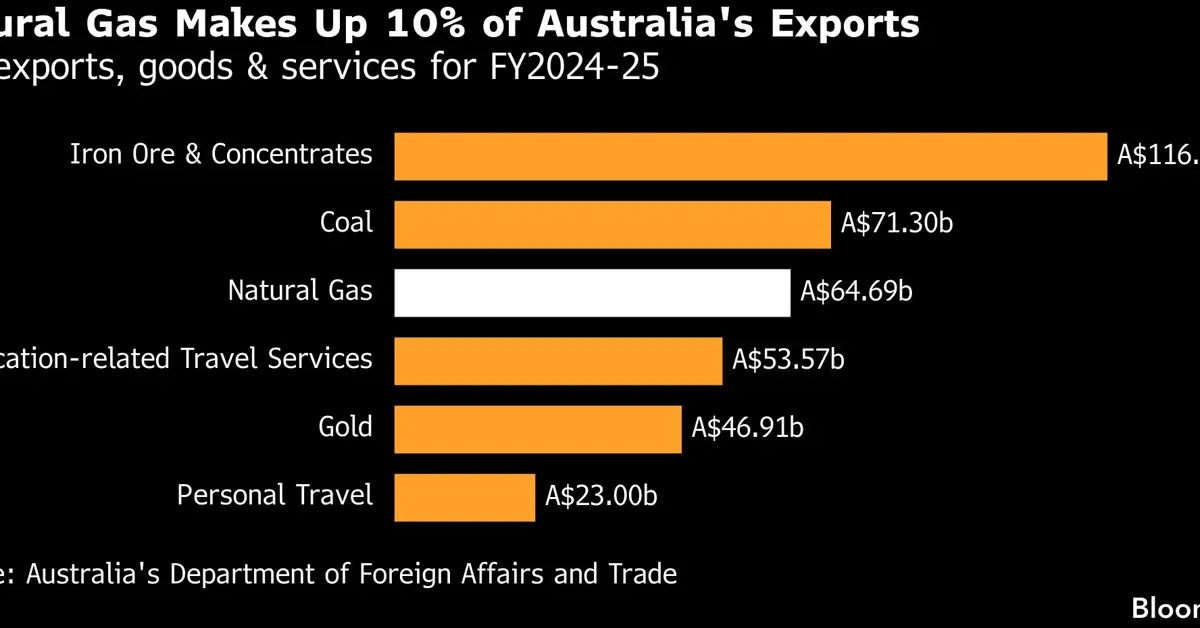
Australia – now the world’s second-biggest LNG exporter after Qatari supplies dried up due to the Middle East war – ships about three-quarters of its locally produced gas. With projects in Western Australia already subject to a 15% reservation policy, the new rules will have the biggest impact on producers in Queensland that export most of their LNG, or even buy gas on the domestic market.
The policy is set mainly to affect three major projects in the state — Australia Pacific LNG, Gladstone LNG and QCLNG — and shareholders including ConocoPhillips, Shell Plc, Origin Energy Ltd. and Santos Ltd.
Bowen said the government had consulted the industry since proposing the legislation in May. Overseas partners had sought assurances that existing contracts would be honored, while other feedback warned that excessive domestic supply could deter investment, he said.
“We have consulted closely and worked closely with trading partners to ensure that it’s well understood around the world that Australia will always be a reliable supplier of energy,” the minister said. The legislation will apply to prospective contracts and the spot market, and won’t impact existing agreements, he said.
The new measures come as gas fields on Australia’s east coast — where domestic demand is highest — are rapidly depleting, while plans to develop new projects have run into opposition.
Exporters could provide as much as 200 additional petajoules of gas a year to the domestic market, ensuring more than enough to meet new manufacturing demand, according to Bowen. That supply will also reduce the risk of tight markets driving price spikes, promote long-term contracting, and shield Australians from global volatility, he said.
The license application process will commence Jan. 1, with the actual supply obligation beginning Jan. 1, 2028.
©2026 Bloomberg L.P.