
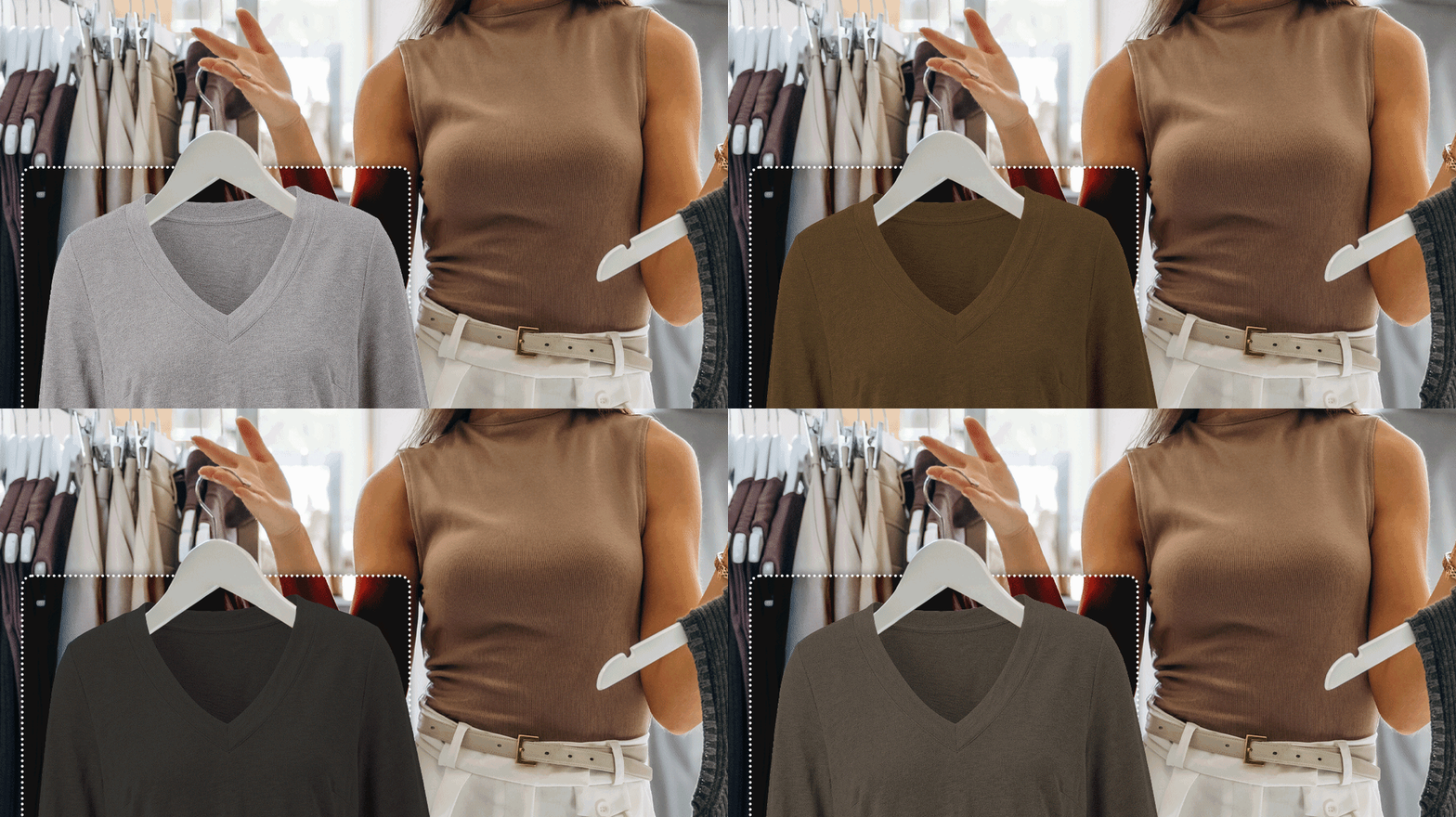
Among avid shoppers and fashion lovers, one thing has become painfully clear: Australia is stuck in an endless cycle of same-same clothes.
Gone are the days of unique pieces being sold in each store. Brands used to have distinct styles; you could glance at a piece and know immediately where it was from, based on its unique features. But now? Everything looks the same.
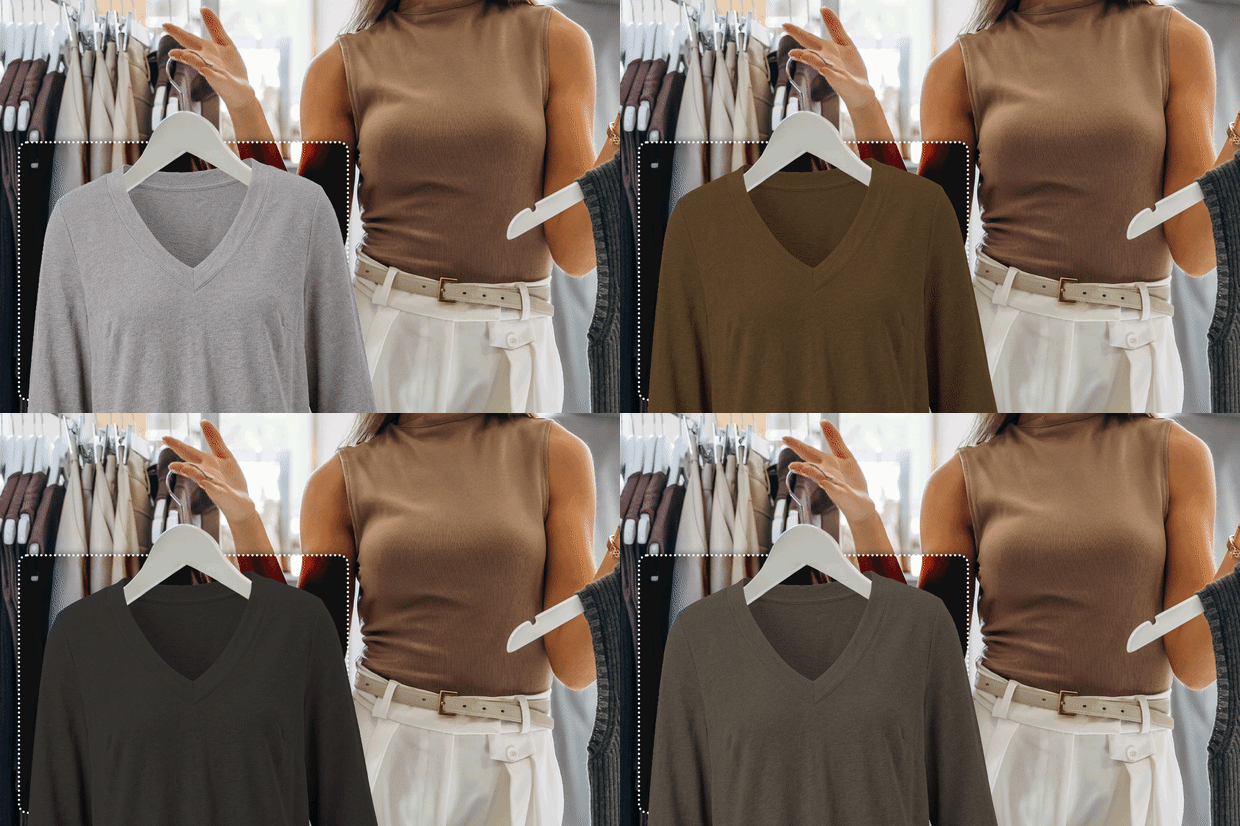
If clothes shopping is giving you déjà vu right now, you’re not alone. Graphic: Polly Hanning
On TikTok, content creator Rebecca Maretic (@notbecmare) argues the country is in a full-blown style crisis, fuelled by a lack of personal style and the chokehold the trending ‘clean girl’ aesthetic has had on individuals and the industry.
“Australia has a massive fashion problem: we are all dressing the exact same,” she begins her videos.
Maretic has started a series dedicated to helping women find unique pieces that might fit into their own personal style, rather than relying on the trend cycle.
She isn’t the only one who has noticed an issue; professional stylist Madeleine Park believes the situation goes deeper than consumer behaviour.
“I wouldn’t go as far as say we’re in a crisis, but we’re caught in a loop between social media, purchasing power and then personal style,” she told nine.com.au.
“We get caught in these echo chambers and algorithms that keep feeding us the same things, the same outfits. We buy into that.
“Then brands the messaging that that’s what we want to buy, so they keep producing along those lines. Then we get caught in that same loop of consumer behaviour.”
The solution, Park believes, is giving ourselves “permission to express ourselves with personal style”. But how?
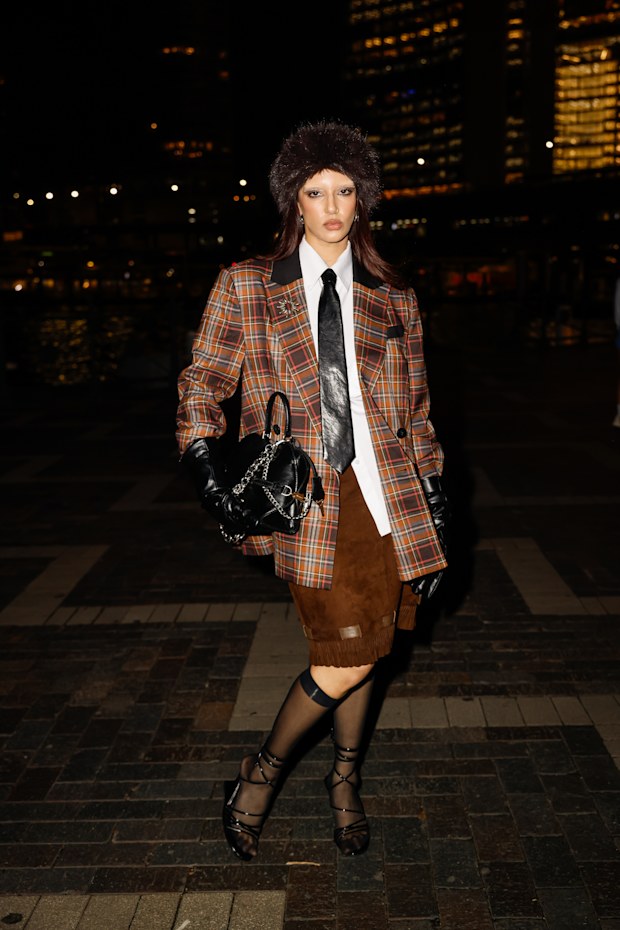
It’s time to embrace your personal style. Pictured: Fashion creative Rowi Singh. Getty
Breaking free of the echo chamber
The stylist says a good way to approach shopping is to know exactly what you’re looking for before leaving the house.
Starting a Pinterest board, or mood board, to get an understanding of what you like should be the first step in anyone’s personal style journey.
If you’re truly lost and have no idea where to start, Park suggests starting with how you want to feel.
“You don’t necessarily have to start with fashion references. You can start with the mood, and that’s why it’s called the mood board,” she explained.
“Let’s say you’re going to an event, and you want to feel like you’re in Europe. Do you want to feel like you’re on some Mediterranean Odyssey?
“If that’s the case, you would pull in those feelings of being seaside and in hot weather, then let that influence what you’re going to wear.”
The same principle applies to your day-to-day wardrobe as well. Pick the mood you’re going for first, then build out from there.
Do you want to feel effortlessly put together? Opt for elevated basics. Do you want to feel like a corporate powerhouse? Opt for chic business casual pieces.
Learning how you want to feel throughout your day, and what makes you feel like that, is the first step to approaching personal style.
Park says you can also incorporate a trend by making it part of your outfit in a way that feels personal to you.
“Realistically, the trick is to bring it into your wardrobe in the way that feels most natural,” she said.
“If [a trend] feels particularly loud, like pairing turquoise with cobalt blue … that may be great for a really strong personality that’s really expressive and very extroverted, but maybe you just want to bring one element of that into your wardrobe in a more muted way.”
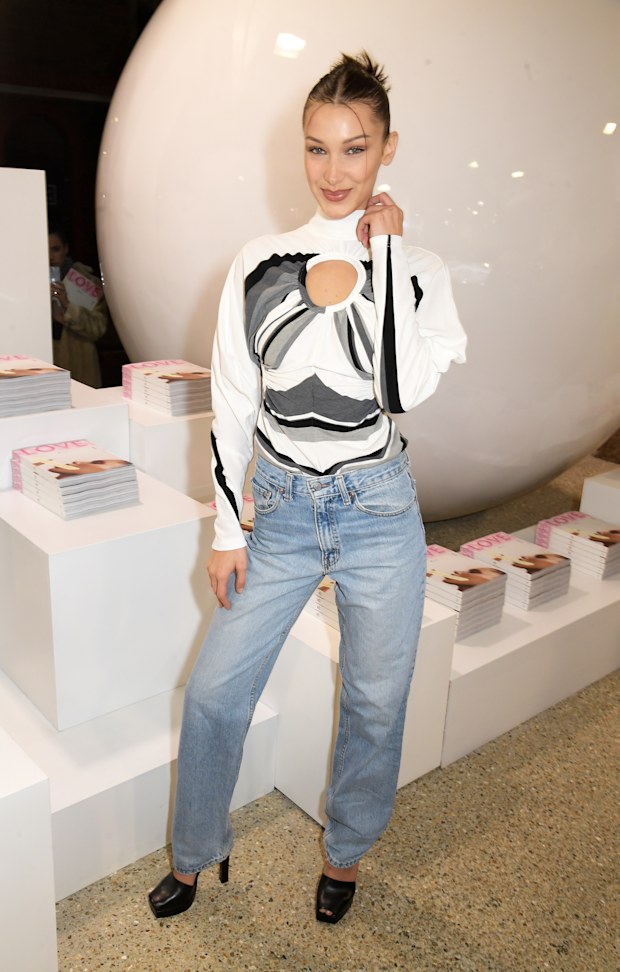
Understanding how you want to feel can help guide the development of your style. Pictured: Bella Hadid. Getty
Buying power vs personal style
Of course, in a cost of living crisis, liking a particular style doesn’t always mean you’d be able to afford it.
Often, the most unique fashion pieces to be found these days come with an outrageously large price tag that’s unreachable for most Aussies.
Luckily, we live in a time when second-hand fashion is more readily available than ever before.
While op shopping can still be expensive, there hidden gems for affordable prices if you’re willing to look.
“I’m a big advocate of secondhand fashion. I feel like there is, there are so many clothes available to us, and the ability to access those markets is only growing,” Park said
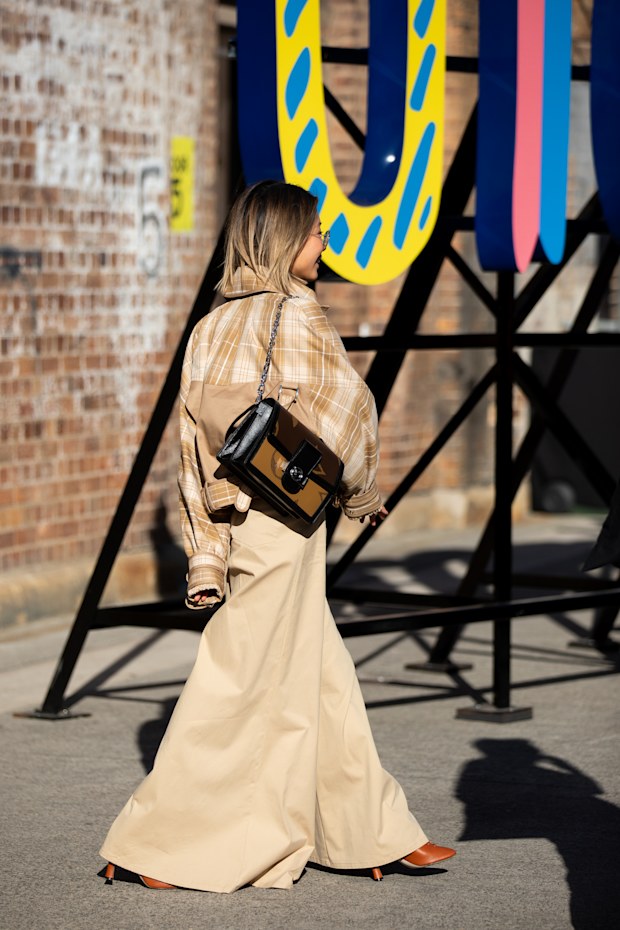
Unique fashion pieces often come with big price tags – but second-hand shopping offers a solution. Pictured: Yan Yan Chan. Getty
She recommends using apps like Depop, eBay and Vinted to find bargain second-hand finds.
“That is where you have a key point of difference, especially if you’re really strong on your personal style, but feel like there’s not like affordable access points.”
“You will be able to find something that is unique, that feels like you. It just might take a little bit more time. But for me, the hunt is like part of the joy of finding a beautiful piece.”