
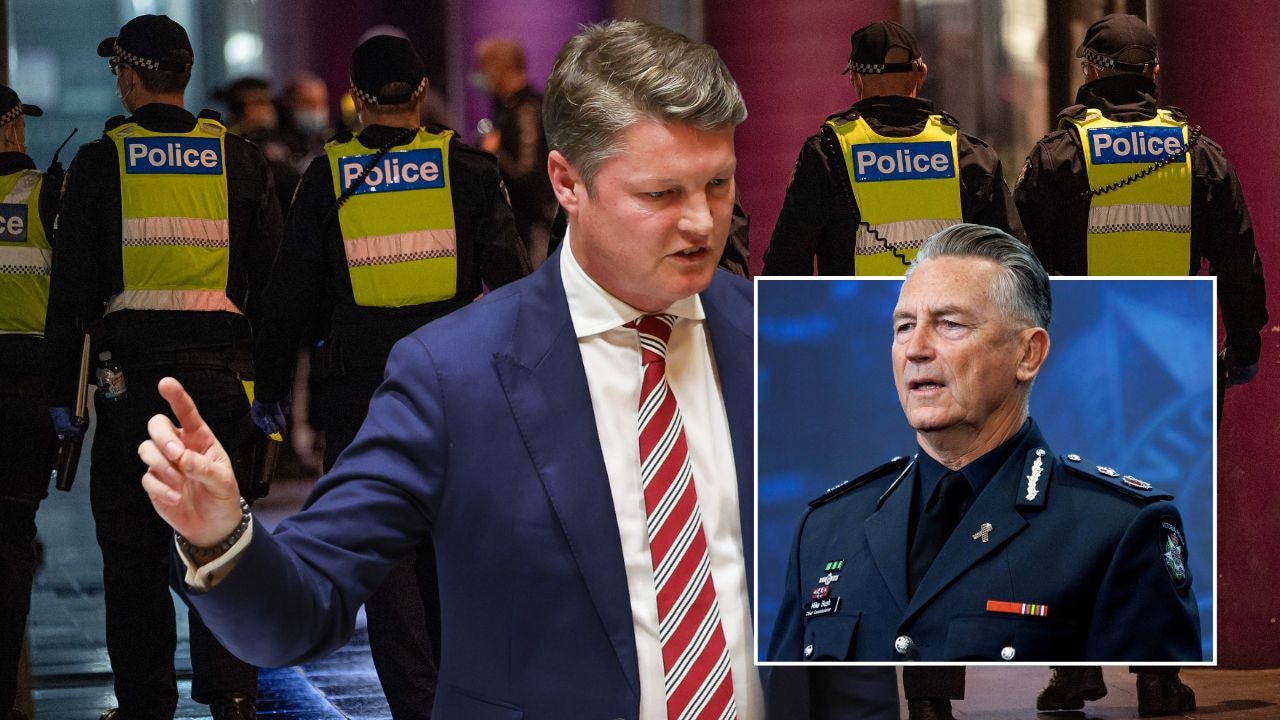
Labor will flood Victoria’s streets with 1500 extra police to crack down on the crime crisis, and build a new training facility in the west as part of a major crime-fighting pitch to voters ahead of the state election.
Premier Ben Carroll will on Sunday unveil the pledge to boost numbers on the frontline and remove bottlenecks in the recruitment process.
The policy will see force numbers boosted above the 17,000 mark and a new training academy opened in Wyndham, in Melbourne’s west.
There will also be moves to increase graduations at the current facility in Melbourne’s east, with the state promising to start ramping up graduations immediately.
Unveiling the plan exclusively to the Herald Sun, Mr Carroll said he was serious about getting police boots on the ground.
“My priority is community safety – and 1500 more police is the new direction I’m delivering as Premier.
“Only Labor has a comprehensive plan to get Victoria Police back to full force and keep our community safe.”
The announcement comes after Victoria posted its first fall in crime rates in four years, on the back of tougher policing and bail laws introduced by Labor in June.
According to the Crime Statistics Agency Victoria, the state’s overall recorded crime rate fell by 1.9 per cent, driven by a reduction in youth crime and repeat offending.
However, overall crime levels remain 26 per cent higher than three years ago.
Falling force numbers have been a growing concern in recent years, with vacancies peaking at 1500 jobs.
Victoria lost almost 332 full-time officers from the beat in the year to January 2026, with Herald Sun analysis showing policing areas across the city were being impacted.
Residents in Brimbank were the worst affected. Other steep falls were recorded in Kingston, the Mornington Peninsula, Whittlesea and Moonee Valley.
Police force numbers had been steadily growing in Victoria until the Covid pandemic, peaking at 16,444.5 full-time officers in September 2021.
The latest Victoria Police employment data shows a total of 15,362 full-time officers on the books in March.
Chief Commissioner Mike Bush has previously flagged his desire to return force numbers to above 17,000 and unveiled a suite of changes designed to get new graduates on the beat faster in March.
The state’s major political parties have clearly also clocked that crime is an issue on Victorians’ radars, with this latest announcement marking the first major law and order election pledge under the new Labor leader.
It also follows a series of Coalition announcements, including promises to boost police numbers.
Earlier this year, Victorian Liberal and Nationals Coalition leader Jess Wilson pledged to recruit 3000 additional Victoria Police officers and reopen more than 40 closed or reduced-hours police stations if elected at the November 2026 state election.
However, the figure was panned by then Premier Jacinta Allan as unachievable.
The move to open a new facility in the City of Wyndham will be central to Labor’s plan, with current warnings that the trek to the academy in Glen Waverley is a huge roadblock for new recruits.
There are also ongoing plans to open two regional academies, in Mildura and Gippsland.
Labor has also promised to bring on more trainers and instructors, upgrade facilities and accommodation for recruits, and fast-track recruitment for people with transferable skills and experience, such as ADF veterans and PSOs.
The Police Association Victoria secretary Wayne Gatt said he welcomed the state government’s proposed plan to reduce bottlenecks and get recruits on the frontlines sooner.
“We’ve long said that we need more police and we need them delivered to the front line more efficiently,” Mr Gatt said.
He said a second academy site in Melbourne’s west “makes sense” given the influx of recruits that must go through the Glen Waverley Academy to date, adding it was becoming a choke point.
“The bottlenecks in the recruitment process both in recruitment and in training need to end in order for Victoria to achieve a modern, resourced police force,” he added.
“The sooner Victoria Police is in lockstep with the broader workforce, by employing prospective recruits within weeks and not months, and training them closer to where they live and work, the more achievable that aspiration becomes.”