
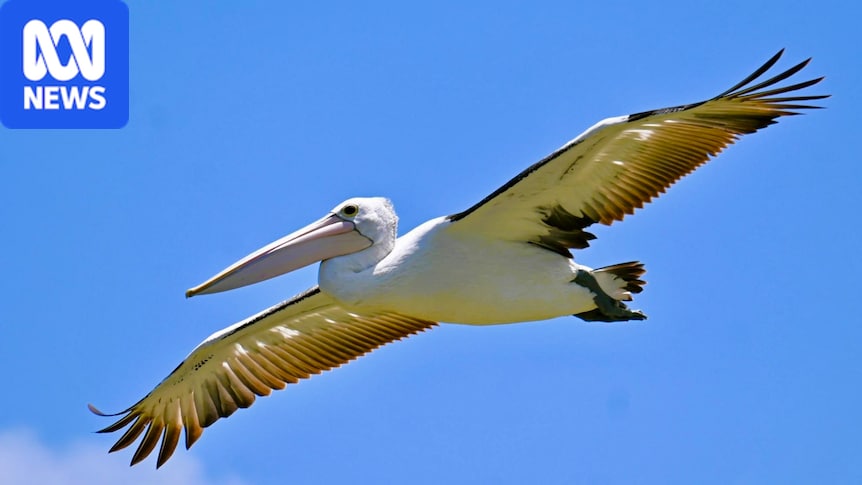
The nation’s first case of a pelican infected with H5 bird flu has been confirmed by South Australian authorities.
The bird was found at Edithburgh on South Australia’s Yorke Peninsula, and is one of four other bird flu events across the state confirmed on Monday.
South Australia’s environment minister Emily Bourke said a dead sea lion found near Victor Harbor had been sent for testing.
It follows yesterday’s confirmation of another sea lion being infected with the virus.
“We’ve had another report today of a deceased sea lion, just off of Victor Harbor, this is a case that we will now test,” Ms Bourke said.
A dead dolphin found washed ashore at Port Noarlunga will be unable to be tested for bird flu, the minister said, due to decomposition of the carcass.
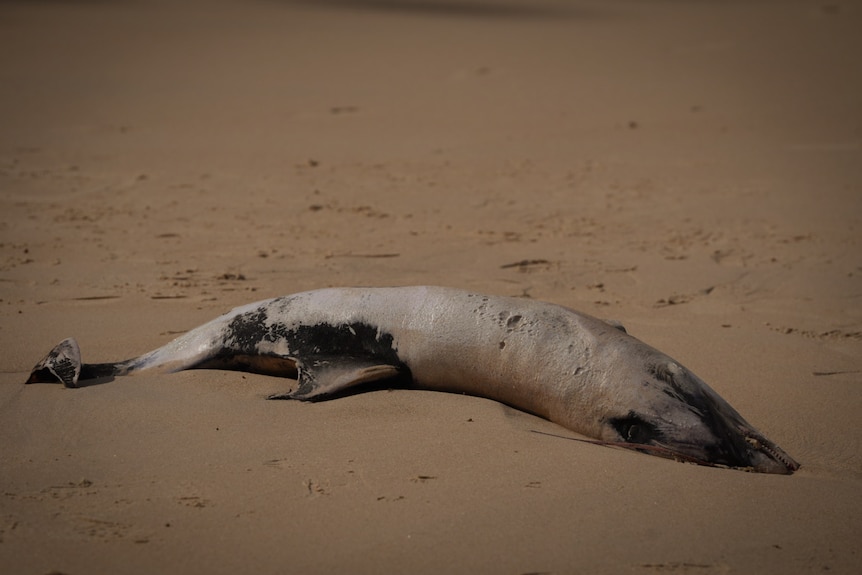
A dead dolphin was found washed ashore near the Port Noarlunga jetty on Monday morning, but is too decomposed to be tested for H5 bird flu according to the South Australian government. (ABC News: Briana Fiore)
South Australia has now had 295 confirmed cases of H5 bird flu in animals,primarily in bird species such as greater crested terns and silver gulls.
A vaccination program for captive birds at Cleland Wildlife Park, Adelaide Zoo and Monarto Safari Park is currently under way, with Ms Bourke confirming around 100 birds were due to shortly receive a second dose of the vaccine.
Threatened mammals such as sea lions will need to wait for the development of a suitable immunisation.
“There is no off-the-shelf vaccine available, no vaccine that has been approved at a national level,” Ms Bourke said.
Other species impacted by positive events today include silver gulls at Port Noarlunga South, little penguins at Nene Valley on the Limestone Coast, and greater crested terns at West Lakes and Middleton.