
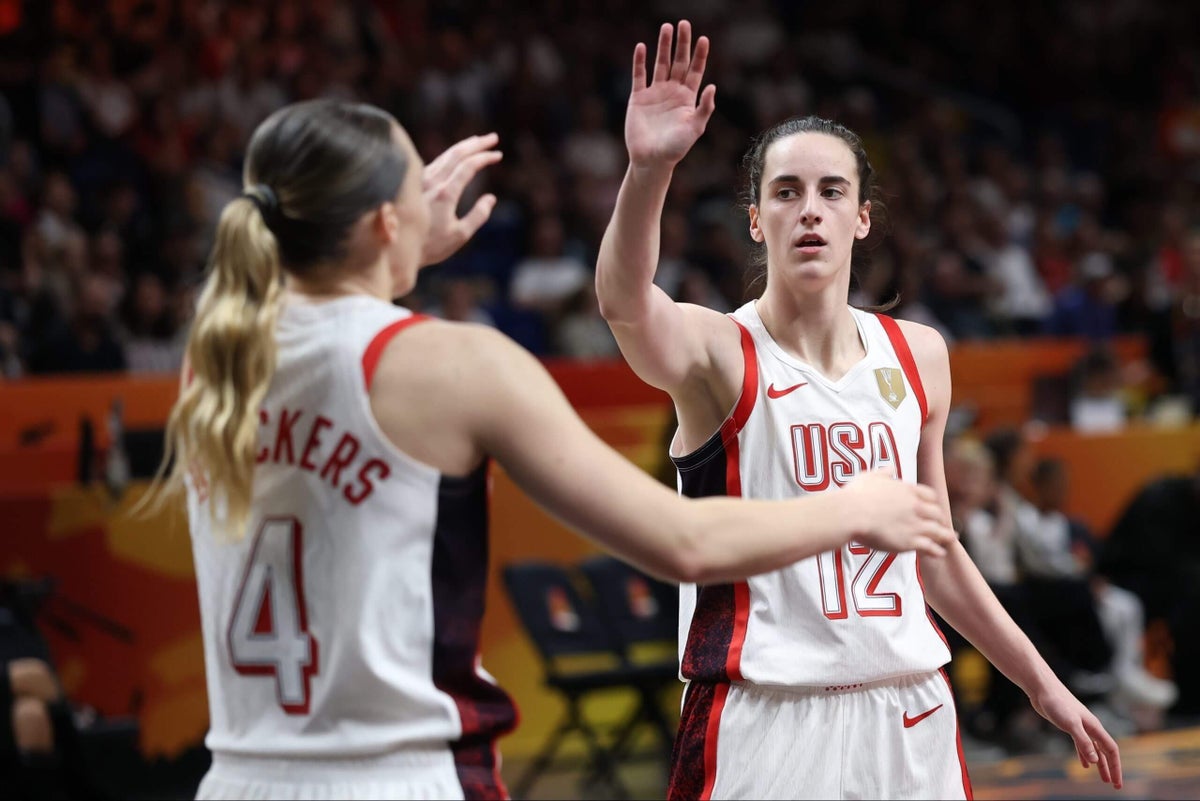
After Team USA secured a fifth consecutive World Cup gold medal on Sunday, it’s time to start thinking about that other gold medal streak the United States women’s basketball team has going. … You know, the Olympics.
We’re less than two years out from Team USA going for its ninth Olympic gold medal, a streak that dates back to 1996. The countdown is on, and women’s national team director Sue Bird will have major roster decisions to make as the U.S. gears up for L.A. 2028.
Historically, massive changes from Team USA’s World Cup roster to its Olympic roster have been rare. Over the last four cycles, the Olympic roster has retained about 70 percent of the previous World Cup roster, but that doesn’t take into account some last-minute changes and unexpected injuries so the true retention rate is even a bit higher.
With that in mind, it would make sense that eight to nine of the players on the Team USA World Cup roster will be suiting up in Los Angeles.
So, with the confetti still being swept up from the World Cup finals celebration in Berlin, it seems like the absolute best (and definitely not too early) time to predict the 2028 Olympic roster.
Breanna Stewart | Forward
Stewart put this team on her back and practically willed it to its fifth consecutive World Cup title. It’s not hyperbole for Stewart’s theme song to be “All I Do Is Win,” because the 6-foot-4 forward has literally never lost in an Olympic, World Cup or NCAA Tournament game. Stewart, the New York Liberty’s 32-year-old star, will be on this roster as the most experienced Olympian — going for her fourth Olympic gold — and as Team USA’s clutch, unflappable foundational player.
A’ja Wilson | Forward / Center
Wilson, the four-time WNBA MVP with the Las Vegas Aces, withdrew from the World Cup roster shortly before she was set to leave for Germany to rehab a nagging back injury that twice put her on the Aces’ injury report in August. Her absence was noticeable, but given that the end result was another gold, her omission might end up being a footnote in the lore of this gold medal streak. However, moving forward, how Bird urges players like Wilson, 30, to prioritize Team USA will be interesting. Let’s see if Wilson — who unlike Stewart, didn’t attend the World Cup Qualifiers pre-camp in Miami — is in attendance at every Team USA event over the next two years.
Napheesa Collier | Forward
This World Cup wasn’t Collier’s best showing, but even so, when Team USA was locked in a tight battle with France during the first half of the gold medal game and coach Kara Lawson shortened her bench significantly, Collier was one of six players who saw the most time. That’s something to clock. As a 29-year-old, two-time Olympian and someone who has been in the Team USA system for 12 years, she’s earned a level of trust. Considering the Minnesota Lynx star isn’t even a year removed from multiple ankle injuries, don’t put a ton of stock into the overall stats of this one tournament when it comes to her inclusion on the Olympic roster.
Chelsea Gray | Guard
Guard depth in this Olympic pool is ridiculous, and Lawson — a former point guard — will want a veteran floor general to lead the group. Considering Gray’s deft performance in Berlin, it doesn’t seem likely anyone is going to take her spot. The cliff of experience behind the Las Vegas Aces veteran, who turns 34 next month, drops pretty steeply. Lawson will need Gray’s experience, handles and leadership in Los Angeles.
Jackie Young | Guard/Wing
Young, 28, has become one of the best off-ball, two-way guards in the world the past few years. In Berlin, she was Team USA’s best high-volume 3-point shooter and a defensive lockdown option who, pound for pound, is one of the strongest in the WNBA with the Aces. Behind Stewart and Wilson, no other player seems more of a shoo-in for the Olympic roster than Young.
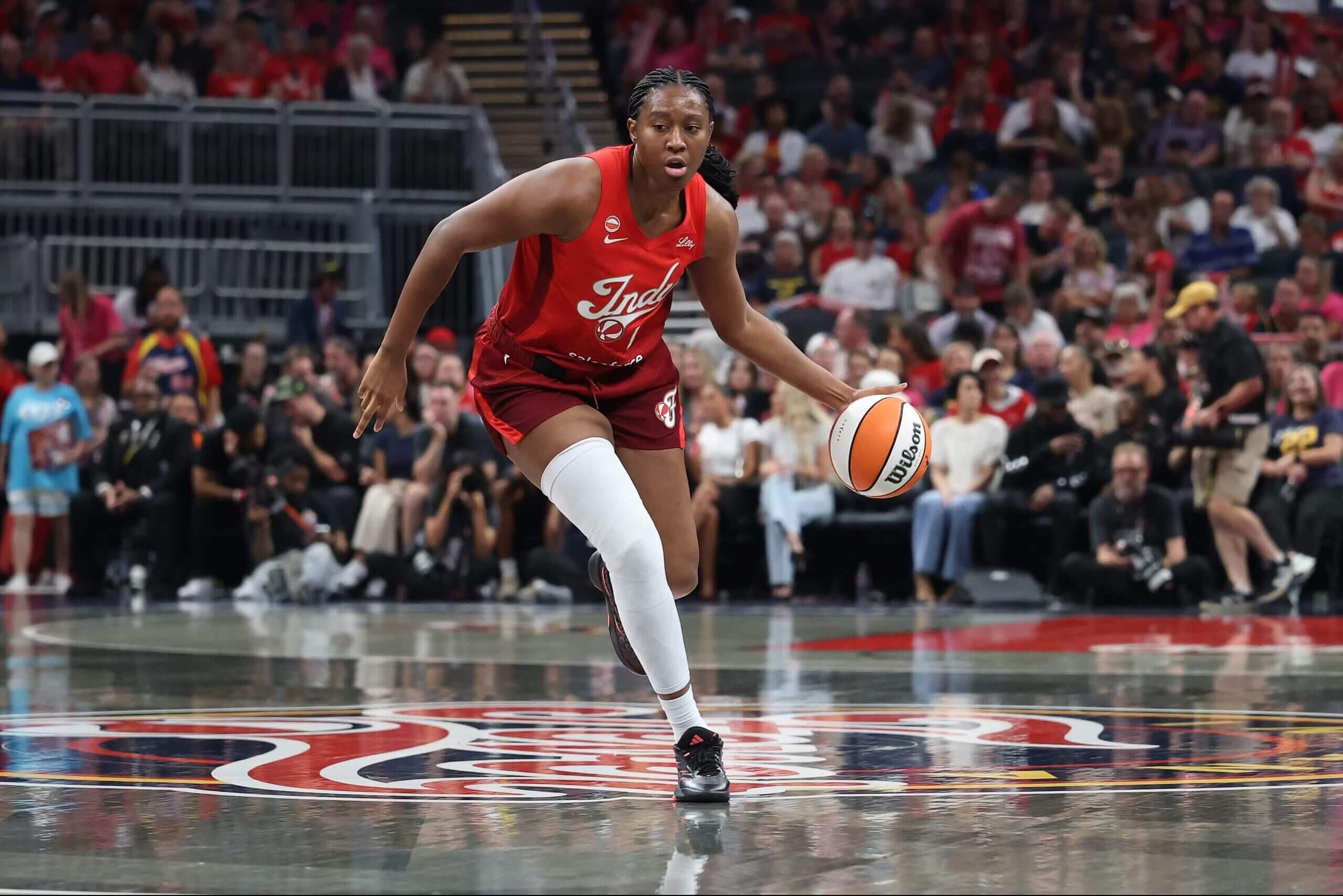
Aliyah Boston serves as a great bridge between the veterans and younger players. (Andy Lyons / Getty Images)
Aliyah Boston | Center
Boston’s strength is in the paint, and establishing that as a Team USA identity was a priority, especially after it couldn’t hit anything on the inside against Italy. But as she has grown in the WNBA with the Indiana Fever, Boston, 24, has also developed an outside shot that’s good enough to make opponents respect her on the perimeter. She’s more experienced than the “young and turnt” group but also not quite a veteran, making her an important bridge for this team beyond the X’s and O’s, which is also a factor for Bird as she puts together this roster.
Kahleah Copper | Wing
Copper, 32, was a key to the U.S. taking home the gold in Paris in 2024, but as the page turns to 2028, Copper’s spot seems safe but far from certain. Team USA is a loyal organization, and Copper is a player who has consistently attended training camps and tournaments. If it wants another well-rounded but defensive ace in this spot, perhaps Rhyne Howard — who had a nice World Cup showing — could land on the roster. If the program wants to add more shooting, while giving up some size (unlikely, but possible), maybe Kelsey Plum is sitting here.
Angel Reese | Forward
Reese had a productive trip to Berlin, being an impact player when her number was called. With a more veteran and experienced post group cemented in ahead of her, Team USA can be more forward thinking with this spot. That’s not to say she wouldn’t contribute in L.A. Having Reese’s energy as a relentless rebounder, her versatility to defend multiple positions and her timing as a shot-blocker (the Atlanta Dream star led the U.S. with five in Germany) means Reese, 24, can gain valuable Olympic experience for future games off the bench while rounding out Team USA’s post depth with size and skill.
Caitlin Clark | Guard
Through the early World Cup games, it seemed Lawson was almost looking at Clark and Paige Bueckers as a package deal. But coming into the gold medal game, Bueckers had seemingly gained an edge. That flip-flopped as Lawson turned to Clark for crucial minutes against France. Clark, 24, will be the first to say she wasn’t pleased with her shooting performance in Berlin, but with more FIBA senior experience and more time with this group, that should improve. The Fever guard will be a necessary backup to Gray for the 2028 Games.
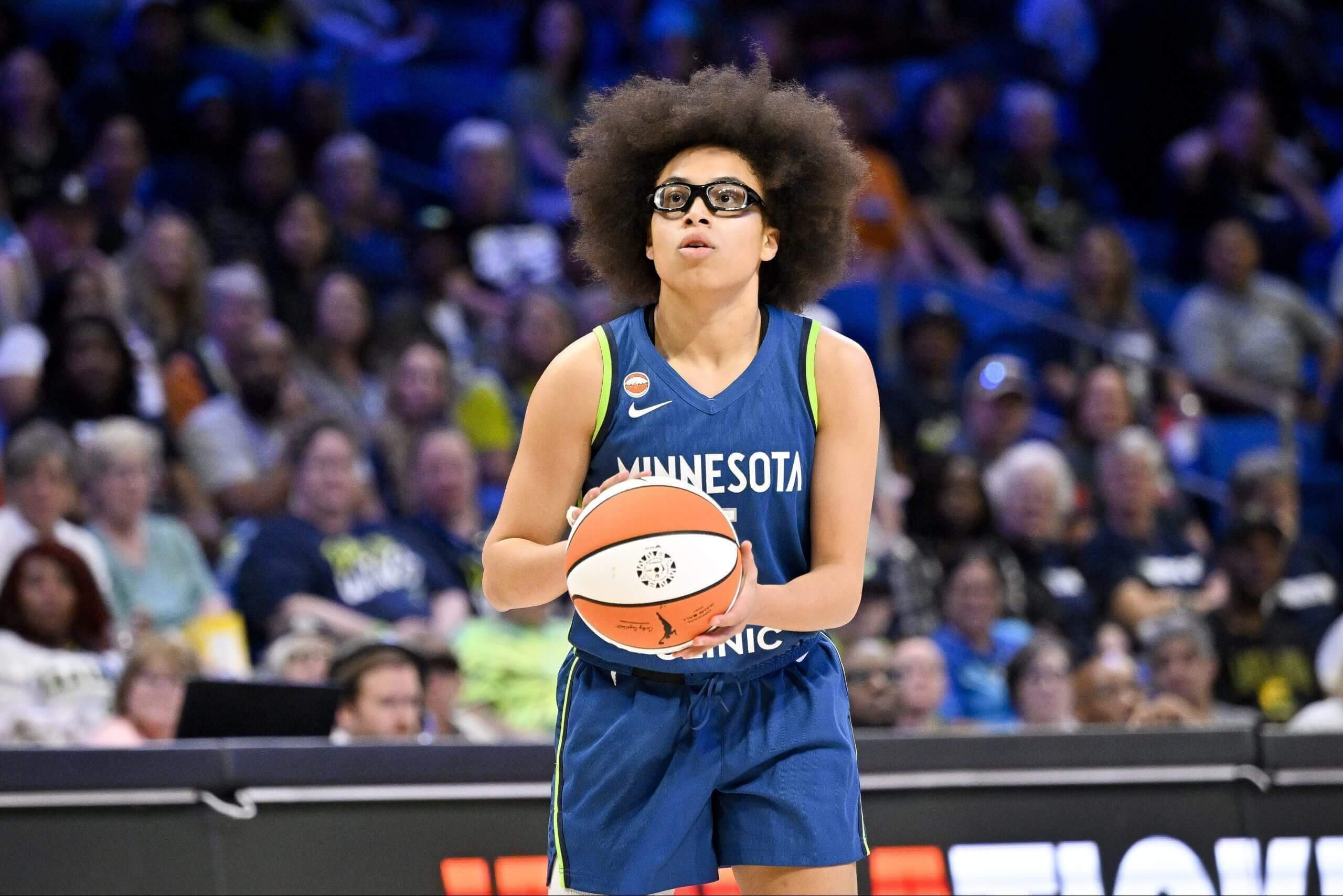
Will Olivia Miles be a new addition to the Team USA roster? (Jerome Miron / Getty Imagn Images)
Olivia Miles | Guard
Speaking of point guards, it seems likely that Bird might tap Miles to come into the fold. She’ll be 25 at the time of the Games, but one of the least experienced — from a national team perspective — to make the roster. But it seems entirely likely that she could be playing her third All-WNBA-level season in 2028, and leaving her and her vision off the roster would be unwise and shortsighted. Her inclusion would make the 2028 roster point guard-heavy, but Bird will be thinking about 2032 as well. With Gray likely out of the picture for that roster, Team USA will want experience at point guard, and having Clark and Miles in the fold seems prudent.
Paige Bueckers | Guard
This is where Team USA’s guard depth is really going to show, because in this prediction, both Sabrina Ionescu and Kelsey Plum — two gold medalists in Paris (and Plum has a 3×3 gold from Tokyo) — don’t make the final cut. It’s notable that in this tournament, Lawson chose to primarily use Bueckers off ball, which is important given that there would already be several cooks in the point-guard kitchen. By 2028, Bueckers will have WNBA playoff experience, giving her a more well-rounded resume. Considering she made this World Cup when Ionescu did not is striking.
JuJu Watkins, USC (guard/wing) or Sarah Strong, UConn (forward)
Four players have made the Olympic roster during as WNBA rookies. Of course, Watkins could be a second-year player in 2028 if she decides to not use her medical redshirt season, but otherwise, she or Strong could join Rebecca Lobo, Diana Taurasi, Candace Parker and Breanna Stewart in the record book. It’s not a given in any cycle, but with the impressive talent among today’s college players, one spot on the 2028 roster could be going to a rookie or someone who’s very young. Don’t expect this player to garner major minutes, but Bird knows the importance of bringing a young player into the fold early to keep the pipeline healthy and allow the team’s culture to blossom. She was the second-youngest player on the 2004 roster (Diana Taurasi was younger) and she didn’t play heavy minutes in Athens, but the experience is something she carried through her next five Olympic Games.