
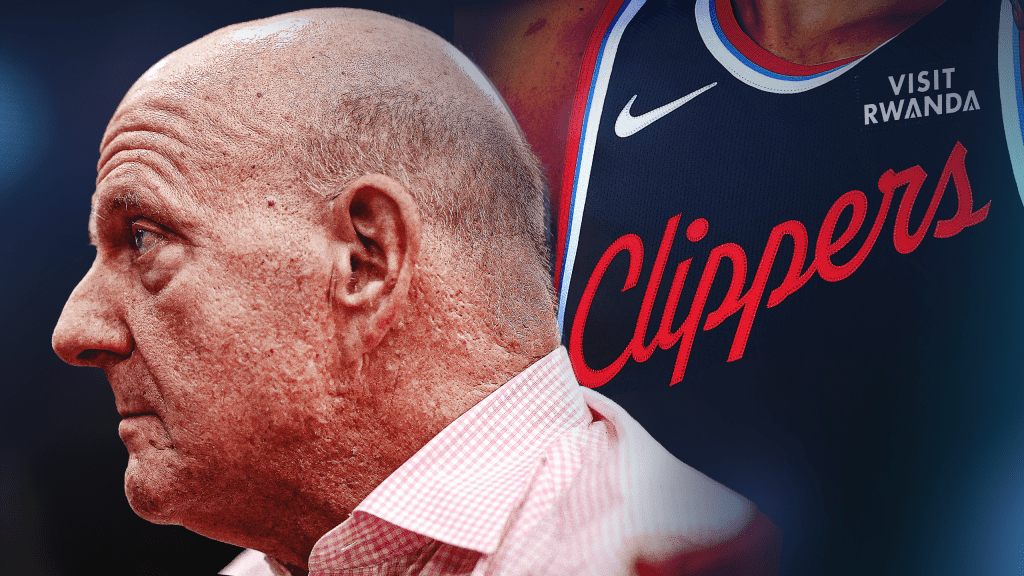
Los Angeles Clippers owner Steve Ballmer on Sunday night apologized via a post on X for the “distraction and distress” associated with the salary-cap-circumvention scandal and wrote that the Clippers are “complying with the penalties assessed by the league.”
Ballmer noted that while there are “disagreements concerning the findings in the report,” he wants the team to focus on moving forward, adding that “team owners should support, not distract.” Ballmer’s apology was directed to Clippers fans and employees, as well as his “fellow NBA team owners.”
The conciliatory statement reflects a striking change from the team’s much more adversarial tone following NBA commissioner Adam Silver issuing a historic punishment, including stripping the team of five first-round draft picks and suspending Ballmer from team and league activities for a year, for arranging off-court opportunities for Kawhi Leonard to earn additional money through four outside companies.
Team officials and attorneys disparaged the league’s investigation as a “witch hunt” that deprived the team of basic due process and denied the Clippers a meaningful opportunity to respond. The Clippers also insisted that there is no specific rule blocking teams from introducing sponsors to players and vice versa; the team insisted that the practice is commonplace in the NBA and that the league was “retroactively punishing the Clippers for violating a rule that never existed.” The Clippers also alluded to possible legal action, saying they intended to “vigorously challenge the findings.”
As Sportico detailed, the Clippers’ possible legal strategy is hampered by the contractual realities of owning an NBA team.
The league constitution—which is a contract between the NBA, teams and owners—explicitly states that decisions of the commissioner are “final and binding” and should be understood as arbitration awards. If the Clippers sued, the NBA would argue there is no viable claim because the Clippers, like other teams, contractually accept Silver’s punishments via the constitution.
The Clippers’ legal options are also hobbled by the NBA imposing a $700,000 fine on Leonard, which both Leonard and the NBPA accepted. NBA players can challenge certain types of punishments through arbitration, which could have scrutinized the NBA’s investigation and findings, but the NBA’s deal with Leonard and the union essentially took that possibility off the board.
Separate from the paucity of options to challenge the NBA is the fact that the league retained an experienced law firm, Wachtell, Lipton, Rosen & Katz, and a former federal prosecutor, David Anders, to lead what appears to be a thorough and evidence-based investigation. The firm took about a year to investigate after journalist and podcaster Pablo Torre of Pablo Torre Finds Out uncovered the underlying allegations. During that time, the firm conducted 73 interviews with 60 people and reviewed more than 200,000 pages of documents obtained from individuals and organizations. Also, while the Clippers describe their introductions as consistent with those made by other teams, the Wachtell report characterizes the Clippers’ introductions as ruses designed to facilitate payments that compensated Leonard beyond his Clippers employment contract.
Ballmer’s apology could be motivated by the hope that the NBA will eventually reduce the punishment. About 25 years ago, then-NBA commissioner David Stern reduced the five-first-round-pick penalty imposed on the Minnesota Timberwolves for circumventing the salary cap in signing Joe Smith. The reduction, first from five picks to four and then from four to three, came after Timberwolves executive Kevin McHale and owner Glen Taylor agreed to serve suspensions.
That specific strategy isn’t available to Ballmer, who has already been suspended, but he might believe the league could eventually reward the Clippers for complying with the penalty and accepting responsibility. The NBA might be reluctant to reduce the punishment, however, because doing so could establish a precedent that would pressure it to offer similar leniency to other teams in future salary-cap cases.
The timing of Ballmer’s statement is noteworthy given The New York Times’ report last week that the U.S. Department of Justice has launched its own investigation into the scandal. While evading NBA salary-cap rules and losing draft picks are newsworthy, they are just sports topics. But the underlying transactions, especially the possibility that money was transferred through illicit means, could invite a host of criminal-law ramifications, including fraud, conspiracy and money laundering.
The feds also have a range of powers that the NBA and Wachtell didn’t have. They can obtain subpoenas that require witnesses to testify and share numerous materials, including emails, texts and bank statements, and can threaten witnesses with criminal charges if they don’t cooperate.
To that point, while the scandal is generally described as one about the Clippers, it’s also about four companies—Aspiration Partners, Boingo Wireless, Daktronics and Lockton—with which the Clippers entered into business contracts allegedly in part to facilitate new income opportunities for Leonard.
Daktronics, a publicly traded company, recently indicated that the Securities and Exchange Commission “is seeking information from us” regarding the Clippers and Leonard. Aspiration’s legal woes are well documented; in June, co-founder Joe Sanberg was sentenced to 14 years in prison for fraud.
The Clippers’ decision to stand down as the DOJ launches an investigation is logical because any litigation brought by the team would open the door to judicial scrutiny of transactions that now appear to be of interest to federal investigators.