
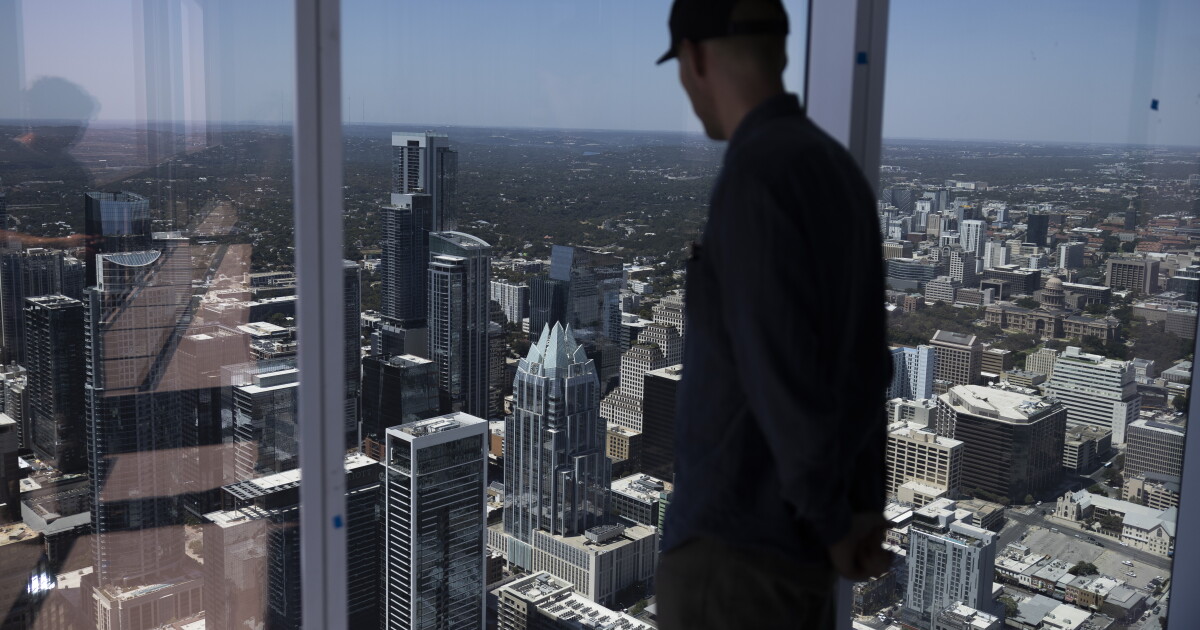
The Waterline tower is officially open in Austin, making it the tallest building in Texas and the 24th tallest in the United States.
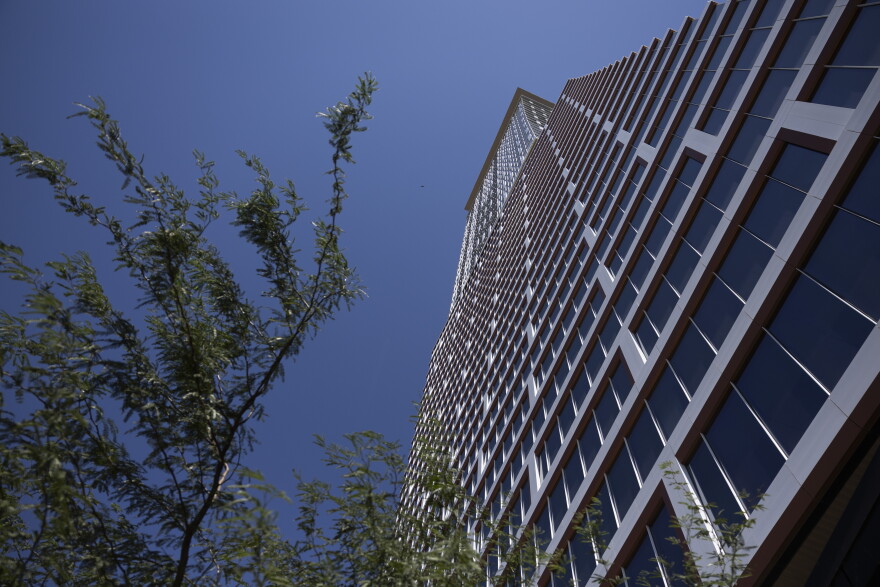
The building at Cesar Chavez and Red River streets stands at over 1,000 feet, which is like three University of Texas at Austin towers stacked on top of each other and then some.
It took over four years to complete, with construction crews putting in 4.5 million hours of labor and using enough concrete to fill about 46 Olympic-sized swimming pools, according to DPR, Waterline’s construction company.
And in case you were curious, the elevator ride from the lobby to the top floor takes over one minute.
The building has offices, residential space, a luxury hotel, a rooftop restaurant with Japanese-inspired cuisine, a coffee shop and a Mexican restaurant, Alteño, created by Michelin-starred chef Johnny Curiel.
DPR finished the project two months ahead of schedule. The residential component was the last to be completed, and residents were able to move in early, said Emory Sweeney, the project superintendent with DPR.
The hotel, operated by luxury hotel chain 1 Hotels, opened Sept. 3.
Lorianne Willett
/
KUT News
The Waterline towers over downtown.
Living at Waterline
The Waterline also comes with eye-popping rents. The cheapest available apartment is a 778-square-foot one-bedroom and one-bath, which costs $4,027 a month, including mandatory fees, according to Bosque at Waterline’s website.
The most expensive apartment listed is a 1,606-square-foot two-bedroom and two-bath. It’s listed for $12,357. The penthouses, that occupy floors 69 to 72, do not have prices listed online.
The costs also do not include parking. A single parking space for a car can range from $225 a month for an unreserved spot to $1,250 a month for a private garage, according to the website.
While the rent is not cheap, it does come with amenities, including a pool deck, a spa, an infrared sauna, a golf simulator, a gym and a poker room.
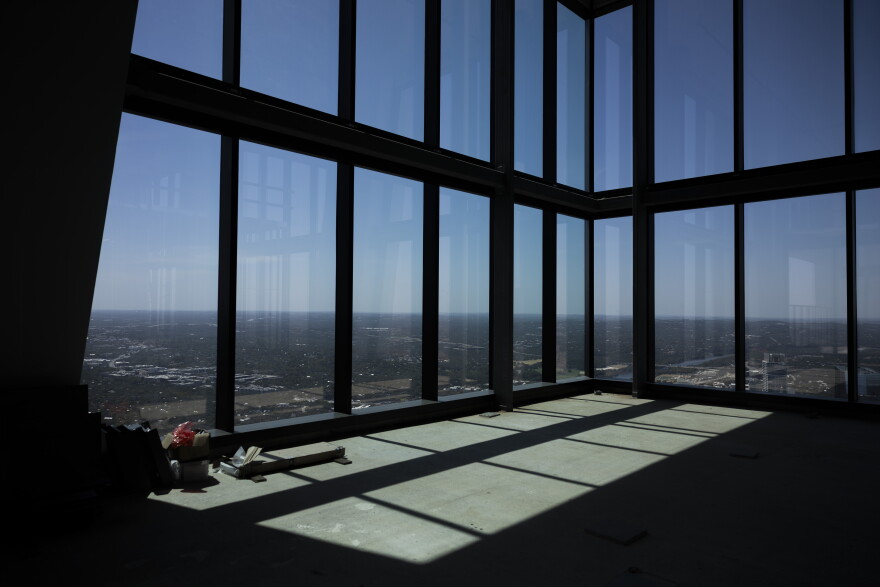
An amenity space near the top floor overlooks Lady Bird Lake and I-35. Off in the distance, you can see airplanes taking off and landing at the Austin-Bergstrom Airport. It’s so high up that it seems like you are on eye level with planes.
Lorianne Willett
/
KUT News
A view of the city and hill country sits outside the penthouse windows at the Waterline.
Connection to The Confluence
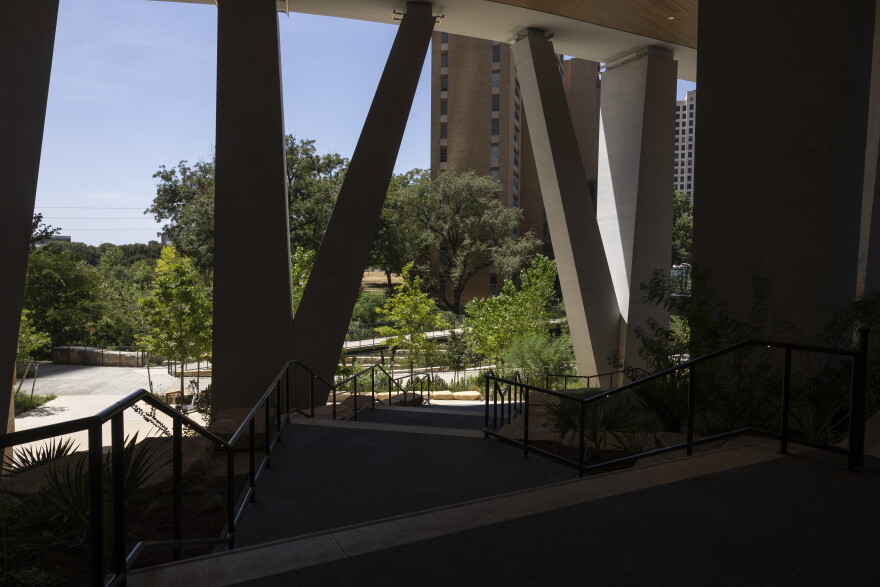
Part of the building’s allure is its location next to Lady Bird Lake and its proximity to The Confluence. This recently completed $91.5 million project restored 13 acres along Waller Creek and connected the space to nearby trails and bikeways, according to the city of Austin’s website.
The waterline developers donated at least $695,000 to the Waller Creek Delta project and the Waterloo Greenway Conservancy, according to public records. The figure does not include development-related payments.
According to Austin Watershed Protection, Waterloo Greenway has a policy of keeping details of donor gifts private, so the full amount donated is unclear.
“It’s tens of thousands of people that are putting in the effort to make this project become a reality,” said Turner Kerr, the project manager for DPR. “And then afterwards everybody in Austin gets to enjoy it.”
Lorianne Willett
/
KUT News
An entryway into the Waterline sits against the Waterloo Greenway.
Kerr said the finished project took intense amounts of collaboration between the partners.
Even though construction is over, and the nearly 6,800 workers who helped lay the concrete have moved onto different projects, Kerr said there’s a sense of pride with seeing a project come together.
“The nice thing about construction, especially when you’re building the tallest building in Austin, you can pretty much drive around anywhere and point up to it and be like, ‘I built that,’” Kerr said.