
*Correction: This story has been updated to clarify the NZNO’s stance
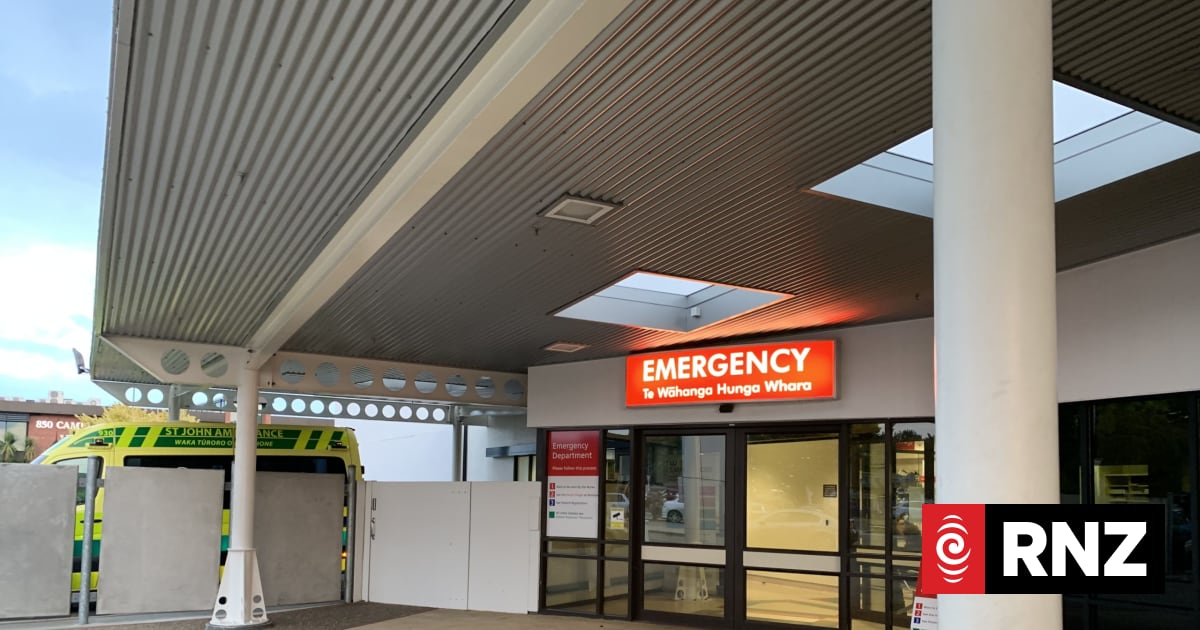
Emergency Department staff at Tauranga Hospital have declared “a state of emergency”, warning of the risks of an ED which they say is often running at 150-200 percent of its capacity, without the staffing needed.
More than 100 Nurses Organisation (NZNO) members and ED staff at the hospital have written a letter to Health New Zealand’s (HNZ) CEO Dale Bramley last Tuesday about their concerns.
The letter said the ED hasn’t received the extra nursing staff required, as identified in “Care Capacity Demand Management” (CCDM) assessments over the past two years.
It said a patient collapsing in the ED wait room toilet was a stark reminder of the risks when overcrowding becomes normalised, and the ED is required to operate beyond their capacity everyday.
HNZ’s regional director for Midland, Cath Cronin, said in a statement that the incident happened on 25 August, and that the patient had a medical event about two hours after they came to ED.
NZNO delegate John Wylie said staff being asked to assess and treat some patients in corridors had become routine practice due to the ongoing patient flow pressures.
“We are often working at more than 150-200% capacity, and I cannot recall any recent day when the ED was not running at over 100% capacity,” he said.
The letter urged HNZ to approve the hiring of more nurses, based on calculations from the previous CCDMs.
Modelling for 2025/2026 found that 13.66 more roles were needed for Tauranga’s ED, across nurses and health care assistants, and 16.78 more roles were needed for 2026/2027, in order to meet safe staffing.
NZNO president Anne Daniels said the need for extra staffing was likely to be even more, because of the big increase in presentations to ED this winter.
A response from Dale Bramley, dated a day after he received the letter from the workers, said he’d recently visited the Tauranga Hospital ED.
He said he’d had conversations with staff about the challenges on the frontline.
“I acknowledge the sustained pressures experienced by the department and the impact these can have on both staff wellbeing and the delivery of patient care,
“Ensuring Tauranga ED has the workforce and resources it needs to provide safe, high-quality care is a priority,” he said in the letter.
Bramley said decisions on staffing sit with the regional director for Midland – Cath Cronin – and the interim group director of operations for Bay of Plenty, Jo Gibbs.
He said he’d asked Cronin and Gibbs to meet with staff, and agree on the way forward on uplifting staff numbers.
“I have asked that this meeting occurs within a fortnight,” said Bramley in the letter.
Cronin said in a statement that Tauranga Hospital’s ED continues to experience significant demand, reflecting rapid population growth and increasing complexity of patient presentations.
“Winter illnesses have added further pressure to an already busy service.
“We recognise some patients have experienced longer waits than anyone would want,” she said.
Cronin said they had offered to meet with staff at Tauranga Hospital, and were working out a time for the meeting.
Workforce capacity must evolve alongside demand as the community continues to grow, she said.
Cronin said Tauranga Hospital is part of the government’s Budget 2026 hospital redevelopment programme, which includes a new acute services block with a “significantly expanded” ED.
In August, NZNO president Anne Daniels posted on social media that there needed to be a change of government for student nurses to see a real future in New Zealand.
But NZNO said that was not an official policy and the post was being removed.
The union was not calling for a change of government but was instead calling on all political parties to fund and staff the health system properly, a spokesperson said.