
Sonya Joseph grew up on a tree-lined street in Brooklyn.
“Around the block we had nice small mom and pop stores that I would frequent. I knew my neighbors and we all pretty much went to school together. So it was pretty communal,” she said.
Joseph’s parents owned their home. She figured one day she’d own a home, too.
“Being a homeowner can provide me with a sense of peace of mind and security and a sense of community that I feel like I deeply desire,” said Joseph, now a 34-year-old community organizer living in Washington, D.C. “That’s kind of the dream that was sold to us.”
Joseph was close to purchasing a home through a first-time homebuyer program. But the organization looked through her bank statements and discovered an ongoing balance of about $600, charged to buy now, pay later programs. She’s used them to buy furniture, groceries, and toiletries. And she said lately, it’s starting to feel like everything in her life is on a payment plan — like her phone, which costs $26 a month.
“Not only I don’t fully own the phone, but by the time I do own the phone I probably need to get a new phone,” she said. “I’m in a lifetime subscription for the phone ownership if that makes sense.”
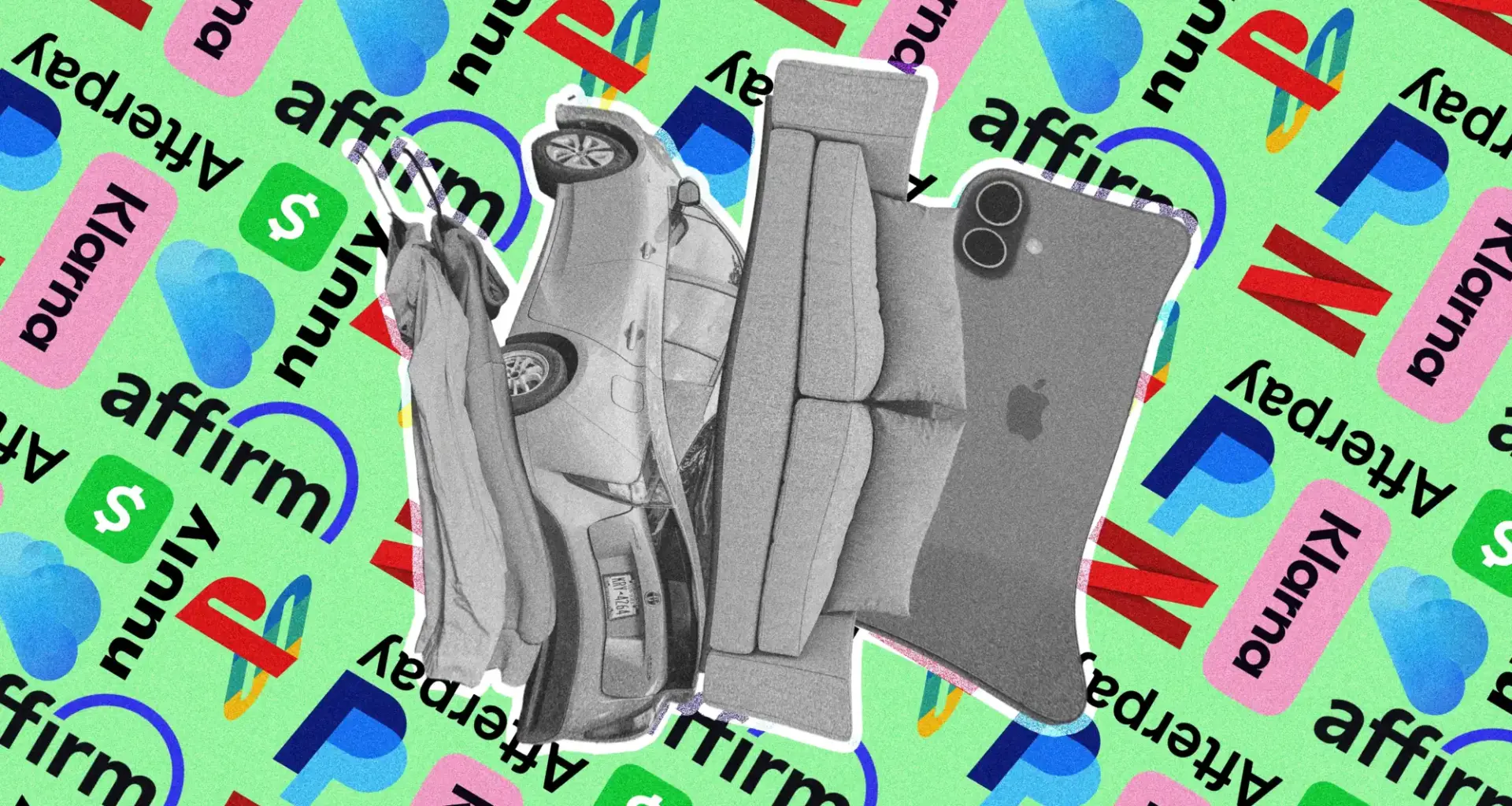
A lifetime subscription for ownership is becoming a hallmark of middle class life. You go into debt to buy a $60,000 car only to learn you have to pay to use its remote start feature. You turn on your PlayStation to play a game you don’t own, just purchased a license to access. And that’s showing up in the numbers. Household debt is historically high for everything from credit card balances to auto loans. Combine that with the subscription economy and it seems like people don’t outright own much anymore.
The idea of financing life this way seems like a 21st century problem, but it goes way back.
“Picture it: The Roaring ‘20s. It’s a great moment of cars and phonographs and vacuum cleaners and refrigerators and all the wonders of the electrical age,” said Louis Hyman, a history professor at Johns Hopkins University. “And it’s all very expensive.”
As in, it’s all very much reserved for the rich. That is, until installment credit comes along, a sort of precursor to the credit card. Suddenly your average Joe could afford a washing machine or even a car.
“Certainly in the 1920s and ‘30s, installment credit was seen as a great leveler, so that ordinary folks had access to expensive things,” said Hyman.
A debt-driven, don’t own anything, subscription economy certainly has pluses. You can rent maternity clothes, use a bike share, borrow a drill from a tool library for that random home repair.
“This is reducing waste, this is offering access, this is democratizing the opportunity to take part in something,” said Cait Lamberton, a marketing professor at The Wharton School.
The thing is, accessing life via subscriptions and debt can quickly tornado into a habit, which is likely what a lot of these companies are looking for: a member for life.
“It can offer access to things that are necessary,” said Lamberton. “It can also create a hamster wheel that leads to more spending and less actual wealth.”
Less wealth means less equity. And when we talk about equity, we usually focus on the biggest version of this, renting versus owning a home. But the small things matter, too.
“So a video game can’t be passed around like the Nintendo cartridge of my youth. I can’t give ‘Legend of Zelda’ to my friend down the street,” said Hyman. “That is a quite different economy if it sort of makes sure that we pay full price for everything.”
These subscriptions, leases and BNPL apps are no longer tools for people’s economies to grow like they were a hundred years ago. They’ve become tools people use to get by.
“If incomes are stagnating or falling then it’s not quite a leveler,” said Hyman. “Then it’s just a tax — a tax on your future.”
Sonya Joseph, the woman in D.C. who’s making monthly payments for her phone, said by the time it’s paid off, she’ll have spent more than if she’d paid for it in cash.
Related Topics