
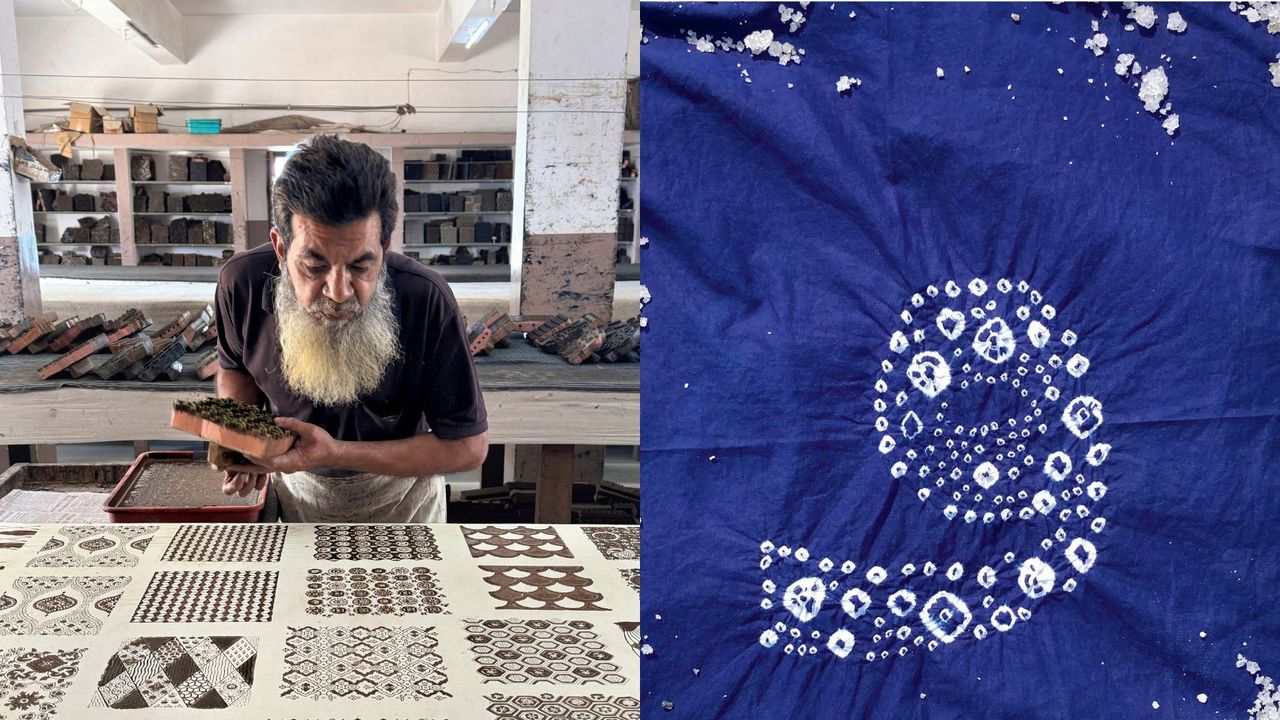
The search for a bandhani typeface led Khosla to the studio of Fahd Khatri, a fifth-generation craftsperson from Bhuj, Kutch. Traditionally, the women of the family knot the cloth while men oversee design, dyeing and business. For the Typecraft workshop, the women designed, tested and talked through ideas, as if in a classroom. Together, they reimagined Arabic letterforms, a script familiar across Kutch through generations of trade, migration and faith, but never before interpreted through the language of bandhani. They sketched letters on paper, filled them with patterns using ink and stencils, then traced and tied the designs onto cloth, the letterforms revealing themselves on brightly coloured cloth when the knots were untied.
“My dream is to bring these typefaces into primary education, so children can learn alphabets through their own visual culture,” Khosla says. “It creates a deeper sense of pride in who they are.”
Kolam
An aerial view of the annual kolam competition in Chennai.
Courtesy of The Typecraft Initiative
Kolam had been on Khosla’s mind for years. He had worked with a kolam artist during his MFA studies, but it was a later trip to Chennai that brought him closer to the tradition of geometric floor drawings made across Tamil Nadu, with counterparts found across India—from rangoli in Maharashtra and alpona in West Bengal to mandana in Rajasthan. Dating back centuries, kolams are drawn each morning outside homes and temples using rice flour, inviting birds, ants and other small creatures to feed while marking the start of a new day.
“Kolam is a perfect example of how mathematical Indian visual culture really is,” Khosla says. He returned during Pongal, when the city hosts elaborate kolam competitions, eventually finding a community of women practitioners, many of them homemakers, working independently and collectively across different kolam traditions.
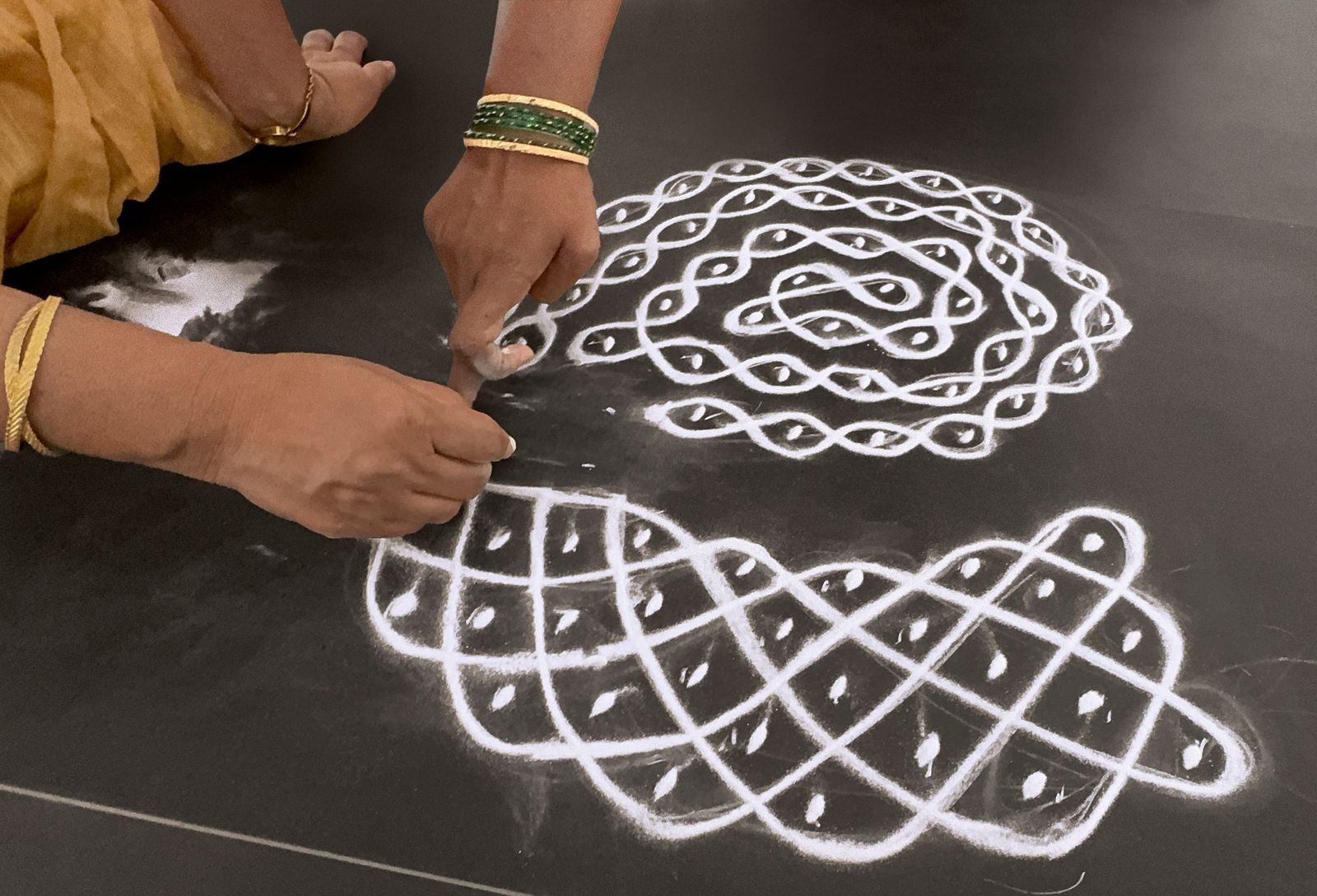
Kolam artists creating letterforms on the floor using rice flour.
Courtesy of The Typecraft Initiative