
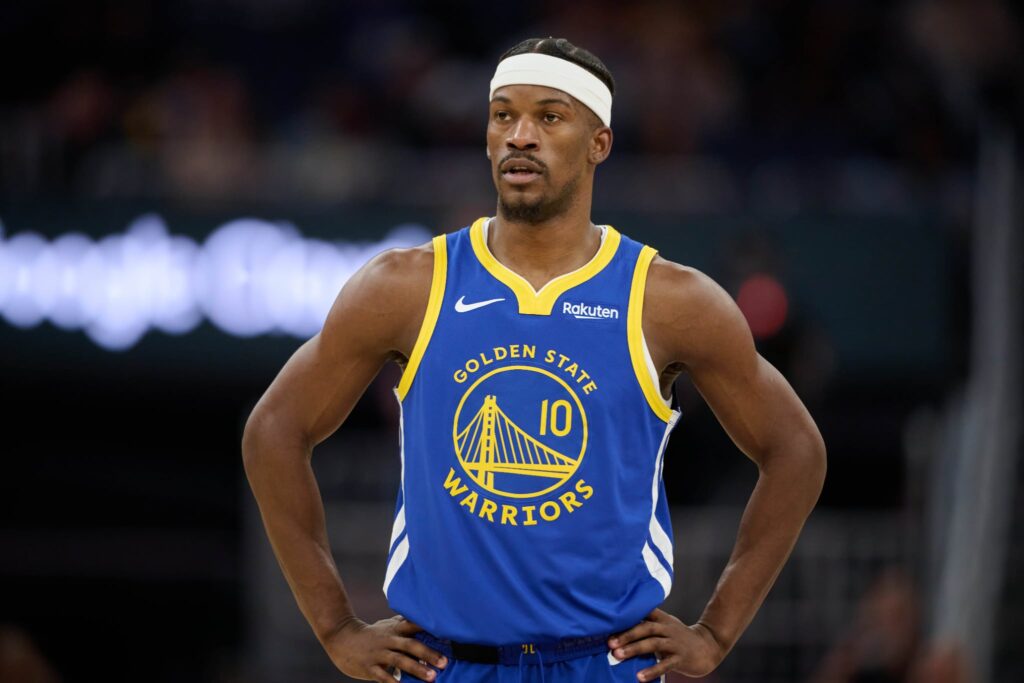
Ever since the second apron arrived, giving crazy money to stars hasn’t felt nearly as automatic as it used to. Expensive players have become way easier to dump when a team gets nervous about the payroll, and Karl-Anthony Towns going from the Timberwolves to the Knicks was probably one of the first huge examples I remember where a legit All-Star basically became movable partly because of how expensive everything around him was getting.
Contracts are starting to work the same way. Just look at Jalen Duren right now. He’s 22, coming off an All-Star and All-NBA season, and he’s seriously considering taking a $9.6 million qualifying offer because the Pistons have been around five years and $190 million, while his camp wants at least $200 million. Detroit simply doesn’t want to go all the way to that $40-plus million annual range.
So imagine being 31, 33, or 37, already making superstar money and asking a team to commit another $100 million, $200 million, or even $275 million. That’s where these eight guys are entering 2026-27. Some are fighting for one last max, others just want to make sure their next contract doesn’t suddenly look nothing like the one they’re finishing now.
Anthony Davis
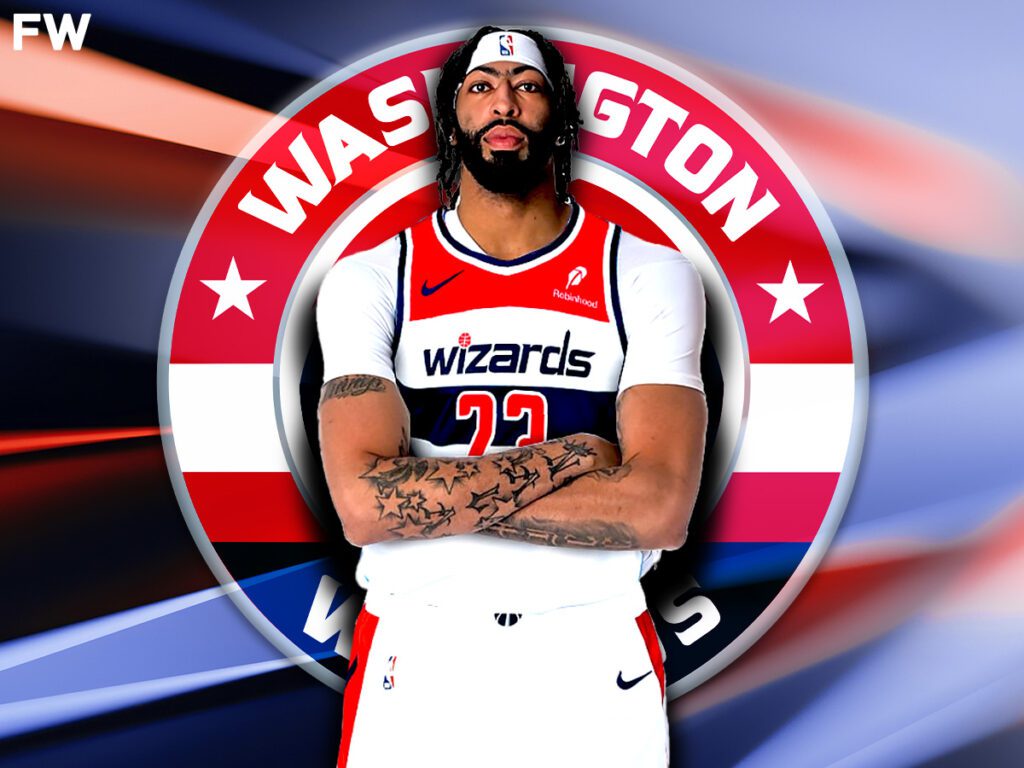 Credit: Fadeaway World
Four years and $275 million for Anthony Davis right now sounds crazy. The Wizards clearly aren’t ready to just give it to him, so both sides agreed to wait roughly the first 20 games of the season before having serious extension talks, basically giving Davis time to see whether Washington can actually compete and giving the Wizards time to see whether Davis can stay on the floor.
And Washington has every reason to be nervous. Davis played only 20 games last season and averaged 20.4 points, 11.1 rebounds, 2.8 assists, and 1.7 blocks. The numbers are still great when he actually plays, but we’re talking about guaranteeing almost $70 million per season to a 33-year-old big man who has spent a ridiculous amount of time on the injury report.
That’s why these first couple of months are basically his contract audition. If Davis comes out looking like an All-NBA player again, plays 18 or 19 of those first 20 games, and has the Wizards competitive next to Trae Young, AJ Dybantsa, and Alex Sarr, then he can at least start making the argument that somebody should get close to his asking price. If he’s already missing games by November, there’s almost no chance Washington suddenly feels better about $275 million.
And then the trade conversation comes right back. The Wizards weren’t interested in trading him during the summer, but that can change quickly if both sides get to December and realize their numbers are nowhere close. Davis has a $62.8 million player option for 2027-28, so he isn’t forced to accept some cheap extension either.
The problem for Davis is that I don’t know which contender is going to look at a 33-year-old with this injury history and happily give him four years and $275 million either. That’s why he needs this season so badly. Maybe Washington won’t give him every dollar he wants, but if he looks like Anthony Davis again for 60-plus games, he can force the Wizards or another contender to at least offer enough guaranteed money that he feels comfortable locking in what should be the final huge contract of his career.
Michael Porter Jr.
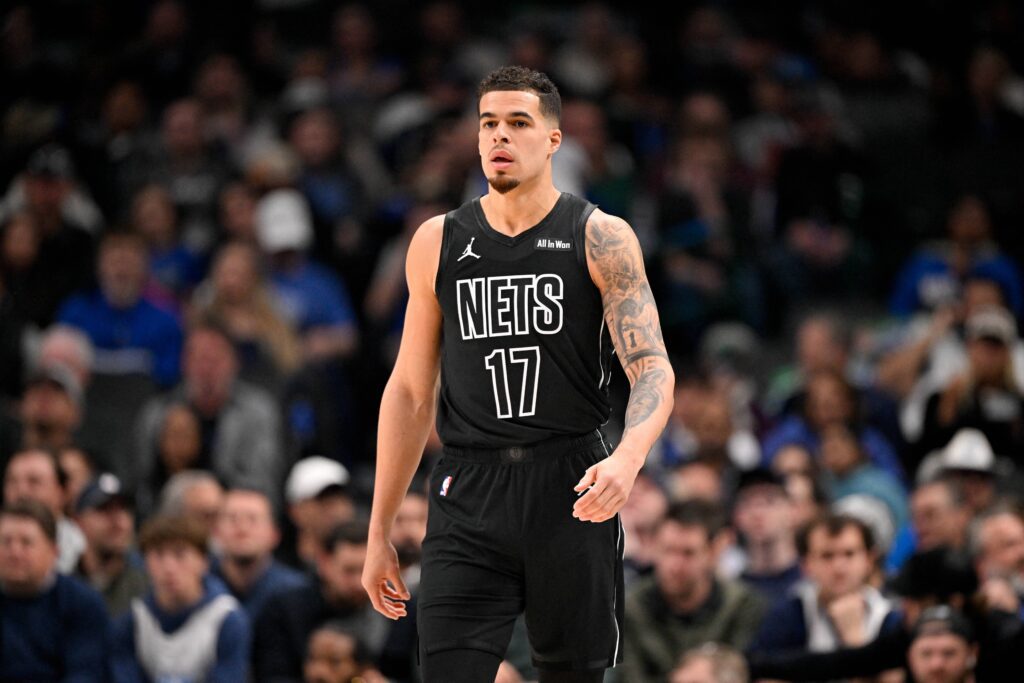 Mandatory Credit: Jerome Miron-Imagn Images
Last season was obviously impressive, but I’m still not fully buying those numbers as the new normal. Michael Porter Jr. averaged 24.2 points, 7.1 rebounds, and 3.0 assists in 52 games for the Nets while shooting 46.3% from the field, 36.3% from three, and 85.9% from the line. That’s easily the biggest offensive season of his career, but Brooklyn went 20-62, and Porter basically had all the freedom in the world to shoot. Someone had to score on that team.
Now he enters the final year of his contract, making $40.8 million, and technically he’s eligible for an extension worth up to four years and $234 million. I just can’t see anybody giving him something close to that, and the Nets and Porter have reportedly struggled to get on the same page about an extension.
His health doesn’t help either. Porter only played 52 games last year, and we’re still talking about somebody whose back history has followed him basically since before he entered the NBA. At 28 years old, Brooklyn has to decide whether paying him another $40 million-plus annually makes any sense when this roster is still young, bad, and nowhere close to the point where locking veteran money into Porter changes its ceiling.
That’s why I think he’s one of the biggest trade candidates in the NBA. If the Nets don’t want to pay him, getting value before he becomes an unrestricted free agent makes much more sense than simply riding this out. His $40.8 million expiring contract also becomes extremely useful salary in a larger deal, and a contender could talk itself into his size and shooting much easier than Brooklyn can talk itself into another four expensive years.
For Porter, 2026-27 is about proving last season wasn’t just a Nets bubble. If he gets traded to a good team, becomes the No. 2 or No. 3 option and still gives you 20-plus points on strong efficiency, then suddenly there’s an argument for somebody giving him another huge contract.
I still wouldn’t touch $40 million per year personally. But if Porter wants a contender to put serious money on the table next summer, he has to show his production travels somewhere where the games actually mean something.
Karl-Anthony Towns
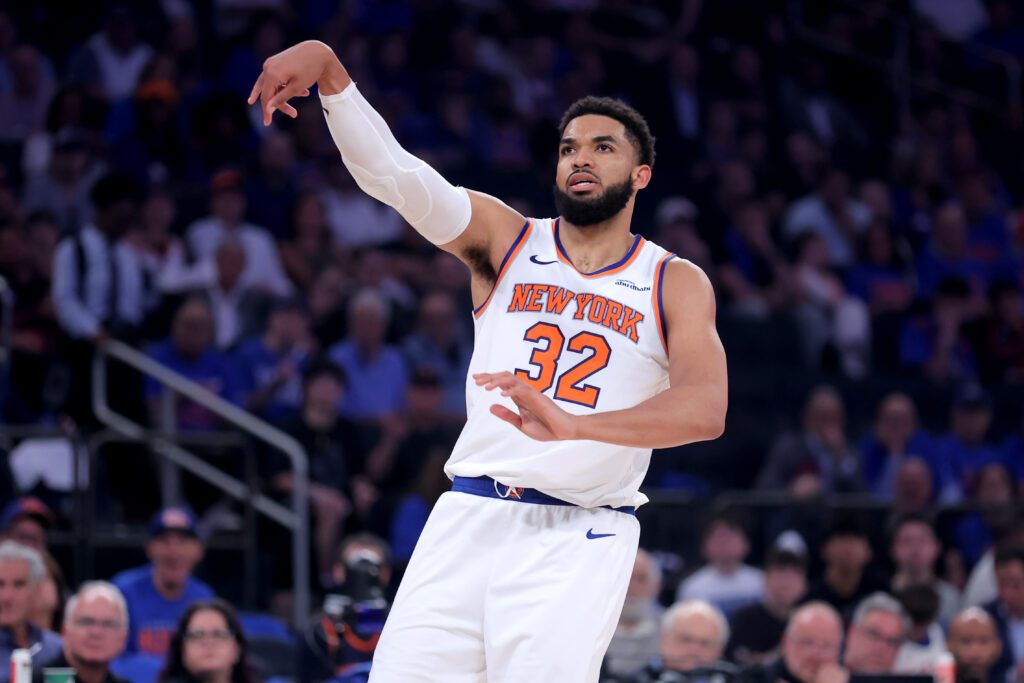 Mandatory Credit: Brad Penner-Imagn Images
Winning the championship changed the argument around Karl-Anthony Towns completely, but it didn’t magically make a four-year, $272 million extension easy for the Knicks to swallow.
KAT averaged 20.1 points, 11.9 rebounds, and 3.0 assists in 75 games last season, shooting 50.1% from the field, 36.8% from three, and 85.8% from the line. He made his sixth All-Star team and, more importantly, finally erased that entire conversation about whether a team could win a championship with him playing a central role.
Now comes the awkward part, as a small discount could help New York keep this championship core together long-term. We’re not talking about Towns suddenly taking half his value, but even giving back $7 million to $10 million over multiple seasons can become important when Brunson, Mikal Bridges, OG Anunoby, and everybody else are already expensive.
For Towns, I don’t think the goal necessarily has to be squeezing every final dollar out of New York. The important thing is getting enough years and guaranteed money to make this his last huge contract. He’s turning 31, so a four-year extension takes him right through ages 32, 33, 34, and 35. That’s basically perfect timing if you’re the player.
If New York doesn’t want to go that long or anywhere close to the max, then Towns has another decision later. He can keep playing out his current deal and eventually reach unrestricted free agency, where another team could come in. Of course, that path also carries risk because the older he gets, the harder it’ll be to convince somebody to guarantee four massive years.
That’s why another All-Star season would be huge. If Towns gives the Knicks 22 points and 12 rebounds, stays healthy and they remain one of the best teams in the East, his leverage is pretty obvious. New York might still ask for a discount, but Towns can make sure we’re talking about a discount from an enormous contract rather than the Knicks seriously reducing the years or money.
He already won the ring. This season is basically about turning that championship value into one final contract that keeps paying him star money well into his mid-30s.
Zach LaVine
 Mandatory Credit: Kelley L Cox-Imagn Images
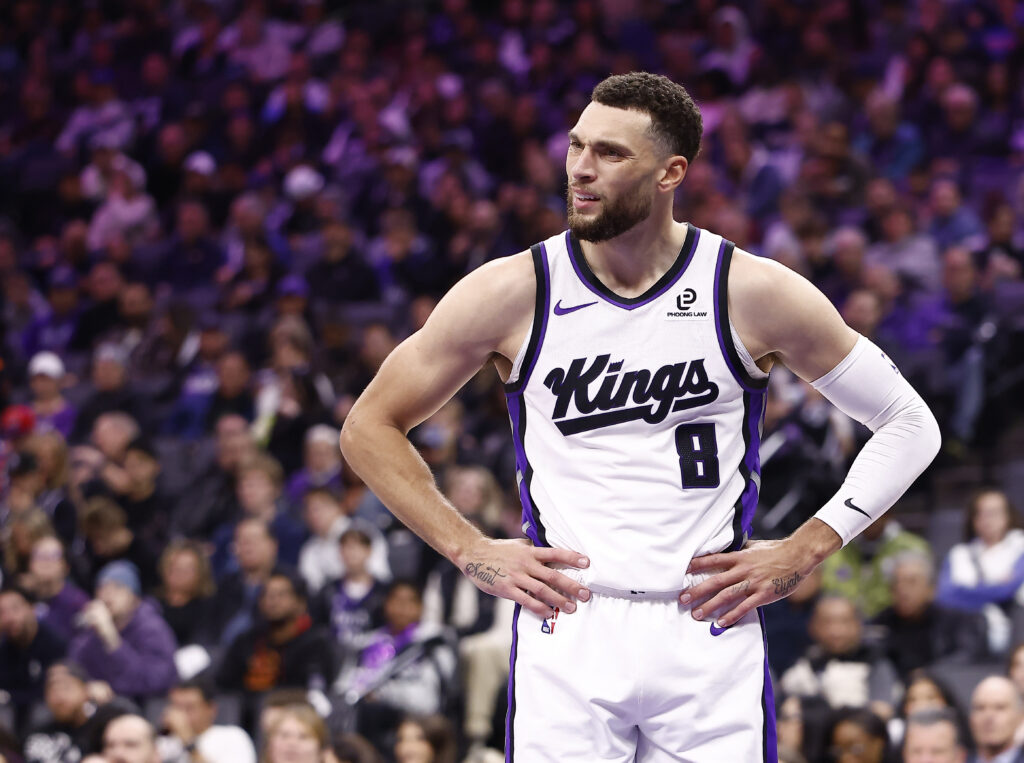
Zach LaVine picked up his $49.0 million player option for 2026-27 because there was no chance he was finding that number in free agency, and now he’s entering the final year of the five-year, $215.2 million contract he originally signed with the Bulls.
Sacramento has continued looking at trade possibilities too, so everything points toward this being his final season with the Kings unless something changes dramatically. The interesting part isn’t whether LaVine can land another max. He can’t. It’s whether he can avoid the type of late-career financial cliff we’ve seen happen to other former stars.
DeMar DeRozan eventually fell all the way to a minimum contract. Bradley Beal went from one of the worst giant contracts in basketball to trying to rebuild his value on a much cheaper deal. LaVine doesn’t want to be the next name in that group two summers from now.
Last season didn’t help enough. He averaged 19.2 points, 2.8 rebounds, and 2.3 assists in just 39 games, although he still shot 47.9% from the field and 39.0% from three. The shooting clearly hasn’t disappeared. The problem is paying serious money to a 31-year-old guard who keeps missing time and doesn’t give you elite defense or playmaking.
So forget $49 million. I think the actual target here is proving he can still be a $20 million-plus player, hopefully much more if he has an All-Star-level bounce-back year. Give Sacramento 65 or 70 games, get back over 22 points per game, keep shooting around 40.0% from three, and suddenly a multi-year deal in that $20-$30 million annual range becomes much easier to imagine.
If he misses another 35 games and stays around 19 points, things can get ugly. He’s entering unrestricted free agency next summer, and once teams start viewing you as an aging scorer rather than an All-Star, that market can disappear ridiculously fast.
Jimmy Butler
 Mandatory Credit: Darren Yamashita-Imagn Images
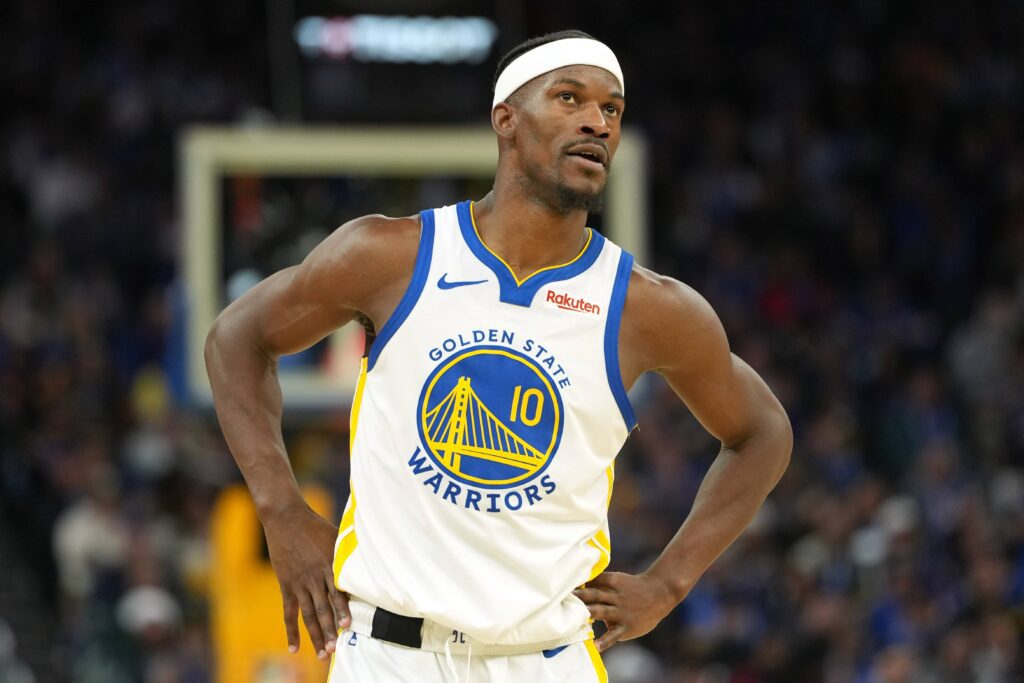
Before tearing his ACL, Jimmy Butler was still playing excellent basketball for the Warriors, averaging 20.0 points, 5.6 rebounds, 4.9 assists, and 1.4 steals in 38 games while shooting 51.9% from the field. He was also at 64.6% true shooting, so the actual decline wasn’t really showing up in his efficiency yet.
But $56.8 million this season is superstar money, and Butler isn’t getting that number again. He’s 37, he’s coming back from an ACL tear, and he’ll become an unrestricted free agent in the summer of 2027.
That doesn’t mean the next contract has to be a minimum. Golden State is old anyway. Stephen Curry is 38, and Draymond Green is 36, so if Butler comes back and still looks anywhere close to an All-Star, the Warriors could easily decide that another one or two expensive years make more sense than trying to completely rebuild around Curry’s final seasons.
Butler just has to prove there’s still enough left. If he’s giving them 18-20 points, five rebounds and five assists, still getting to the line and still capable of defending in important games, he can probably squeeze one last strong contract out of Golden State or somebody else.
He isn’t fighting for superstar money anymore. That part is probably gone forever. He’s fighting to make sure his final NBA contract still looks like one given to a star rather than an old veteran teams are only willing to take year by year.
Kyrie Irving
 Mandatory Credit: Jerome Miron-Imagn Images
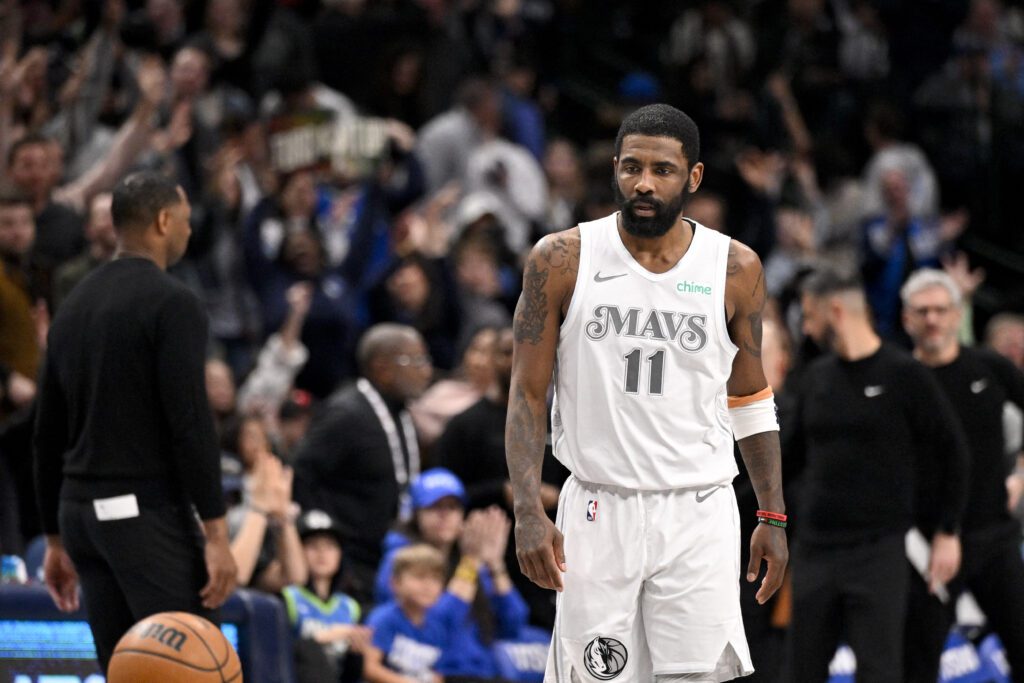
Kyrie Irving hasn’t played an NBA game since March 2025, so before we talk about money, he basically has to remind everybody what he looks like.
The Mavericks shut him down for the entire 2025-26 season while he continued recovering from the torn ACL in his left knee. The latest update is encouraging, with Irving expected to be ready for 2026-27, but that’s still an enormous layoff for a 34-year-old guard.
The last version we saw was still great. Irving averaged 24.7 points, 4.8 rebounds, and 4.6 assists before the injury, and Dallas gave him a three-year, $119 million contract in 2025. The final season, 2027-28, is a player option, so a strong comeback could put him right back into the free-agent market next summer if he decides to decline it.
That’s why this year has pretty obvious financial consequences. If Kyrie comes back, stays healthy, and looks like the same 24-point scorer next to Cooper Flagg, then there should still be one more serious contract available. Maybe Dallas does it, maybe another team does, but elite shot creation and shooting won’t suddenly stop having value.
If the ACL takes away some explosion or he can’t stay available, then that 2027-28 option starts looking much more attractive. Irving is a possible trade candidate depending on how Dallas views his fit with Flagg’s timeline, and other teams will obviously want to see the knee before committing major money.
Irving doesn’t need to prove he’s skilled enough. He has to prove he’s still healthy enough to be paid like Kyrie Irving instead of like a 35-year-old guard teams don’t trust for more than one or two seasons.
Julius Randle
 Mandatory Credit: Jesse Johnson-Imagn Images
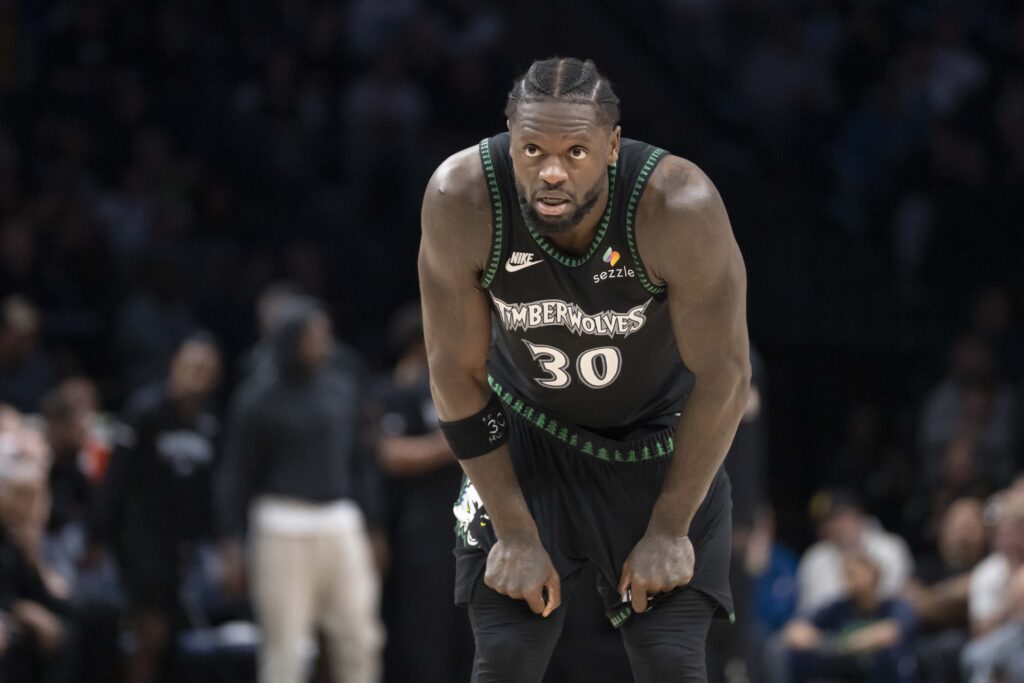
Being good enough to average 21 points per game and still having your team attach a first-round pick just to move your contract isn’t exactly the best way to enter your next negotiation.
That’s basically what happened to Julius Randle. The Timberwolves sent him and the No. 28 pick to Brooklyn while moving up only five spots to No. 33, a deal widely viewed as Minnesota paying the Nets to absorb his salary and create financial flexibility. Randle is making $33.3 million this season and has a $35.8 million player option for 2027-28.
And it’s not like he was terrible. Randle averaged 21.1 points, 6.7 rebounds, and 5.0 assists last season. The playoffs were much worse, with his shooting falling to 39.0% from the field and 24.4% from three, but this is still a three-time All-Star who can create offense, rebound, and pass.
The issue is how the league values that package now. Minnesota was a contender and decided it preferred flexibility for the LaMelo Ball trade. Brooklyn is rebuilding and basically got paid with draft capital to take him. That’s a pretty loud signal for somebody who could opt out next summer and test unrestricted free agency.
Randle needs to change that perception. If he has a strong season in Brooklyn, puts up something around 22-8-5 and gets his efficiency back up, he can show contenders that he’s still worth a proper multi-year contract. If it goes badly, taking the $35.8 million option becomes the obvious move, and the next free agency gets scarier.
He’s only 31, but we’ve seen how fast this happens. One minute you’re making $30 million-plus, then suddenly you’re Russell Westbrook bouncing between teams on short deals because nobody wants to make a major commitment anymore.
Randle’s fight isn’t really for another max. It’s making sure that when this contract ends, the league still views him as somebody worth committing more years and money to.
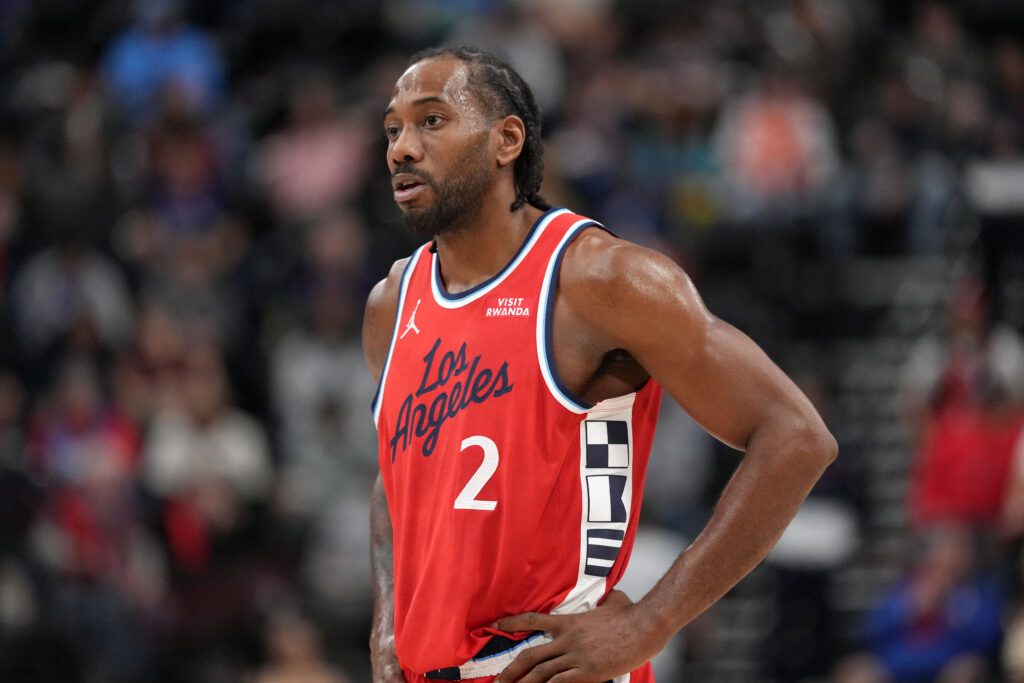
Kawhi Leonard
 Mandatory Credit: Kirby Lee-Imagn Images
The Raptors finally completed the trade to bring Kawhi Leonard back, and he even waived his entire 15% trade kicker worth about $7.45 million to help Toronto fit the deal under its first-apron hard cap. That’s a pretty significant concession from a guy who could’ve simply taken the extra check.
There’s a pretty obvious reason he was willing to do it: Leonard has one year and $50.3 million left on his contract, and he’s eligible for a two-year extension worth approximately $123.7 million. When the trade was originally agreed, Toronto planned to sign him to the max extension, so he isn’t really in the same category as these other guys.
And after last season, Toronto doesn’t have much reason to hesitate if the medicals look good. Leonard averaged 27.9 points, 6.4 rebounds, 3.6 assists, and 1.9 steals in 65 games while shooting 50.5% from the field, 38.7% from three, and 89.2% from the line. He was still playing at a superstar level.
So Kawhi isn’t fighting nearly as hard as everyone else here. The deal looks almost inevitable, especially after he already gave up $7.45 million to facilitate the trade.
Still, until the two-year extension is actually signed, he belongs on the list. At 35 years old, those additional $123.7 million would almost certainly be the final monster contract of his career, and after everything that happened with the Clippers, getting Toronto to officially put it on paper would finish this story pretty quickly.