
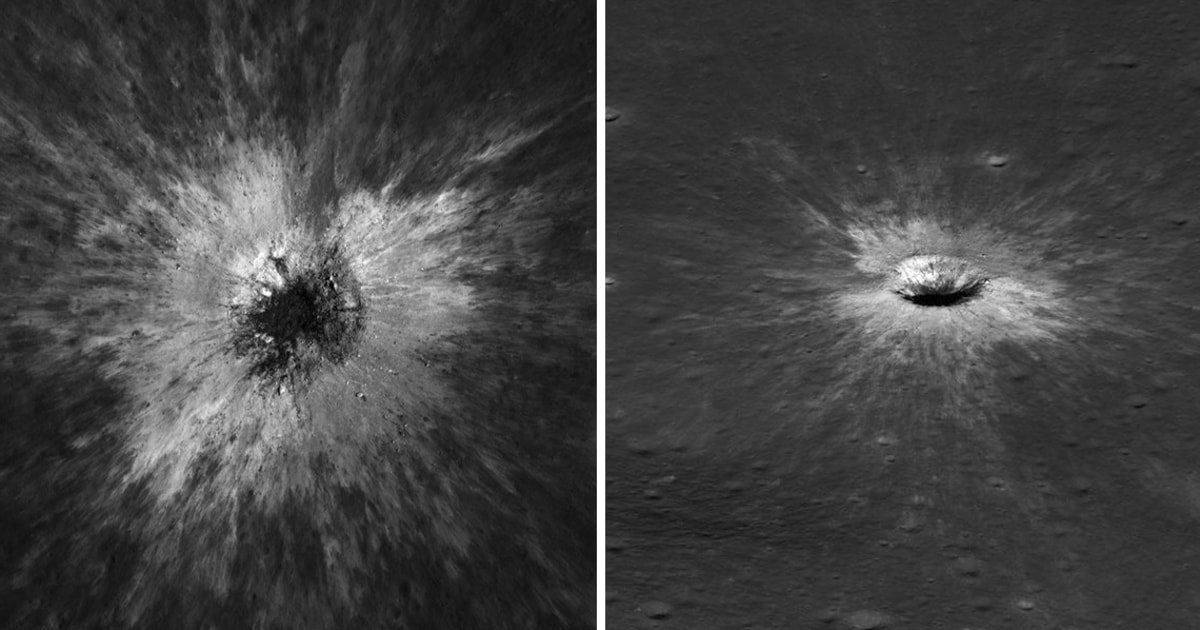
The crater — named for the late Thomas McGetchin, a former director of Houston’s Lunar and Planetary Institute — is three times bigger than the previous record-holder found by the LRO a decade ago. Pockmarked since ancient times, the moon bears some of the solar system’s largest impact craters, including one that stretches more than 1,500 miles across.
This latest impact churned the lunar surface for more than 66 miles. Dust and rocky soil were hurled away at a higher angle than expected, according to Mark Robinson, chief scientist for the LRO’s cameras who works at Intuitive Machines. Robinson was the lead author for one of the studies.
A separate study identified a 4-mile-wide cold spot around the new crater, consistent with a loosening of the moon’s top soil. Co-author David Paige of the University of California, Los Angeles, likens it to gardening.
“We’re now thinking of impacts as a way to garden the regolith — churning the sediments and putting stuff above that’s usually below the surface,” Paige said in a statement.
The LRO’s numerous crater discoveries since its launch in 2009 show that the moon’s top inch of soil is being overturned by ejected material every 80,000 years, faster than previously thought, according to Robinson.
Contrary to the popular belief that the Apollo moonwalkers’ dusty lunar footprints will last forever, they will “definitely be long gone in that time frame,” Robinson said in an email.
The next step is to calculate the risk of ejected crater material striking NASA’s planned moon base, he added. “That information will help engineers harden structures so one won’t have to worry about damage, or maybe worry less.”