
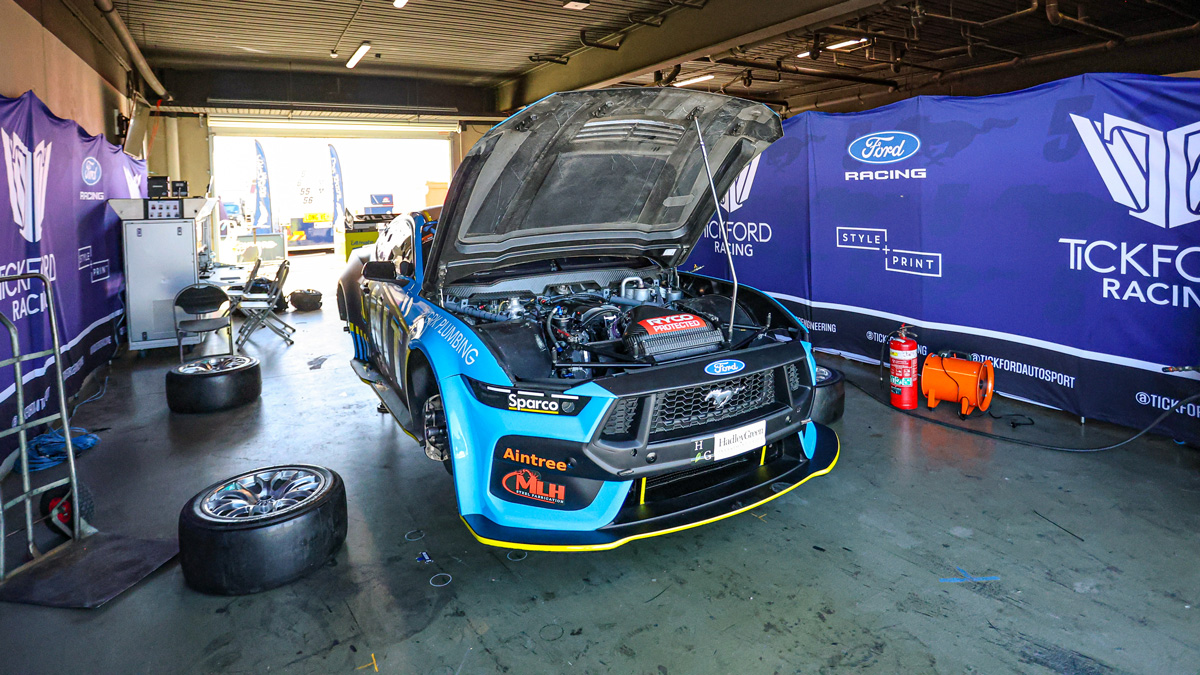
AN update aimed at strengthening the Ford Supercars engine almost certainly won’t be delivered prior to the Repco Bathurst 1000.
That’s the word from Jamie Whincup, whose Triple Eight organisation this year took over as the party responsible for the 5.4-litre Coyote V8.
Engine reliability for the Blue Oval emerged as a sudden concern at last month’s Ipswich Super440, where Matt Payne suffered a notable failure that cost him the Repco Sprint Cup. Rylan Gray also encountered an issue the day before, as did the #88 Red Bull Ampol Mustang at the post-event test.
Several Ford runners encountered engine overheating during the AirTouch 500 at The Bend, but that was suspected to be more to do with blocked radiators due to off-track excursions through mud.
The focus remains on the impact of overrevs on the timing chain – firstly to encourage drivers to apply mechanical sympathy, and secondly to eventually push through a fix.
“After those two incidents at QR, we recognised the core of the issue is overrevs, but can we make the engines stronger so that they can cop some overrevs? And we have got a plan in place to do that,” Whincup told V8 Sleuth.
“It will take some time to put those parts in and validate them with (Supercars engine specialist) Craig Hasted.”
Asked if that would happen before Bathurst, Whincup replied: “It’s still to be confirmed. It’s all about availability, and then it’s literally how much time.
“It’s very, very unlikely it’s going to happen before Bathurst because you want all 11 cars (i.e. the full allotment of Mustangs) exactly the same.
“We’re never going to have enough time to do all 11 engines in the space of four weeks. It will probably be something that we look at down the track.”
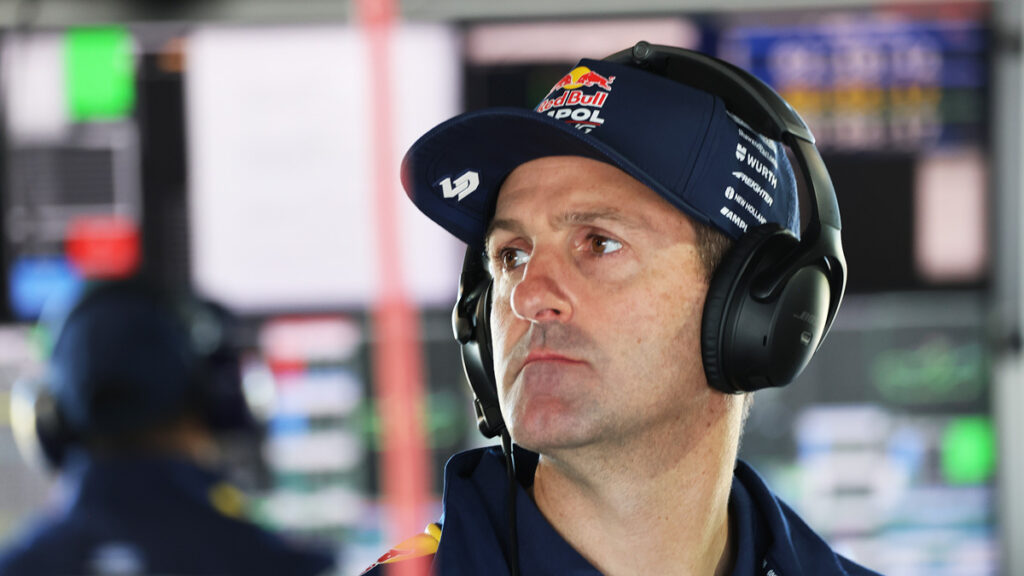 Jamie Whincup. Pic: Mark Walker
An engine matter that has been promised to be addressed pre-Bathurst is the category’s completion of barometric pressure testing studies.
Supercars identified last year that the Ford motor was more adversely affected by altitude than its Chevrolet counterpart, but that was only based off work done on the inlet, with analysis on the exhaust side still to come.
“All we’re looking for is to make sure there’s no deficiency there. I think the testing will be done and if there is something technically there, they’ll change it. If not, we’ll go as we are,” said Whincup.
Supercars also conducted Centre of Gravity parity tests across the past three days in Melbourne, the results of which are to be announced.
REVEALED: The cars to be used in CoG testing