

September 18, 2026 — 5:00am
Save
You have reached your maximum number of saved items.
Remove items from your saved list to add more.
AAA
A 400 per cent spike in influenza cases across Victoria is expected to continue rising over the school holidays, placing pressure on emergency departments and fuelling an increase in workplace absences.
Chief Health Officer Dr Caroline McElnay said this year’s influenza season had arrived unusually late, and was set to peak well past the traditional mid-winter surges observed in 2024 and 2025.
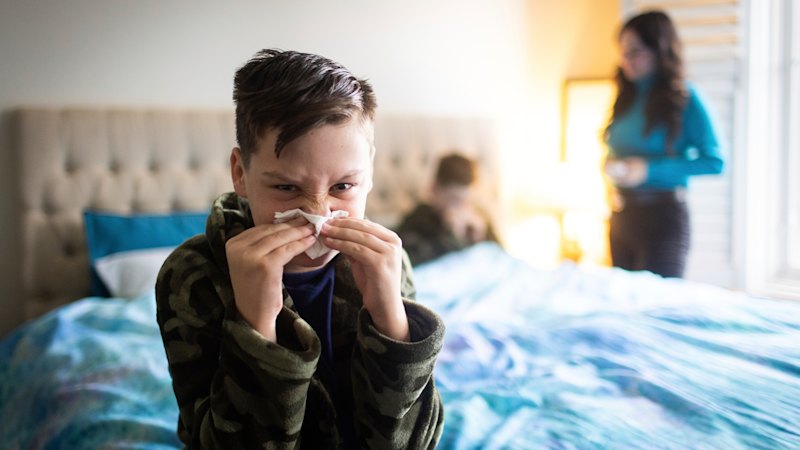
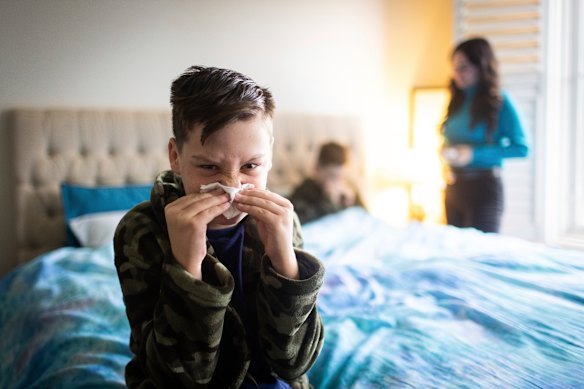 Victoria’s flu season has not yet reached its peak.Paul Jeffers
“We’re seeing a rise in our notifications for respiratory illnesses, and that’s driven by influenza. We’re seeing that later this year than what we’ve seen in previous years,” she said.
“Because the temperature starts to heat up now … there’s a tendency to think, ‘Well, we’re out of flu season now.’ We’re absolutely not. Our numbers are increasing.”
McElnay said it was unclear why this year’s influenza season was delayed, but a similar pattern had played out in New Zealand and NSW.
“We honestly don’t know why we’re seeing it late,” she said.
Health Department data shows that influenza notifications have risen by 400 per cent over the past seven weeks, with influenza A responsible for most infections. Almost 3000 new influenza cases were recorded across the state during the last week of August, according to the latest data. COVID infections have remained stable during this period, while respiratory syncytial virus (RSV) cases have declined.
As thousands of families prepare to embark on school holidays next week, McElnay urged people to take extra precautions to protect vulnerable relatives and those with compromised immune systems.
Related Article
“If your child is sick, keep them at home … they themselves might not be too sick, but if an older family member catches it, they may be very unwell.”
She said it was not too late to get the influenza vaccine, which was one of the best ways to protect against severe disease.
Influenza vaccination rates have tumbled for all age groups since 2020.
Just 39.3 per cent of children aged 6 months to 2 years are vaccinated against the flu, compared with 54.4 per cent in 2020.
Last year, around 119,000 influenza cases were detected in Victoria, with infections peaking in mid-July. This year, around 28,000 cases have already been recorded, but this number is expected to rise exponentially as flu season kicks off.
The Department of Health said the continued circulation of influenza could increase disruption to workplaces, schools and childcare settings.
The rise in infections is also impacting emergency departments and placing pressure on the state’s health workers, who are home sick or caring for unwell children.
Emergency department presentations for acute respiratory infections have risen by 25 per cent over the past six weeks, mainly driven by children aged five to 17.
At the Royal Melbourne Hospital last weekend, the bulk of patients admitted to the respiratory unit from the emergency department were suffering from influenza A.
Associate Professor Megan Rees, director of the respiratory medicine and sleep disorders department at the Royal Melbourne Hospital, said many of these patients required extra oxygen to help their breathing, antiviral medication and hydration.
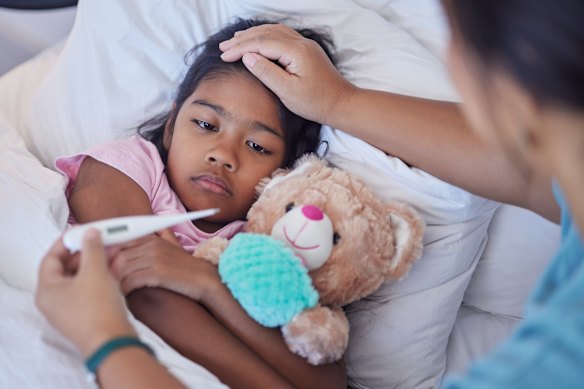 Victoria’s flu season has not yet reached its peak.Getty Images
“It is a dominant spike that we’ve seen over the last few weeks,” she said. “I don’t know where it’ll end.”
She believes that climate change and the pandemic disrupting the cycling of viruses through the community may have led to a later-than-normal flu season compared to the last few years.
Related Article
“When I was training decades ago, flu season always peaked in September … but that was before climate change was as severe as it is now and when we still had snow on the mountains … it didn’t seem so unusual.”
She said older people and those with underlying health conditions such as asthma, emphysema and chronic obstructive pulmonary disease, were more likely to require hospital treatment.
Rees said the virus could exacerbate other chronic conditions such as heart failure or diabetes by triggering inflammation, causing cells across the body to function poorly.
This can also lead to secondary bacterial infections such as pneumonia, which might develop weeks later.
“Your immune system becomes impaired as a result,” Rees said. “The inflammation has meant that their normal capacity to fight off bacterial infections has diminished.”
While vaccination doesn’t always prevent infection, Rees said immunisation helps the body fight the virus more effectively.
“In the hospitalised group, people who are vaccinated probably present less often than people who are unvaccinated, and have less severe disease when they come in,” she said.
She also recommended regularly washing hands with soap and warm water and wearing masks in crowded spaces such as airports.
Related Article
Rees said contrary to popular opinion, planes often have very effective cleaning and extraction systems.
“It’s often that embarkation and disembarkation, when you’re in a crowd of people, where you might be exposed. If you were going to wear a mask at any time during plane travel, it would be on that onboarding and offboarding.”
She said people with a chronic heart or respiratory condition should consider wearing masks on public transport.
Dr Nader Abou-Seif, a GP from Hoppers Crossing, in Melbourne’s west, has been treating an increasing number of patients with influenza A over the past two to three weeks.
He said this rise in cases followed a relatively quiet period during the winter months.
“It’s a lot later than what I was expecting,” he said of the influenza season.
He said patients were exhibiting symptoms including congestion, sore throat, fever, lack of energy and a cough.
“They feel very ordinary,” he said. “The acute illness lasts around a week but the lack of energy that follows and the cough can go on for many weeks.”
Abou-Seif advises patients suffering from influenza to rest, make sure they are adequately hydrated and to seek medical attention if they are having trouble breathing.
He said it was not too late to be vaccinated against the flu, and an increasing number of patients had been booking immunisations at his clinic.
The Examine newsletter explains and analyses science with a rigorous focus on the evidence. Sign up to get it each week.
Save
You have reached your maximum number of saved items.
Remove items from your saved list to add more.
 Henrietta Cook is a senior reporter covering health for The Age. Henrietta joined The Age in 2012 and has previously covered state politics, education and consumer affairs. Email her via henrietta.cook@theage.com.au or henrietta.cook@protonmail.comConnect via X, Facebook or email.From our partners