
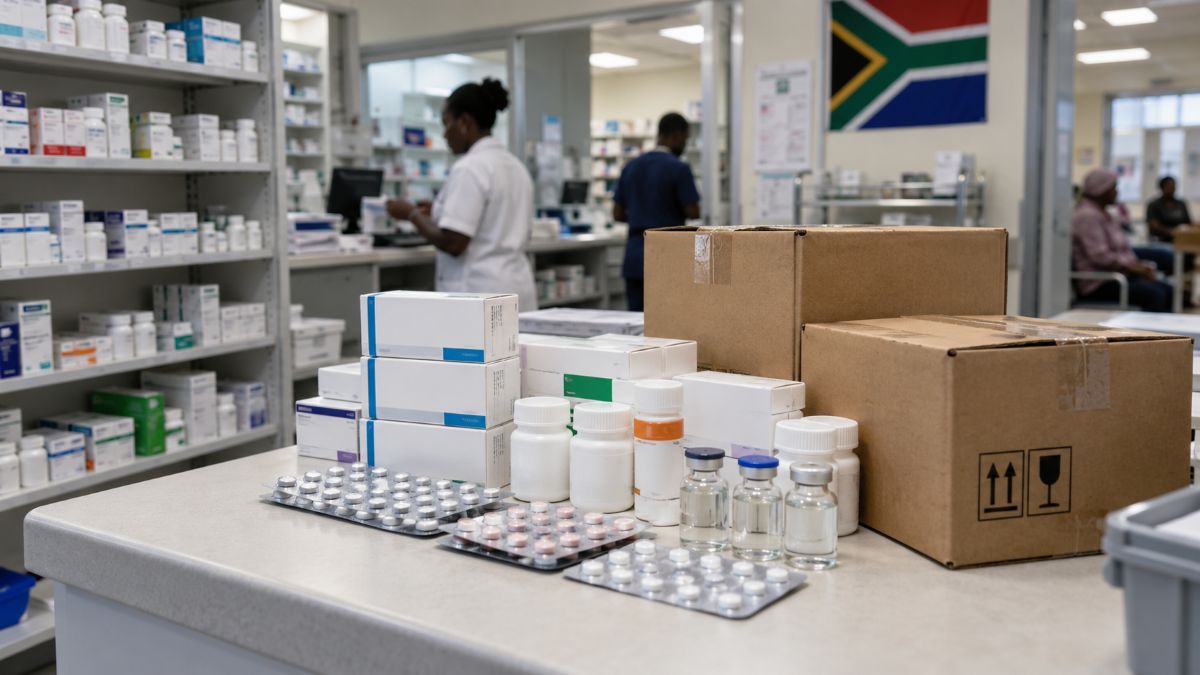
South Africa is currently relying on special regulatory authorisations to secure a range of essential medicines used in the treatment of tuberculosis, cancer, severe respiratory conditions, epilepsy and life-threatening medical emergencies.
The extent of this intervention is reflected in the National Department of Health’s current Section 21 medicine register, which lists 19 active authorisations covering medicines ranging from tuberculosis treatments and chemotherapy drugs to rabies immunoglobulin, seizure medication and nebulised salbutamol.
 PAID ADVERTISING: Visit Pixelfish Marketing to get shopping by tapping the advert
However, the presence of a medicine on the list does not necessarily mean it is unavailable at every South African hospital or clinic.
Rather, the Department of Health explains through its Affordable Medicines Directorate that Section 21 authorisations provide a mechanism to source medicines internationally when sufficient registered stock is unavailable in South Africa.
The process allows the South African Health Products Regulatory Authority (SAHPRA) to authorise access to medicines that are not ordinarily registered for sale in the country when they are required to meet an urgent clinical need.
According to the Department, this mechanism is used when an essential medicine is unavailable for an unmet medical need and there is no suitable therapeutic alternative.
Against this backdrop, the current register provides a revealing look at the medicines for which government has had to establish an alternative supply route.
These presently include:
Streptokinase 1.5MIU injection, a clot-dissolving medicine used in certain serious cardiovascular emergencies.
Aciclovir 3% eye ointment, used to treat certain herpes infections of the eye.
Glyceryl trinitrate 1mg injection, used in the hospital management of acute cardiovascular conditions.
Rifabutin 150mg capsules, used in selected tuberculosis treatment and certain mycobacterial infections.
Atropine 100mg injection, which can be required in the treatment of serious poisoning, including organophosphate poisoning.
Bleomycin 15IU injection, a chemotherapy medicine.
L-Asparaginase 10 000IU injection, used in the treatment of certain blood cancers, particularly acute lymphoblastic leukaemia.
Human tetanus immunoglobulin 250IU injection, used where immediate protection against tetanus is required.
Rifampicin 150mg capsules, a cornerstone medicine in tuberculosis treatment.
Mitomycin 2mg injection, used in cancer treatment.
Bivalent oral poliomyelitis vaccine, used to protect against poliovirus.
Equine anti-rabies immunoglobulin, used following potentially serious rabies exposure.
Thiopentone 500mg injection, used in anaesthesia and certain critical-care situations.
Ethambutol 400mg tablets, an important tuberculosis medicine.
Vincristine 2mg injection, a chemotherapy medicine used to treat several cancers.
Phenobarbitone 30mg tablets, used in the management of seizures.
Salbutamol 2.5mg nebuliser solution.
Salbutamol 5mg nebuliser solution.
Protamine sulphate 10mg injection, used to reverse the anticoagulant effects of heparin.
The active authorisations extend from November 2026 into March 2027, with several medicines receiving extensions or renewed approval rather than appearing on the register only temporarily.
Furthermore, the presence of several tuberculosis medicines on the list carries particular significance in South Africa, where TB continues to place a substantial burden on the public healthcare system.
Rifampicin, rifabutin and ethambutol all feature on the current Section 21 register.
In the case of ethambutol, the National Department of Health had already confirmed the seriousness of the supply problem earlier this year.
In a circular issued by its Affordable Medicines Directorate on 29 April 2026, the Department formally advised healthcare facilities of the non-availability of ethambutol 400mg tablets.
According to the circular, existing available stock was due to expire at the end of April, while an alternative supplier identified by government was only expected to begin delivering stock during May.
The situation prompted the Department to issue temporary clinical guidance explaining how certain adult and paediatric TB patients should be managed while ethambutol remained unavailable.
Rifabutin has faced similar pressure.
In another Affordable Medicines Directorate circular, dated 23 March 2026, the Department confirmed supply constraints affecting rifabutin 150mg capsules and said it had begun the process of obtaining bulk Section 21 approval.
Healthcare professionals were subsequently provided with interim therapeutic options while imported supply was being arranged.
Months later, both rifabutin and ethambutol remain reflected on the Department’s active Section 21 medicine register.
Another example involves phenobarbital, a longstanding medicine used in the treatment and management of seizures.
In an availability update issued on 1 September 2026, the National Department of Health confirmed that South Africa had experienced a stock supply shortage of phenobarbital 30mg tablets.
While tablet supply had subsequently resumed, the Department explained that initial stock would still be accessed through Section 21 channels.
Once that stock was depleted, healthcare facilities would be required to procure the medicine through a quotation process involving another supplier.
At the same time, the Department confirmed that supplies of injectable phenobarbital obtained through Section 21 remained stable.
The existence of a Section 21 authorisation does not automatically mean patients are unable to obtain treatment. In several instances, the exceptional regulatory mechanism is precisely what allows government to prevent a complete interruption in treatment.
Medicine supply problems become more serious when doctors cannot simply switch patients to another clinically suitable product.
This was demonstrated in June 2026 when the National Department of Health was forced to restrict the use of Anti-D immunoglobulin following unforeseen operational delays experienced by the contracted supplier.
Anti-D immunoglobulin is used for several indications involving Rh-negative patients, particularly during pregnancy and following certain pregnancy-related events.
In its 24 June 2026 circular on Anti-D immunoglobulin, the Department explicitly stated that no therapeutic alternative agents were available.
Healthcare professionals were therefore instructed to prioritise and restrict its use until supply stabilised.
While Anti-D immunoglobulin does not presently appear on the Section 21 register, the incident highlights a broader vulnerability within medicine supply chains when South Africa relies on a limited number of manufacturers or contracted suppliers.
In addition, Government is also watching another list
Section 21 authorisations are only one part of South Africa’s medicine supply monitoring system.
The National Department of Health also maintains what it calls an Essential Medicines Supply Hot List, which is updated monthly and monitors contracted medicines experiencing substantial supply pressure.
According to the Department’s Affordable Medicines Directorate, a medicine qualifies for inclusion when its supply availability falls below 90%, outstanding orders exceed the stock available from the supplier, and provincial stock levels amount to less than two months of anticipated demand.
The Hot List also records the reasons for the supply problem and the remedial action being taken, with the situation reviewed through a national structure involving provincial health departments.
The latest published list covers August 2026.
This means the medicines appearing under Section 21 do not necessarily represent the full extent of supply pressure within the public healthcare system.
The Department of Health acknowledged this broader reality in a public statement issued on 1 September 2026, explaining that medicine shortages can arise from manufacturing interruptions, global shortages of raw materials, increased international demand, transportation disruptions and transitions between procurement contracts.
However, the Department also cautioned against interpreting every shortage as evidence that patients are being left without treatment.
According to the Department, medicine supply across the public healthcare sector remains stable overall, while shortages affecting a particular brand, pack size or supplier can often be managed by sourcing an equivalent medicine or using another clinically appropriate treatment.
Government further explained that medicine availability is continuously monitored through systems including the National Surveillance Centre and Stock Visibility System, allowing health authorities to identify emerging shortages and intervene before supply disruptions become more severe.
Nevertheless, the current Section 21 register provides an unusual window into where those interventions are already taking place.
From critical tuberculosis medicines and chemotherapy drugs to rabies treatment, seizure medication and medicines required during cardiovascular emergencies, the register shows that maintaining South Africa’s essential medicine supply sometimes requires government to go beyond ordinary procurement channels.
 PAID ADVERTISING: Contact Mosaic Funeral’s Today to ensure you and your partner are covered. Call them on 082 567 2526
In several cases, health authorities are having to look beyond South Africa’s registered medicine market altogether to ensure vital treatment remains available to patients.
What are your thoughts on all of this? Let us know below.
Do not forget to read: N3 Becomes Real-World Test Route for Electric Cars in South Africa