
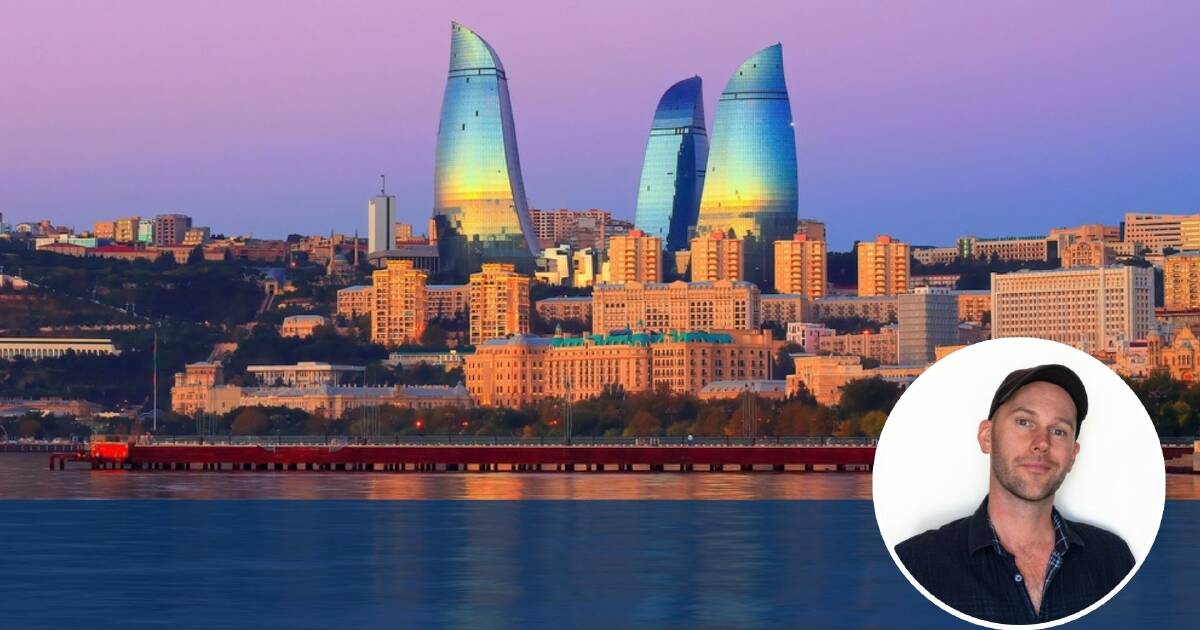
Drivers, start your engines. In the coming week, the cars will hit the streets of Baku for the Azerbaijan Formula 1 Grand Prix. If it seems like a bit of an obscure location, keep in mind that this is a sport with events in places like Bahrain, Saudi Arabia, and Monaco. What’s the common thread? Well, wealth, of course.
It can be hard to properly picture Baku until you visit, as I did last year on a trip with Bunnik Tours. The historic part of the city is full of marvellous heritage, including an extensive 15th-century palace and a mysterious stone tower, all best explored by just wandering through the maze of alleys, past mosques and caravanserais.
But it’s the spoils of the oils that really dominate, from the skyscrapers shaped like flames to the enormous white museum designed by Zaha Hadid. An army of streetsweepers seems to keep the capital permanently spotless, while huge office buildings in weird and wonderful shapes dot the shoreline of the Caspian Sea.
Although life in the fast lane may be fun, it’s when we shifted gears and headed out into the rest of the country that a more traditional view of Azerbaijan emerged. There’s no need to race, because the striking natural landscapes, medieval settlements, and rural villages offer plenty of pit stops.
Not far from Baku, and an easy day trip, is the region of Gobustan, where the most significant thing is a World Heritage Site of ancient petroglyphs. There are more than 6000 images here, some up to 40,000 years old, that include scenes of hunting and dancing.
Most tours to Gobustan also include a detour to the nearby ‘mud volcanoes’, which are metres-high mounds that bubble with gas and overflow with cold, wet mud. The final few kilometres to reach these mini muddy eruptions are controlled by local drivers who tackle the bumpy terrain at high-speed in battered old Soviet-era Ladas.
Another popular stop for visitors is Sheki, an ancient mountain city famous for its Silk Road history. Down the cobblestone streets are ancient inns and bazaars that are still used today as craft shops. Museums, restaurants, and walking trails can easily fill a day or two.
However, the main attraction here is the enormous 18th-century fortress that was built as a citadel for the city’s rulers. Through its high walls, past the studios of artisans, head straight for the highlight – Shaki Khan’s Palace. The detailed facade gives you a sense this is a special building, but it gets even better inside, where every bit of wall is covered in intricate painting and stained-glass windows turn rooms into kaleidoscopes.
On the way to Sheki from Baku, a stop in Nij will take you off the tourist trail. This small village surrounded by lush orchards is home to the Udi people, a small ethnic minority who are descendants of Caucasian Albania.
The old stone churches here offer a different perspective on the region’s complex history, which still has pockets of Christianity amongst the mainly Muslim population. The community has worked hard to preserve their unique language and traditions, and are happy to share the heritage with visitors, including the peaceful 17th-century Chotari Church.
From oil wells to oil wellness, the resorts in the town of Naftalan have an interesting take on a spa day. The luxury hotels here are famous for their baths of crude oil, which are thought to have therapeutic benefits. For a standard treatment, the oil will be heated to about 37 degrees and pumped into a bathtub, then you’ll spend about eight minutes submerged up to your neck before getting out and having someone scrape it all off you.
I have to confess that our tour didn’t go here so I haven’t tried it myself. Normally I prefer something a bit more refined.
For the more active, head north of Baku into the Greater Caucasus Mountains, where there’s lots of incredible hiking around the region of Guba. Rugged trails lead to the isolated village of Khinaliq, about 2300 metres high, that has its own language and some breathtaking views across the valleys.
The 3000 kilometre-long Transcaucasian Trail passes through this part of the mountains, so you’ll also be able to do some multi-day treks, if you’re interested. It takes walkers to winding mountain passes, sheer drops, and dramatic gorges, with ancient paths connecting the stone houses of more remote communities.
In the far south near the Iranian border, the landscape shifts as the air turns humid amongst thick subtropical forest. The scenery is reason enough to visit Hirkan National Park, where ironwood trees run down to mirror-like lakes, but many people also come for the wildlife. Along with hundreds of species of birds, there are deer, boars, and bears but the most famous resident, the endangered Caucasian leopard, is rarely spotted (despite being… well, spotted).
But you won’t have any trouble finding things to do in Azerbaijan. The focus may be on the laps of luxury at the Formula 1 in Baku this week, but don’t be afraid to leave the track.