
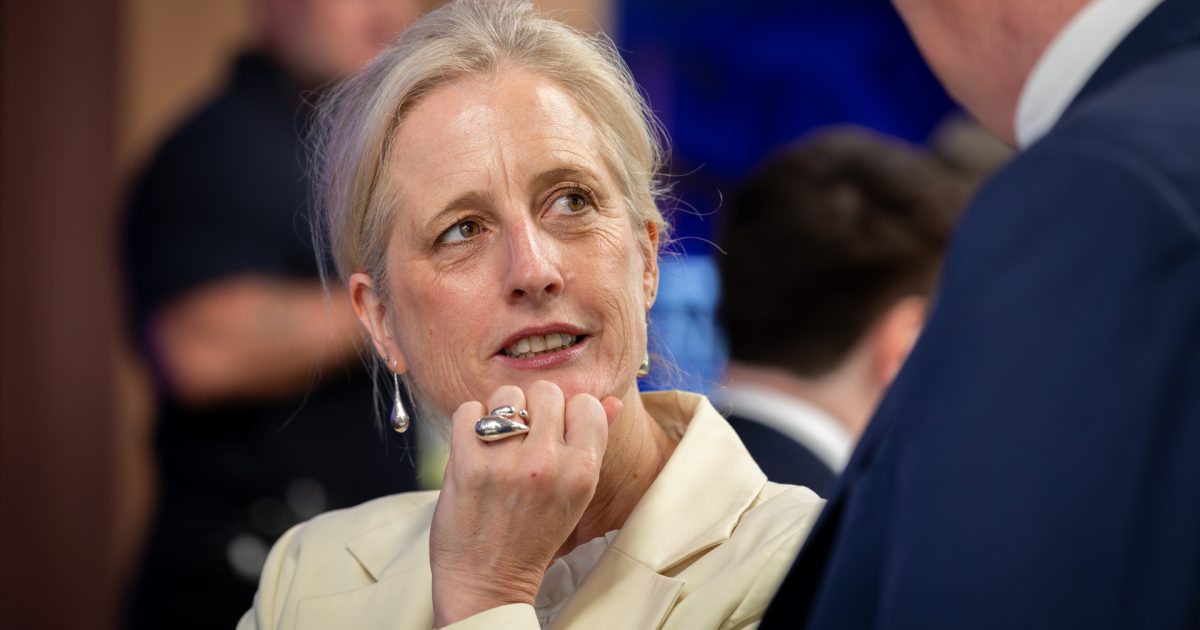
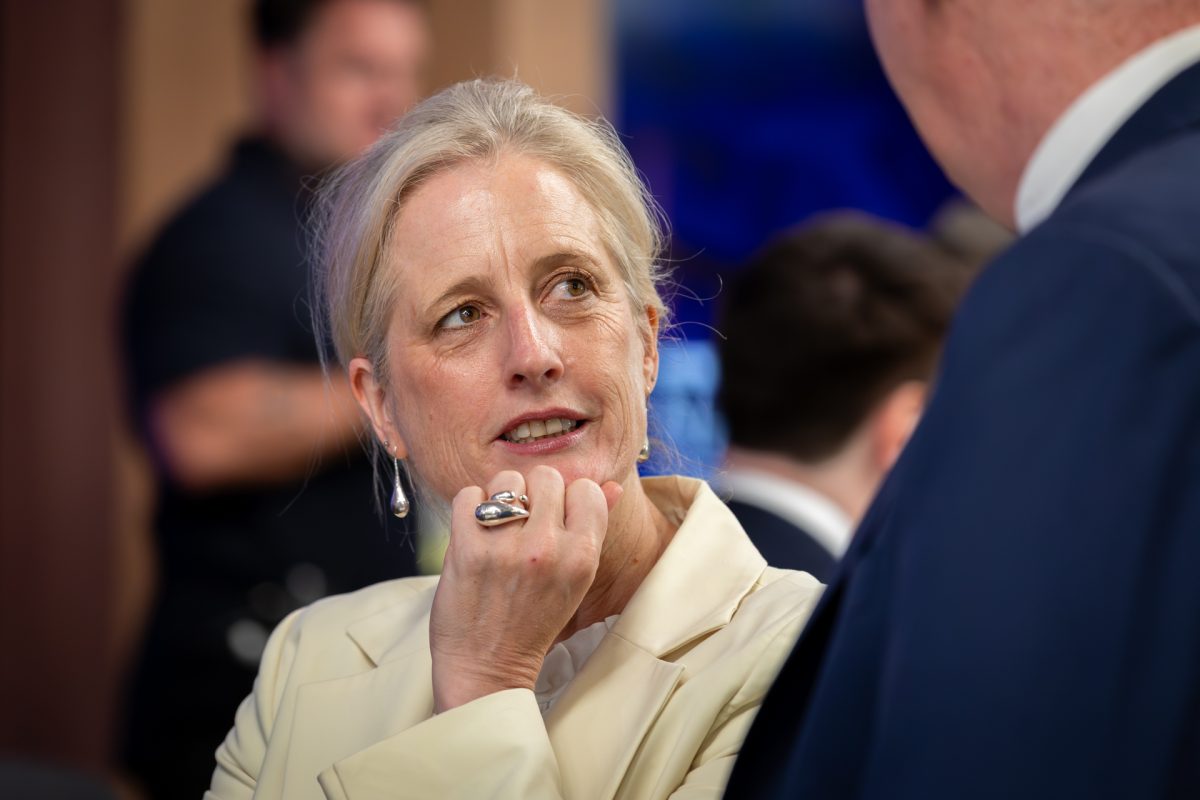
Senator Katy Gallagher at the National Press Club. Photo: Michelle Kroll.
Australia has made its debut as a top 10 country in terms of gender equity, but is still outshone by New Zealand.
Australia is ranked eighth out of 148 countries in the World Economic Forum’s 2026 Global Gender Gap Report, achieving its highest ever ranking for gender equality.
New Zealand has been in the top 10 for a while and sits at number six.
For the past two decades, the Global Gender Gap Index has benchmarked progress towards gender parity across four dimensions – economic participation and opportunity; educational attainment; health and survival; and political empowerment.
The index provides a consistent measure of the present state of gender parity, as well as the long-term evolution of global efforts to close the gender gap.
Anthony Albanese is delighted at the result, saying it reflects his government’s “sustained action to improve the lives of women and girls”.
This includes lifting wages in female-dominated industries, expanding Paid Parental Leave to six months with superannuation and making significant investments in women’s health, the Prime Minister said.
It also reflects the progress made on women’s representation in government, with women making up the majority of Cabinet for the first time and more women serving across the Federal Parliament.
“My government is committed to creating a fairer, safer and more equal society for Australian women and girls,” Mr Albanese said of the report on Wednesday (16 September).
“Our efforts are bearing fruit, with Australia now sitting in the top 10 countries for gender equality worldwide.
“When we first came to government we were ranked 43rd – and slipped to an all-time low of 50th under the previous Coalition government.
“The job is not done and we will continue to focus our efforts on lifting wages, ending gender-based violence, increasing female representation in workplaces, investing in women’s health and more.”
The report notes that progress on gender equity has been made by a number of countries, with those ranked in the top 10 being standouts.
“Raising the bar from last edition, every economy in the global top 10 has closed at least 81 per cent of the gender gap,” the report states.
“European economies make up the majority of best performers in 2026 and across time.
“In 2026, Europe represents 70 per cent of the leaderboard between Iceland (93 per cent, first), Finland (87.2 per cent, second), Norway (85.7 per cent, third) the United Kingdom (84.2 per cent, fifth), Sweden (82.3 per cent, seventh), Germany (81.7 per cent, ninth), and Ireland (81.4 per cent, tenth).
“Completing the top 10 are Namibia (84.5 per cent, fourth), the highest scoring Sub-Saharan economy; New Zealand (82.8 per cent, sixth), in a recurring appearance; and Australia (81.9 per cent, eighth) making its top 10 debut.
“Since the index was launched in 2006, Europe has occupied 69 per cent of all top 10.
“Eastern Asia and the Pacific economies have the second highest footprint, with 17 per cent of all top 10.
“Only four economies have featured in every top 10: Iceland, Finland, Norway and Sweden.
“In comparison, five economies have only been featured once: Australia, Latvia, Republic of Moldova, the Netherlands and South Africa.”
Minister for Women Katy Gallagher also applauded the result, noting it was achieved by a determined policy approach towards women.
“We came to the 2022 election with a commitment to make Australia one of the best countries in the world for women,” Senator Gallagher said.
“Today we are in the top 10, not by accident and not by wishful thinking but because of deliberate commitment and action from the Albanese Government.
“From closing the gender pay gap and lifting wages in female-dominated industries to expanding Paid Parental Leave and investing in women’s health, we are delivering practical changes that make a difference in women’s lives.
“We know there is more work to do across our priorities of ending violence against women, valuing care, improving women’s economic empowerment, improving women’s health outcomes and strengthening women’s leadership and representation.
“This is just one measure that shows Australia is moving in the right direction but we also remain absolutely steadfast in our commitment to improve the lives of women and girls around Australia.”
Original Article published by Chris Johnson on Region Canberra.