
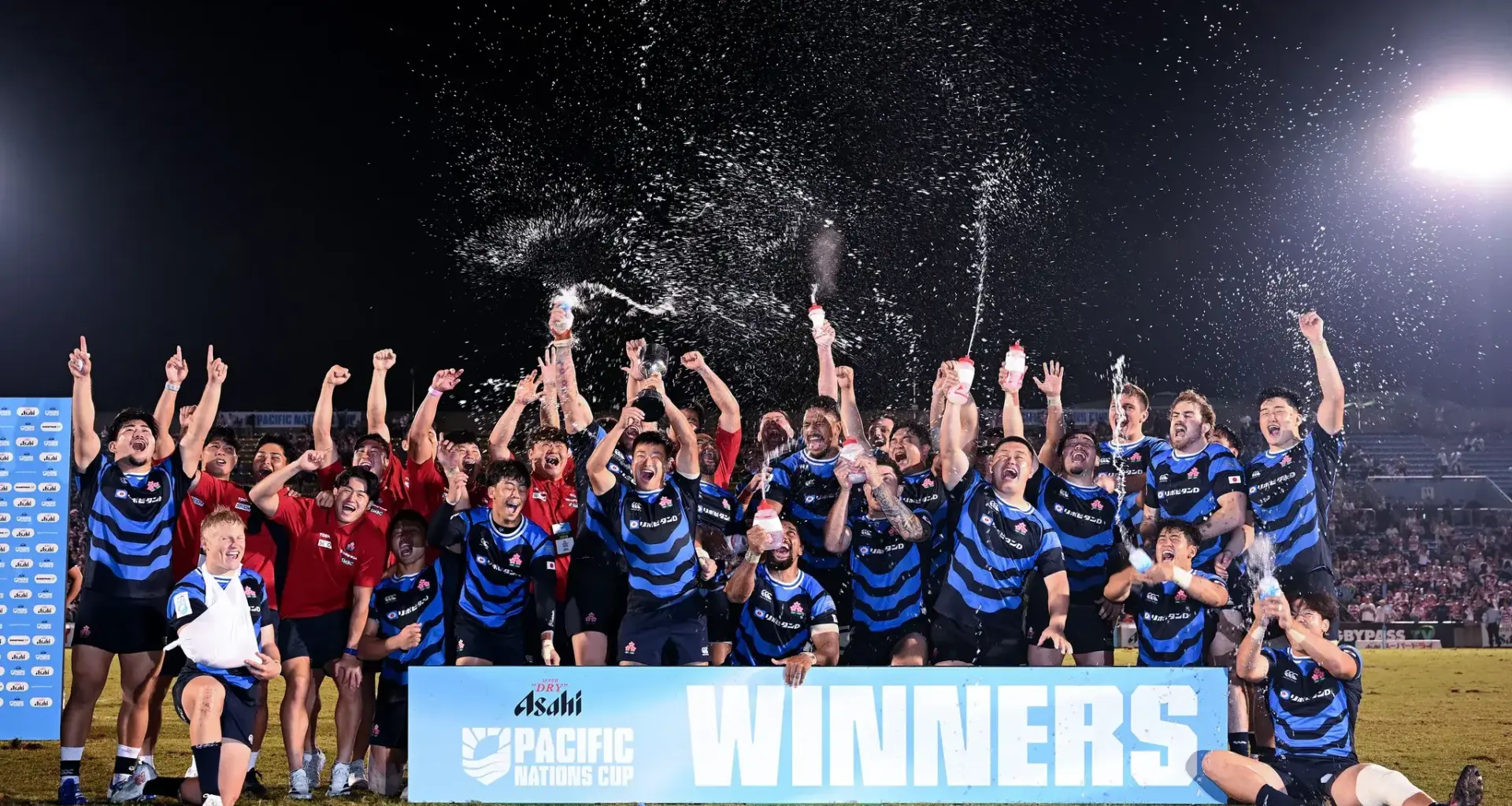
Happy Monday, G&GRs. The Wallabies weren’t playing again, however there was plenty of ruggers on to keep us all amused. Firstly, we’ll take a gander at the Wallaroos V The Froggies, the Japan taking out the Pacific Nations Cup against the Fijians. Then we’ll dive into the Super Rugby Aus. So, pour a massive cup of liquid gold☕ and get that into you while we wander into the mad, mad, mad world of Brisney.

France 29 defeated The Wallaroos 26
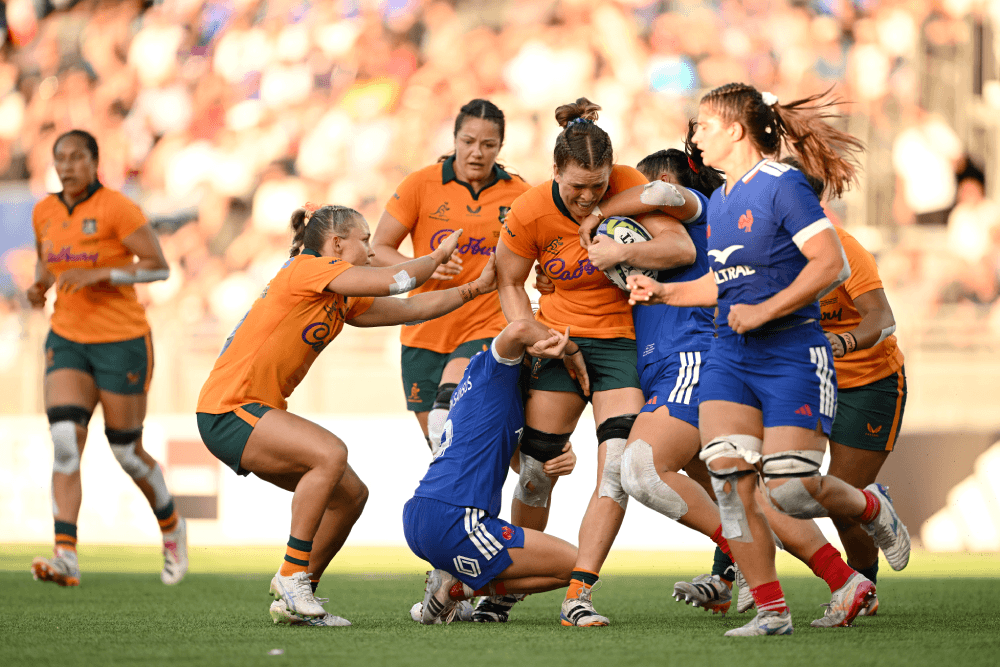
France Pull Off Great Escape as Wallaroos Surrender 19-Point Lead in the festival of Cheese – Well, that got out of hand quickly. The Wallaroos looked to have France exactly where they wanted them in Aix-en-Provence, holding a 19-point lead while Les Bleues were reduced to 12 players at one stage. Twelve. Against Australia. And somehow, France still won.
In a match that apparently decided ordinary rugby drama simply wasn’t enough, France came from behind to snatch a remarkable 29-26 victory, ending their wait for a win over the Wallaroos that stretched all the way back to 2017. There were cards. Lots of cards. There was an eye-gouging red card. There was a 20-minute red card. There was a fire outside the stadium that delayed the start of the second half. About the only thing missing was a bloke wandering onto the field with a lawnmower. For Australia, this will go down as a spectacular opportunity missed. For France, it was a great escape.
France start with the French stuff – From the opening whistle, Les Bleues made their intentions fairly obvious. Rush defence? Tick. Ball thrown wide at every available opportunity? Tick. Run the Wallaroos around until someone forgot where they were? Also tick. France came close early, their scrum putting the Wallaroos under enormous pressure, but Australia produced some excellent scrambling defence.
Amelia Whittaker and Caitlyn Halse were particularly important, somehow keeping the French out when a try looked almost inevitable. And then the Wallaroos began to settle. Desiree Miller and Halse were making metres through direct running, the support play was sharp and Australia began building sustained pressure. France responded in the traditional French manner: by giving away penalties. Four of them in quick succession.
Ambre Mwayembe was the first to see 🧀 for a high tackle and, with the French defence temporarily down a player, Australia went to work. The rolling maul did the damage. Brittany Merlo crossed in the 17th minute, and suddenly the Wallaroos had the lead. Things were going rather nicely. Which, naturally, meant everything was about to go completely pear-shaped.
France implode – France attempted to hit back through Emilie Bolard, but Australia’s scramble defence was holding firm. Then Lea Champon was sent to the bin for another dangerous tackle. And shortly afterwards, the French disciplinary wheels didn’t merely fall off. They rolled several kilometres down the road. In the 23rd minute, Lea Murie joined the growing French contingent in the sin bin following another high tackle.
Then came the big one. Cloe Correa was sent off for eye gouging in a rolling maul. Mwayembe’s earlier yellow was also upgraded to a 20-minute red card. Suddenly France were down to 12 players. The Wallaroos had a four-player advantage. If ever there was a time to put a rugby match to bed, this was probably it. Australia duly obliged.
Naden crossed from the maul shortly afterwards before Halse finished off another attack six minutes later. The Wallaroos were flying. France were down to a dozen. The scoreboard was beginning to resemble a public-service announcement about what happens when you don’t tackle legally. Australia led 19-0. Surely. Surely this was the moment to put the French away. Apparently not.
And then the French remembered they were French. Champon and Correa eventually returned to the field and France changed tack. Instead of trying to run around Australia, Les Bleues went more direct. And suddenly it worked. Anais Grando broke through with two minutes remaining in the half, and the French had their first points. That try sparked something.
Bolard soon crossed for another and, despite being absolutely battered by their own disciplinary problems, France had somehow dragged themselves back to 19-12 at halftime. Then came the fire. Yes. A fire outside the stadium. Because apparently seven cards, an eye-gouging dismissal and a 19-point comeback wasn’t enough drama for one afternoon. The second half was delayed while the situation was dealt with. You couldn’t make this stuff up.
Wallaroos restore order — briefly – When the players eventually returned, the match settled into another seesawing contest. Australia landed the next major blow in the 50th minute. A sustained build-up ended with Piper Duck crashing over and restoring the Wallaroos’ advantage to two converted tries. At that point, Australia had weathered the French comeback and looked to have regained control.
But France simply refused to go away. nThey went direct, attacking through the middle, and began dragging themselves back into the contest. Elisa Riffonneau thought she had crossed, only for Georgina Friedrichs to produce a superb last-gasp tackle to deny her. Four minutes later, though, France got their reward. Captain Pauline Bordon Sansus scored from a blindside attack and suddenly Australia were beginning to feel the French breath on the back of their necks.
Then Michaela Leonard was sent to the bin for a high tackle. Another card. Another momentum swing. At this point, someone in the match officials’ room was presumably checking whether they still had enough yellow cards left.
Australia have the chance to finish it – Australia responded with fresh firepower, with Tabua Tuinakauvadra and Eva Karpani entering the fray. Then Charlotte Escudero was sent to the bin for a high tackle. That was the seventh card of the match. Seven. And yet the Wallaroos still had the match in their hands.
Australia even had the opportunity to extend their lead after another sustained maul. But Naden knocked the ball on. And that was one of those moments where rugby quietly whispers: You might regret that. France certainly didn’t waste the opportunity.
The Wallaroos made a couple of errors shortly afterwards and suddenly the French were back up the other end of the field. The maul came marching in. Riffonneau scored in the 68th minute. Australia’s lead was down to two. The Wallaroos were wobbling. France could smell blood.
The French finish the job – With five minutes remaining, France finally completed the escape act. They attacked relentlessly and, after sustained pressure, Teani Feleu crashed over in the corner in the 75th minute. France had the lead. For the first time all afternoon. The conversion was missed, leaving the score at 29-26, but the damage was done.
Australia now had to find three points just to force the match into another twist. The Wallaroos threw everything they had into one final attack. But France held firm. Then came the final gut punch. Gabrielle Vernier won a critical penalty for holding on, killing the Wallaroos’ final opportunity and allowing France to close out one of the more extraordinary comebacks you’ll see. From 19 points down. From 12 players. After a fire delayed the second half.
After collecting cards like they were going out of fashion.France somehow found a way. And for Australia, the autopsy will be a painful one. Because this wasn’t a match the Wallaroos lost from a winning position. This was a match they had 19 points and a four-player advantage to win. And somehow, they left Aix-en-Provence empty-handed. That’s going to sting.
Three Things We Learned
You really do need to put teams away when they’re down to 12 – The Wallaroos had France exactly where you would want them. Four-player advantage. 19-point lead. France’s discipline had completely imploded. But Australia couldn’t deliver the knockout blow. Once the French players returned, the Wallaroos allowed their opponents back into the contest — and France took full advantage. In international rugby, mercy is generally not a particularly useful tactical option.
The French maul was the difference – When France needed points, they repeatedly turned to the direct stuff. The maul became a weapon, particularly as the match entered its final stages, and Australia struggled to contain the French pressure. Riffonneau’s second try and the late Feleu score ultimately turned what looked like a comfortable Wallaroos victory into a French celebration.
The Wallaroos will be haunted by the little moments – Naden’s knock-on after the sustained maul. The errors that followed. The missed opportunities to stretch the lead. And, ultimately, the failure to close out the match when France were down to 12. Those moments don’t look particularly significant while they’re happening. Then France score in the 75th minute and suddenly every one of them is being replayed in your head. For Australia, this was one that got away. For France, it was the sort of comeback that can become part of a team’s folklore.
And somewhere in Aix-en-Provence, someone is probably still trying to work out how a team that spent so much of the afternoon in the sin bin somehow walked away with the chocolates.
Japan 20 defeated Fiji 15
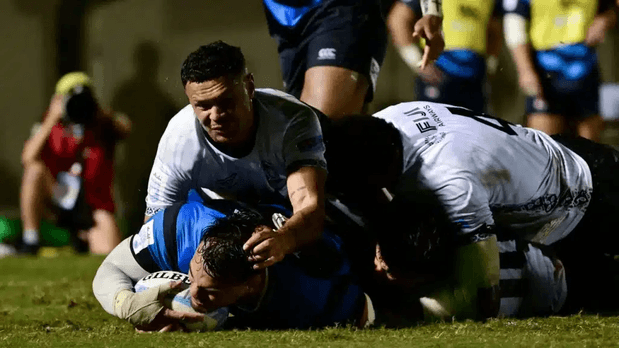
Japan outpace Fiji to steal the Pacific Nations Cup – Well, someone forgot to tell Japan that Fiji were supposed to win this thing. The Brave Blossoms have produced one of the Pacific Nations Cup’s great boilovers, knocking over the Flying Fijians 20-15 in Tokyo to claim the title for the first time in seven years. And they didn’t do it by fluking a couple of intercept tries or hoping Fiji forgot how to tackle. Nope. Japan ran them ragged.
The No.12-ranked side took down the No.9 team in the world by playing fast, playing smart and, eventually, playing Fiji completely off their feet. It was Japan’s fourth Pacific Nations Cup title, while Fiji’s reign at the top of the competition has come to a rather abrupt end. The Flying Fijians had won six of the previous eight editions, but this time the trophy is heading to Tokyo. And the Japanese had a wonderfully simple method for getting it there. Maul. Maul. And, just for good measure, maul.
All three of Japan’s tries came from rolling mauls, with Mamoru Harada, Ben Gunter and replacement Samisoni Tua doing the damage. Sam ‘Daniel Herbert – the man that thinks he knows more about Aus recruiting than anyone’ Greene chipped in with a conversion and penalty, while Fiji’s points came through tries to Virimi Vakatawa and captain Tevita Ikanivere, with Caleb Muntz adding a conversion and Isaiah Armstrong-Ravula slotting a penalty.
Fiji bring the muscle – For the opening quarter, however, it looked very much like the world rankings had got this one right. Fiji came out with the sort of physicality that makes you wonder whether the opposition has accidentally wandered into a different sport. And leading the charge was former France international Virimi Vakatawa. The 34-year-old, making only his second appearance for Fiji after switching international allegiance, showed exactly why he has spent much of his career making defenders question their life choices. In the 10th minute, four Japanese defenders attempted to stop him. Four. Vakatawa simply kept going and powered over the line.
Fiji had landed the first blow and, for a while, looked ready to turn the final into another demonstration of Pacific Island power rugby. But Japan had other ideas.
Japan’s maul gets to work – Fiji were reduced to 14 men when prop Mesake Doge was yellow-carded, and Japan immediately went to work. A lineout. A maul. A try. Mamoru Harada was the grateful recipient in the 22nd minute as Japan rolled the Fijians backwards and eventually deposited their No.8 over the line. It was the first warning shot. Unfortunately for Japan, Fiji had an answer.
A clever short pass from the lineout caught the Japanese defence napping, and captain Tevita Ikanivere suddenly found himself with a runway in front of him. The Fijian hooker needed no second invitation. He sprinted away to score and restore Fiji’s lead. At half-time, the visitors had their noses in front 12-10, and Japan had plenty of work to do. Then the fitness bill arrived
The second half was where things started to get interesting. Japan turned up the tempo. And Fiji started looking like they had been asked to run a marathon immediately after completing a particularly unpleasant gym session. The Brave Blossoms kept moving the ball, kept attacking, and kept forcing Fiji to defend phase after phase. And when they weren’t running the Fijians around, they were doing what they had already discovered worked rather nicely. They maul. Again. And again.
Eventually, Fiji cracked. In the 57th minute, Ben Gunter was the man who forced his way over as another Japanese rolling maul did the damage. Japan led 15-12. Fiji weren’t done, though. Armstrong-Ravula calmly knocked over a penalty with 15 minutes remaining to level the scores at 15-all, setting up a grandstand finish. Surely Fiji’s experience would tell? Surely the defending champions would find something?
Well… About that. Japan saves the best for last. With the game delicately poised, Japan went back to the one thing that had been working all afternoon. The rolling maul. Because if it ain’t broke, keep smashing the same button until someone gives up. And eventually someone did. Replacement Samisoni Tua emerged from the chaos to score the match-winning try, completing Japan’s third maul-generated five-pointer of the afternoon.
Fiji had no answer. Japan had the lead. And, more importantly, Japan had the final whistle. 20-15 to the Brave Blossoms. Cue scenes of absolute delirium in Tokyo. For Fiji, it’s a frustrating end to their title defence. They had the size, the power and enough individual brilliance to cause Japan plenty of problems.
But Japan had something just as important. They had the legs. The Brave Blossoms simply kept the game moving until Fiji’s physical advantage began to disappear, and once the Fijians tired, Japan’s disciplined set-piece attack became increasingly difficult to stop. Three tries. Three mauls. One Pacific Nations Cup trophy. Sometimes rugby really is a wonderfully simple game. Japan are champions again. And somewhere in Tokyo, an awful lot of people are currently wondering why nobody thought to stop the bloody maul.
Three Things We Learned
Japan’s fitness is becoming a serious weapon – Japan didn’t beat Fiji by trying to out-Fiji Fiji. They beat them by making the game faster and forcing the Fijians to keep working. The longer the match went, the more Japan’s fitness and tempo became a factor. That’s a particularly useful weapon against sides that rely heavily on explosive physicality.
Japan’s rolling maul deserves its own postcode Three tries. All from mauls. At some point Fiji surely knew what was coming. And yet Japan kept marching forward anyway. It’s not exactly complicated rugby, but when your execution is good enough, simplicity becomes very difficult to defend. Japan’s lineout-maul combination was the difference between the two sides.
Fiji can’t rely on brute force alone – Fiji had the power to hurt Japan early, but once the pace increased, their influence waned. The Flying Fijians remain an enormously dangerous side, but this match showed the value of being able to adapt when the opposition refuses to let the game become a slow-motion arm wrestle. Japan didn’t just survive Fiji’s physical challenge. They made Fiji chase them. And eventually, the Fijians ran out of puff. Japan 20 def Fiji 15. Pacific Nations Cup champions. And on this occasion, the Brave Blossoms didn’t just upset the apple cart. They nicked the whole bloody fruit bowl.
NSW Waratahs 47 defeated Queensland Reds 19
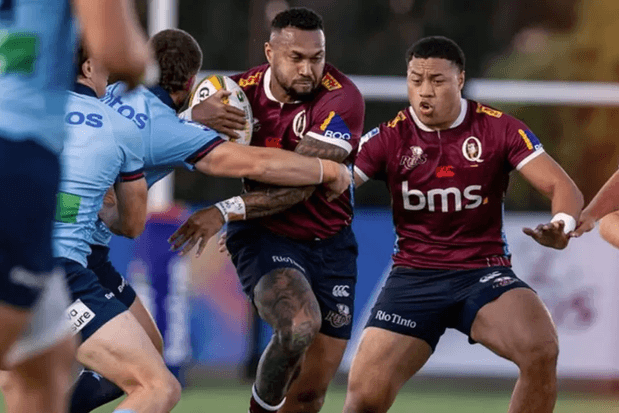
Waratahs Put Reds to the Sword in Roma as Super Rugby AUS Final Looms – Well, that was a bit awkward. The NSW Waratahs have taken a giant stride towards securing a home Super Rugby AUS final after putting the Queensland Reds to the sword, running out 47-19 winners in Roma. And for anyone experiencing a touch of déjà vu, you’re not imagining it. The scoreline was exactly the same as last year’s meeting in Narrabri.
Apparently, someone forgot to tell the Waratahs that Queensland was supposed to get a little more competitive this time around. The Tahs came out firing and effectively had the contest in their back pocket before the Roma locals had finished deciding whether they were supporting the home side or simply enjoying the spectacle.
Serfontein sends an early warning – The Waratahs’ attacking intent was obvious from the opening exchanges, with Otto Serfontein making himself extremely difficult for the Reds defence to handle. The Easts product continues to make a serious case for a future Super Rugby Pacific opportunity, and he wasted little time reminding everyone why. Serfontein ran a superb line to slice straight through the Reds’ defensive wall and crossed for the opening try.
For a Reds backline already patched together with injury replacements, it was not exactly the sort of start they needed. With former NRL star David Fusitu’a and former Wallaby Sefa Naivalu among those called upon, Queensland were always going to need time to find their combinations. Unfortunately for the Reds, the Waratahs weren’t particularly interested in giving them any.
The Easts connection was particularly prominent, with Sid Harvey and Teddy Wilson both producing the sort of performances that had Queensland supporters reaching for the emergency supply of headache tablets. Harvey soon glided over for another five-pointer after a beautifully weighted kick from Max Burey, who continues to look increasingly comfortable pulling the strings in Super Rugby AUS. At halftime, it was 14-0 to NSW. And while the scoreboard still offered Queensland a theoretical route back into the contest, reality was already looking rather less charitable.
Reds threaten, Tahs respond – To Queensland’s credit, the Reds came out after halftime with considerably more intent. There were some promising breaks from the call-ups and, for a brief moment, it looked as though the home side might make a contest of it. The Waratahs, however, had other ideas.
Ethan Dobbins and Latrell Smiler Ah-Kiong crossed to extend the lead, before Teddy Wilson did what Teddy Wilson does best — finding a support line that seemingly nobody else on the field had noticed. Wilson followed George Poolman and the Waratahs suddenly had the scoreboard reading 33-0. At that point, the Queensland comeback had moved from “difficult” to “requiring an act of divine intervention”.
The Reds finally got themselves on the board in the 57th minute when Tim Ryan found himself completely unmarked in the corner. It was a good finish, but the damage had already been done.
Serfontein turns creator – The Waratahs weren’t finished either. Serfontein again provided the spark, bursting through the Queensland defence and creating the space for Marshall Le Maitre to cruise through the resulting gap. Le Maitre then turned provider, setting up Joe Dillon, who added another five points to what was rapidly becoming a very uncomfortable afternoon for the Reds. Dillon crossed to push the Waratahs further clear and effectively put the result beyond any doubt.
Queensland did manage to add some respectability to the scoreboard late, with John Bryant and Alex Flanagan Smith both crossing. But by then the horse had bolted, jumped the fence, crossed the border and was probably halfway to Sydney. The final score? Waratahs 47 defeated Reds 19. And remarkably, the Waratahs had once again produced the exact same scoreline against Queensland as they did twelve months ago. Home final now firmly in the sights. For the Waratahs, this was another statement of intent.
They showed plenty of attacking firepower, dominated the opening half and had too much power and cohesion for a Reds side forced into plenty of reshuffling. Serfontein was particularly impressive, while Harvey, Wilson and Burey all played their parts in a performance that increasingly resembles a team preparing itself for the business end of the competition. For Queensland, there were certainly mitigating circumstances. Injuries have forced plenty of changes and there were promising passages from the replacement-heavy Reds backline.
But conceding 47 points is going to make for a rather uncomfortable review session. Especially when you’ve just conceded exactly the same number of points you conceded against the same opponent twelve months ago. At least the Reds have consistency going for them. The Waratahs, meanwhile, are now looking increasingly like a side with one destination in mind: a home Super Rugby AUS final.
And judging by this performance, they’re not planning on making the trip anywhere to play it.
Three Things We Learned
Otto Serfontein is knocking loudly on the Super Rugby Pacific door – Serfontein was one of the biggest winners from the afternoon. His ability to break the line, carry strongly and create opportunities for those around him was obvious, and performances like this will only strengthen his case for a crack at the next level. If the Waratahs keep producing this sort of rugby, there may be a few Super Rugby Pacific coaches taking rather more interest in what the Easts product is doing.
Teddy Wilson has a sixth sense for support play – There are some players who simply seem to know where the ball is going to be. Wilson is becoming one of those blokes. His support line for the try off George Poolman was classic Teddy Wilson — anticipate the opportunity, hit the gap and make the defence pay. It is the sort of instinctive rugby that makes good attacking players very difficult to contain.
Queensland have plenty to fix before the finals – The Reds’ injury list certainly didn’t help, and the makeshift backline deserves credit for continuing to compete. But 47 points conceded tells its own story. The Reds showed enough in patches to suggest there is plenty of attacking ability available, but against a Waratahs side playing with this much confidence, defensive lapses were always going to be punished. If Queensland want to make a serious impact when the business end arrives, they’ll need considerably more than promising patches. Because the Waratahs have just delivered a fairly substantial reminder: the road to the Super Rugby AUS final might be going through NSW.
Western Force 40 defeated Brumbies 12
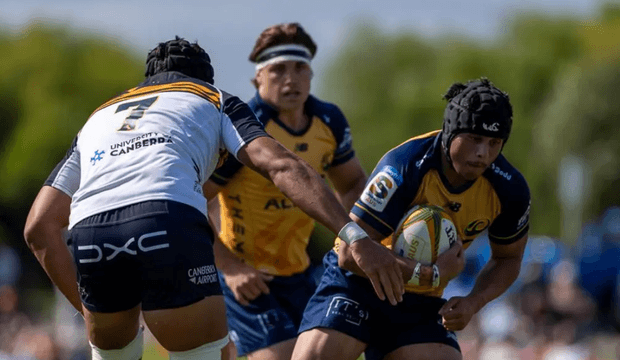
Force spank Brums to get a space at the Big Dance – Well, well, well. The Western Force have gone and done it again. In what is becoming a rather familiar piece of Super Rugby AUS business, the Force have booked themselves another Grand Final appearance after putting the ACT Brumbies to the sword 40-12 at North Coast RUFC on Sunday. Six tries to two. Forty points.
A Grand Final ticket safely tucked into the back pocket. And, just for a bit of extra spice, James O’Connor has wandered back onto the Australian rugby stage after 15 years away from the Force. Because apparently this is how Western Australian rugby rolls these days.
The Force were absolutely ruthless in the opening half, using a stiff breeze to their advantage and turning Brumbies mistakes into points at a rate that would have had the Canberra coaching box reaching for the emergency coffee supplies. By half-time, it was 28-0. Game over? Not quite. But the Brumbies were going to need something approaching a rugby miracle.
Force hit the turbo button – The Force didn’t waste much time making their intentions clear. The first try came after Nic Dolly produced an opportunistic 50-22, before Kurtley Beale spotted Ronan Leahy lurking out wide. The cut-out pass found Leahy, who finished neatly in the left corner. Beale converted. Seven-nil.
Then came Boston Fakafanua. The big bloke punched a hole straight through the Brumbies defensive line, creating the platform for UWA openside Jack Daly to crash over. Beale knocked over another conversion. Fourteen-nil. And then Nathan Hastie decided subtlety was overrated. The Wanneroo product popped out of the ruck, showed a lovely pair of feet, chipped the ball over the top and then chased it down himself. That’s right. The halfback chipped and chased his own kick. And scored. Twenty-one-nil.
At that point, the Brumbies were probably wondering whether somebody had accidentally left the Force’s difficulty setting on ‘nightmare’. The visitors continued to probe, but the Force defence was having absolutely none of it. Then, just before the break, the Force marched the Brumbies backwards from a maul and Misinale Epenisa eventually burrowed over. Beale converted. 28-0 at half-time. Ouch.
Hastie and Daly go back for seconds – If the Brumbies were hoping the Force might ease off after the break, they had clearly not been introduced to Nathan Hastie. The busy halfback grabbed his second try early in the second stanza, taking a quick tap and throwing himself over from close range. Thirty-five-nil. Then Daly joined him in the double-try club. The Force spread the ball left, Mac Grealy created the opportunity and Daly finished the job out wide. Beale’s otherwise excellent afternoon finally suffered a blemish from the tee. It was now 40-0. And with the Force making wholesale changes, including the return of a certain familiar Queensland rugby character, the Brumbies finally found some joy.
O’Connor returns – The headline within the headline was, of course, James O’Connor returning to the Force after 15 years. JOC got the final 20 minutes, linking up with another bloke who has spent plenty of time in Australian rugby headlines: Kurtley Beale. The pair alternated between fly-half and centre, giving the Force a rather entertaining combination of experience and rugby mischief. It wasn’t exactly the sort of backline arrangement you’d draw up in Rugby 101. But it certainly got the attention.
And after everything O’Connor has been through in Australian rugby, seeing him back in Force colours was a pretty cracking subplot to an already dominant afternoon.
Brumbies finally find the scoreboard – To their credit, the Brumbies kept swinging. Eventually, reserve scrum-half Dan Nelson managed to burrow over from the back of a rolling maul to get the visitors on the board. Then Darcy Breen added another late after repeated Brumbies assaults on the Force line. Two tries. Twelve points. But by then the horse had not merely bolted. It had crossed the Nullarbor, checked into a hotel and ordered room service. The Force had already done the damage.
Western Force 40 defeated ACT Brumbies 12. Force booked into another decider. The win means the Force have won both of their Super Rugby AUS matches and, just like last season, they are heading back to the Grand Final. The only question now is where that Grand Final will be played. The NSW Waratahs also sit at 2-0, setting up a rather important clash between the two unbeaten sides in Sydney next weekend. Win that one and the Force will have earned the right to host the decider. Lose it and they’ll be packing the bags. Either way, the Force have put themselves in exactly the position they wanted. Two games. Two wins. A truckload of tries. And now James O’Connor is back in the shed. Things are getting interesting out west.
Three things we learned
The Force are becoming very good at putting games to bed early – That first-half performance was the story of the match. Four tries, 28 points and a defensive effort that gave the Brumbies precious little to work with. The Force didn’t just win the opening 40 minutes. They effectively put the match in the freezer.
Nathan Hastie is becoming a serious handful – Two tries from the halfback, including that cheeky little chip-and-chase effort, capped an outstanding display. Hastie was energetic around the breakdown, dangerous with ball in hand and constantly asking questions of the Brumbies defence. Halfbacks aren’t supposed to be this annoying. Unless they’re playing against you. Then apparently it’s perfectly acceptable.
JOC and Beale in the same backline? Well, this could be fun – James O’Connor’s return was always going to attract the attention, but seeing him combine with Kurtley Beale added another layer of intrigue. The two veterans swapping between fly-half and centre for the final 20 minutes gave the Force plenty of experience and plenty of rugby nous. Whether that combination becomes a regular feature remains to be seen. But if nothing else, Western Australia has just discovered another reason to tune in.
Anyway boys and girls!That is all the rugby I could watch and commentate on. I will leave the rest for RAWF yto comment on tommorrow. Over to you GAGRS! Have at it!
Stay in the loop with G&GR