
Hoops Rumors is checking in on the 2026 offseason for all 30 NBA teams, recapping the summer’s free agent signings, trades, draft picks, departures, and more. We’ll take a look at each team’s offseason moves and consider what might still be coming before the regular season begins. Today, we’re focusing on the Charlotte Hornets.
Free agent signings
 Coby White: Three years, $74,000,000. Fully guaranteed. Re-signed using Bird rights.
Josiah Allick: One year, minimum salary. Non-guaranteed (Exhibit 9/10). Signed using minimum salary exception.
Jarkel Joiner: One year, minimum salary. Non-guaranteed (Exhibit 9/10). Signed using minimum salary exception.
Kyle Mangas: One year, minimum salary. Non-guaranteed (Exhibit 9/10). Signed using minimum salary exception.
Bez Mbeng: One year, minimum salary. Non-guaranteed (Exhibit 9/10). Signed using minimum salary exception.
Kobe Stewart: One year, minimum salary. Non-guaranteed (Exhibit 9/10). Signed using minimum salary exception.
Trey Townsend: One year, minimum salary. Non-guaranteed (Exhibit 9/10). Signed using minimum salary exception.
Note: All of these players except White and Mbeng have been waived.
Trades
Acquired Dorian Finney-Smith, the Grizzlies’ 2027 second-round pick, the Rockets’ 2028 second-round pick, and the Rockets’ 2033 second-round pick from the Rockets in exchange for cash ($110K).
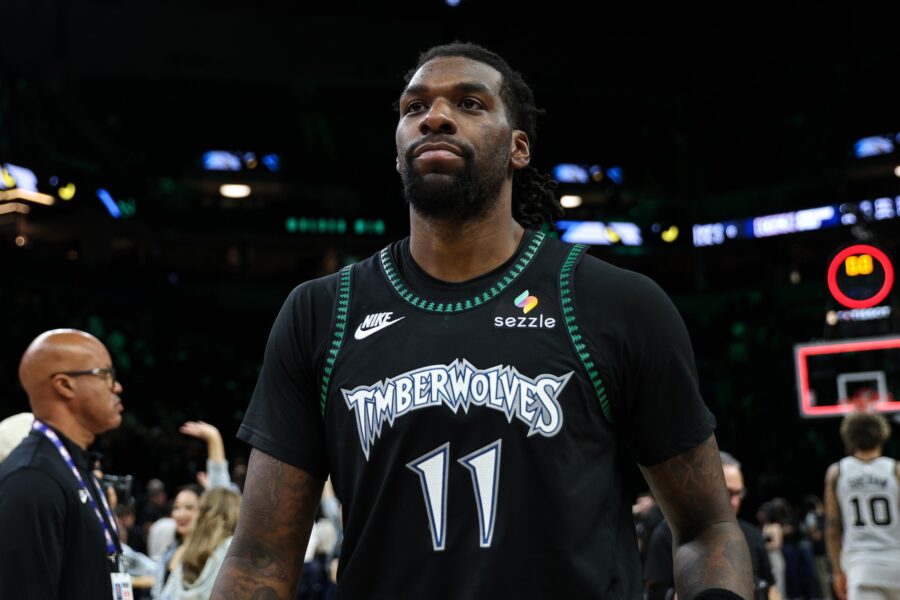
Acquired Naz Reid, the draft rights to Matteo Spagnolo, the Timberwolves’ 2033 first-round pick, the Timberwolves’ 2029 second-round pick, the Timberwolves’ 2032 second-round pick, the Timberwolves’ 2033 second-round pick, and first-round pick swaps in 2028, 2029, and 2030 from the Timberwolves and Mouhamadou Gueye from the Bulls in a four-team trade in exchange for LaMelo Ball (to Timberwolves) and Josh Green (to Timberwolves).
Acquired Grayson Allen, Royce O’Neale, and the Suns’ 2033 first-round pick from the Suns in exchange for Miles Bridges, either the Hornets’, Jazz’s, Timberwolves’ (top-five protected), or Cavaliers’ 2029 first-round pick (whichever is least favorable), and either the Celtics’ or Magic’s 2027 second-round pick (whichever is least favorable).
Acquired Dennis Schröder and cash ($4.35MM) from the Cavaliers in a five-team trade in exchange for Tre Mann (to Wizards).
Draft picks
1-14: Hannes Steinbach
Signed to rookie scale contract (four years, $24,981,907). First two years guaranteed. Third- and fourth-year team options.
1-18: Christian Anderson Jr.
Signed to rookie scale contract (four years, $20,613,239). First two years guaranteed. Third- and fourth-year team options.
Two-way signings
Two years, $91,000 partial guarantee (will increase to $339,441 at start of regular season); second year non-guaranteed.
Two years, $91,000 partial guarantee (will increase to $339,441 at start of regular season); second year non-guaranteed.
Note: The Hornets carried over PJ Hall on a two-way contract from 2025/26.
Departed/unsigned free agents
Other roster moves
Salary cap situation
Note: Figures are rounded to one decimal place.
Operating over the cap ($165MM) and below the first tax apron ($209MM).
Hard-capped at first apron.
Team salary: $179.7MM (tax); $180.2MM (apron).
Below luxury tax line by $20.7MM; below hard cap by $28.8MM.
Partial non-taxpayer mid-level exception ($847K) available.
Four traded player exceptions available (largest worth $40.8MM).
The offseason so far
The Hornets have been extremely active since Jeff Peterson became the team’s head of basketball operations in March 2024, making a series of trades to stockpile draft assets and inject the roster with a mix of young talent and seasoned veterans. The big question entering the 2026 offseason was, would that trend continue after Charlotte went 28-10 down the stretch of last season?
The answer, it turns out, was a resounding yes. But even for the Peterson-led front office, this offseason was different.
Most of the Hornets’ trades over the past couple years had involved rival teams sending Charlotte draft capital to take on unwanted contracts. There were a few notable exceptions, including Phoenix trading for Mark Williams last year and Charlotte acquiring Coby White in February, but for the most part, the Hornets operated as a salary-dumping ground.
Those sorts of transactions were relatively straightforward for a rebuilding club with the financial flexibility to accommodate contracts that might have been onerous for a team facing a steep luxury tax bill or some other sort of financial and/or roster crunch. On top of their strong finish to 2025/26, the Hornets entered the offseason with two first-round picks in the teens (Nos. 14 and 18) and a sizeable stash of future assets.
That draft cache has grown substantially after the front office decided to part with former franchise player LaMelo Ball and veteran forward Miles Bridges, whose long tenure with the team was marred by domestic violence charges.
As part of a four-team blockbuster trade, Charlotte sent Ball and Josh Green to Minnesota in exchange for Naz Reid, the draft rights to Matteo Spagnolo, the Timberwolves’ unprotected first-round pick in 2033, three first-round swaps, and three second-rounders (all from the Wolves).
The Suns, who had long been linked to Bridges, traded Grayson Allen, Royce O’Neale and their 2033 first-round pick to Charlotte to acquire the former Michigan State star. Charlotte sent Phoenix a low-value 2029 first-round pick (the least favorable of four teams’ selections) and a least favorable second-rounder as part of the deal.
The Hornets also took on another salary dump, this time acquiring three second-round picks from the Rockets for taking on Dorian Finney-Smith’s contract. They also added veteran point guard Dennis Schröder from Cleveland in a five-team deal that sent Tre Mann to Washington.
The Ball trade was the most significant of the group, as the Wolves paid a steep price to land the former Rookie of the Year and one-time All-Star. Still, despite his injury history, I’m sure it was difficult for the Hornets to deal away their best player.
Ball appeared in 72 regular season games in 2025/26 and proved what he’s capable of when he can stay on the court. His scoring average dipped to 20.1 points per game and he shot just 40.7% from the field, which was nearly a career low, but he cut down on his turnovers and played winning basketball, making everyone around him better.
The Hornets had a remarkable +9.1 net rating and a 123.2 offensive rating during Ball’s time on the floor. Those marks would’ve ranked second and first in the NBA, respectively, over the course of a full season, and represented a massive improvement over the +1.5 net rating and 110.6 offensive rating that Charlotte posted when the star point guard wasn’t playing.
While Ball is under contract for three more years and is only 25 years old, Bridges is on an expiring deal and is entering his age-29 season. Minnesota certainly gave up more for Ball than Phoenix did for Bridges, but the Suns parting with an unprotected first-round pick and a couple of solid role players just to have to pay Bridges a potentially significant contract raised some eyebrows around the league.
Re-signing White in free agency became a top priority after agreeing to trade Ball and the Hornets came to terms with the North Carolina native on a three-year, $74MM deal. They added former Washington big man Hannes Steinbach with the 14th pick and drafted ex-Texas Tech guard Christian Anderson Jr. with the 18th selection. Charlotte also signed Michael Ajayi and Kylan Boswell to two-way contracts after they went undrafted.
Up next
The Hornets are one of several teams facing a roster crunch this fall, with 16 players on guaranteed contracts and veteran wing Pat Connaughton on a non-guaranteed deal. Barring additional trades, Finney-Smith and Connaughton appear most likely to be the odd men out.
Charlotte signaled by trading away its two longest-tenured players that the team is committed to building around a core headlined by former No. 2 overall pick Brandon Miller and Rookie of the Year runner-up Kon Knueppel, a pair of sharpshooting wings. Miller is up for a rookie scale extension this fall and is reportedly discussing a new deal with the team.
Miller seems like a strong candidate to sign an extension ahead of the Oct. 19 deadline. I’m curious to see what that contract might look like — I’d expect it to land somewhere between the $31MM annually Ausar Thompson received from Detroit and the $41.6MM per year Amen Thompson got from Houston.
Forward Grant Williams and center Moussa Diabate are up for veteran contract extensions and could be candidates for new deals before the season begins. That said, they’ll remain extension-eligible through June 30, 2027, and certain types of extensions would make them ineligible to be traded ahead of the February deadline.
The Hornets created a $40.8MM traded player exception — the largest TPE in NBA history — as part of the Ball trade and currently have $20.7MM in breathing room below the tax line and are about $28.8MM beneath their first-apron hard cap.
In addition to controlling that $40.8MM TPE, the Hornets have several players on mid-sized contracts and project to have 11 first-round picks over the next seven years, plus at least 17 second-rounders over that same span, per RealGM.
Maybe the Hornets will continue to patiently accumulate draft assets in the short term. But they have more than enough draft capital to pursue any star player that might become available in the future if they want to, and are worth monitoring for that sort of roster upgrade as they continue to build out their core around Miller and Knueppel.
Luke Adams contributed to this article