
Tell us about your experience.
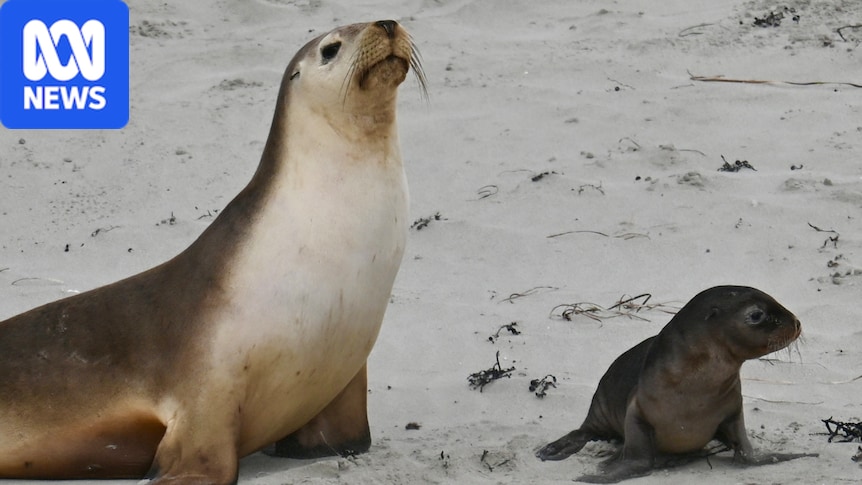
South Australia’s sea lion population is increasingly being affected by H5 bird flu, with four of the mammals — including one pup — testing positive for the virus.
The sea lions were among 12 found dead on the North Page and South Page islands, a key breeding location for the animals between the South Australian mainland and Kangaroo Island.
SA Environment Minister Emily Bourke said there has also been a mass mortality event involving crested terns on the Pages, with about 900 of the birds found dead.
“This isn’t new in the sense of a new species, but it is an event of significance to be highlighting today,” she said.
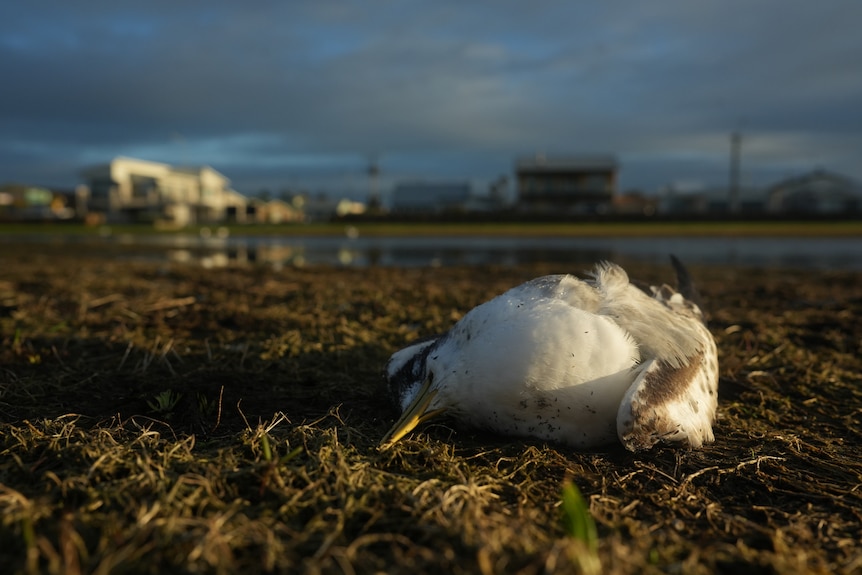
A dead greater crested tern found earlier this year in the state’s South East. (ABC News: Carl Saville)
Ms Bourke said out of 10 deceased sea lions available for testing, three adults and one pup returned positive results.
The results bring the total number of South Australian sea lions with bird flu up to five, following a positive case at Kangaroo Island’s Seal Bay last week.
There have been significant fears from environmentalists that the virus could devastate the sea lion population, which is recorded as endangered on international threatened species lists.
A major bird flu outbreak on Heard Island, an Australian territory in the Indian Ocean, has killed more than 13,000 baby seals since last year.
Ms Bourke said the latest cases in the state were “concerning” in light of those Southern Ocean events, but discussions are underway with the federal government to gain approval for a vaccine trial targeting mammals.
She said a separate trial aimed specifically at birds has been underway at Cleland Wildlife Park, with more than 150 vaccines administered since last month.

Emily Bourke says talks are underway with the federal government about a vaccine trial targeting mammals. (ABC News: Lincoln Rothall)
“We are pulling every lever possible to show we are willing, able and capable of participating in a national vaccine program,” she said.
Separately, magpies have also tested positive at Hindmarsh Island, which Ms Bourke said was an indication the virus would eventually travel further inland.
“We’ve seen it in Monarto, we’ve seen it in metropolitan areas, within inland areas in South Australia,” she said.
“This isn’t a coastal issue … it is a national issue, and it is being addressed that way.”
The government said two dead sea lions on Liguanea Island, off the southern point of Eyre Peninsula, were also tested but returned negative results for bird flu.