
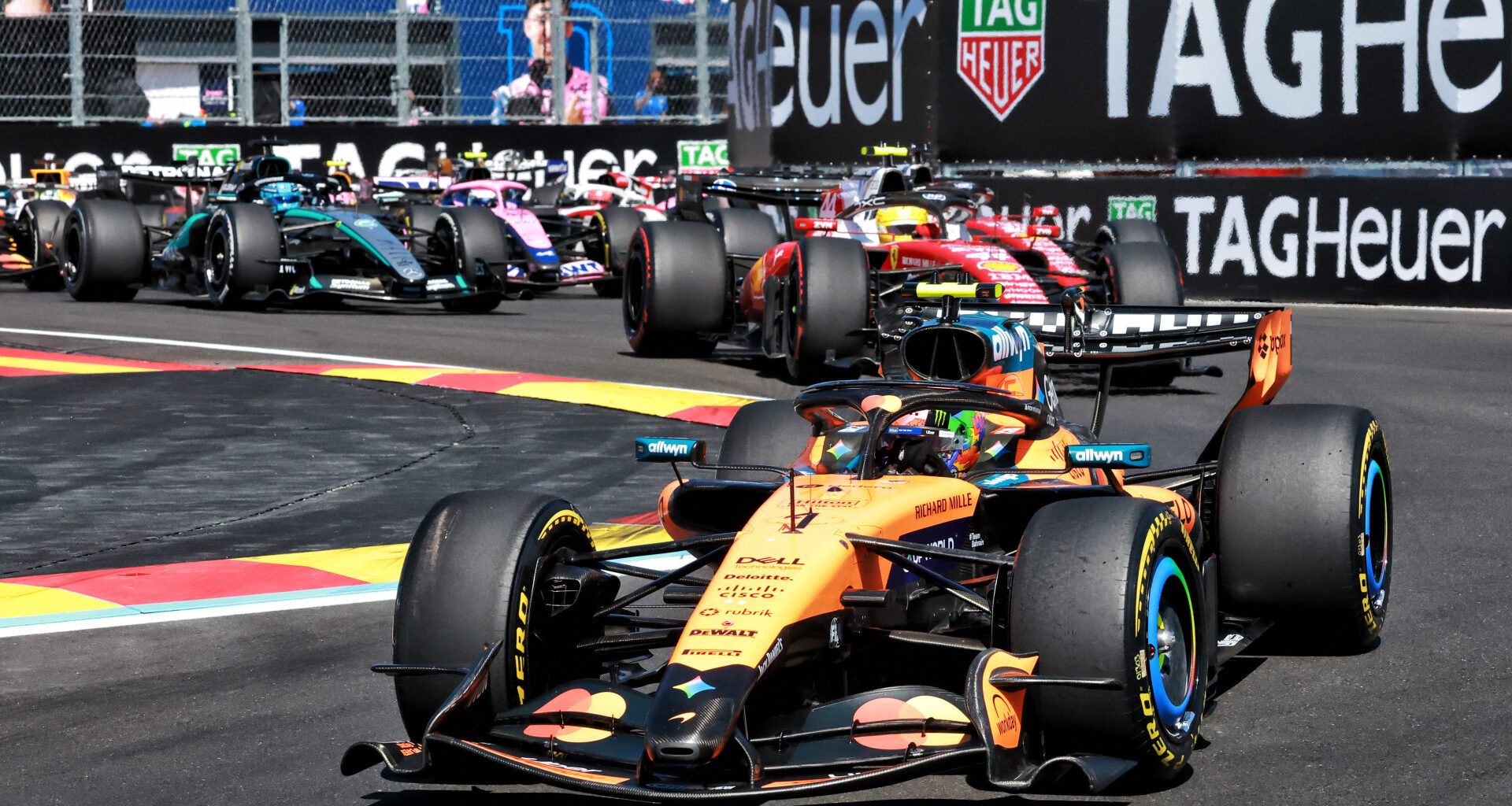
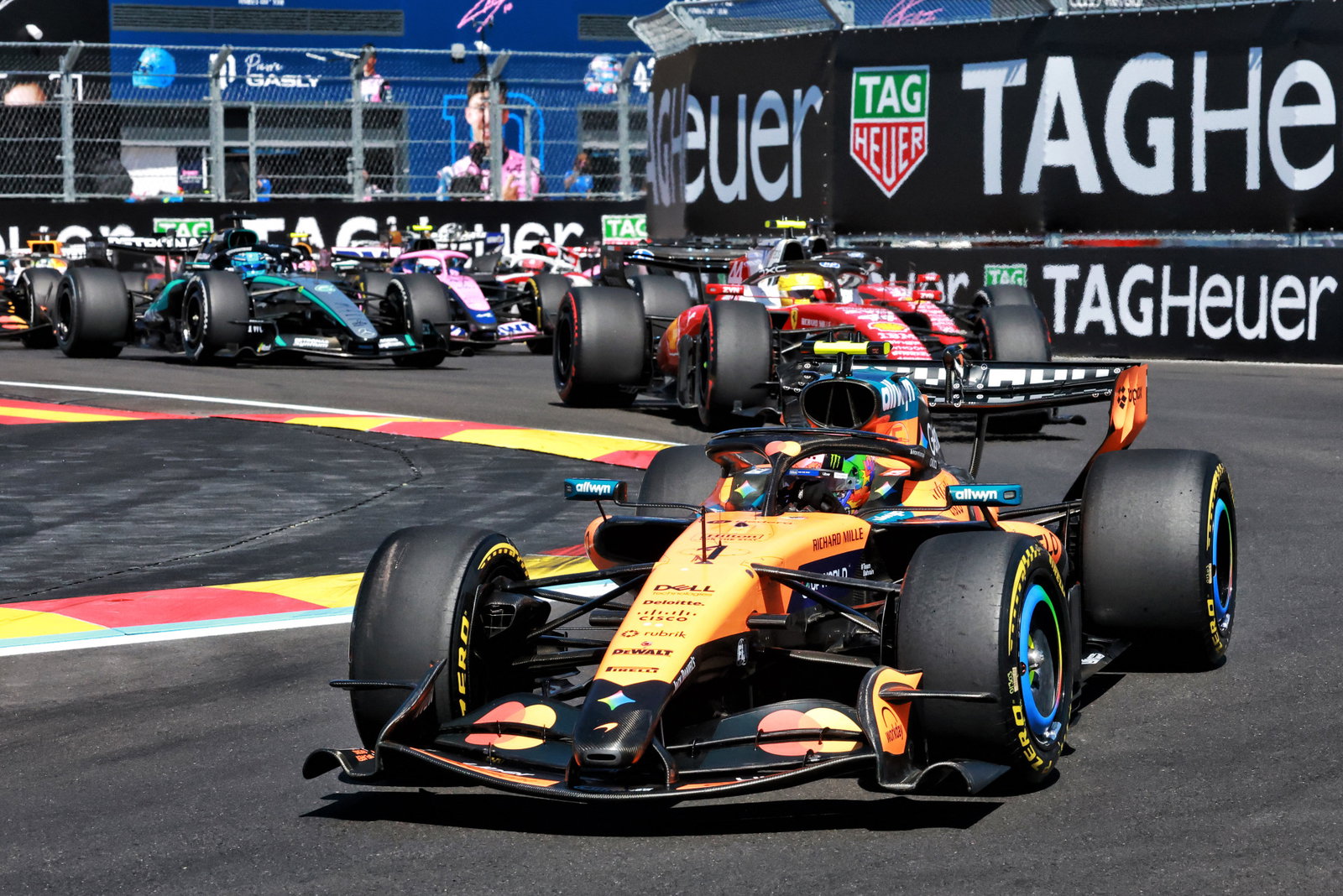
 F1 Race distances in 2027 look set to be cut. Image: XPB Images
The decision was made at the Commission’s third meeting of 2026 in London on Monday, chaired by FIA single-seater director Nikolas Tombazis and FOM president and CEO Stefano Domenicali.
It will result in most races being cut by two or three laps next season, with the standard race distance set to drop from 305km to 290km.
Monaco already sits outside the usual distance requirement, with its race run to approximately 260km.
The shorter races are linked directly to further revisions being made to F1’s new-generation power units following their first season in competition.
A greater share of the overall output will come from the internal combustion engine next year, accompanied by an increase in fuel flow to support the change.
ICE output will increase to 420kW, while the MGU-K will be capped at 300kW during normal running but retain its 350kW maximum in overtake mode.
Those adjustments are designed to ease some of the energy-management concerns that have emerged under the 2026 regulations, but will also increase the amount of fuel required across a grand prix.
Retaining the existing 305km distance would therefore have left some teams needing additional fuel capacity.
For constructors, increasing the size of the fuel cell would have meant committing budget and redesign work to the chassis almost immediately after the arrival of the current regulations.
Cutting the race distance instead provides a way of accommodating the higher consumption without requiring teams to substantially increase tank capacity for 2027.
The reduction is currently set to apply only for next season, with Formula 1 able to reconsider race lengths in 2028, when ICE output is expected to reach 450kW and fuel flow will rise further as the balance between combustion and electrical power moves towards 60/40.
Whether the shorter race format continues beyond 2027 therefore remains to be determined.
Meanwhile, the Commission also backed changes to the rules governing races heavily affected by stoppages.
While the two-hour maximum for actual racing will remain, the separate three-hour window covering the entire event, including interruptions, is set to disappear.
Race control would instead work to a fixed finishing point, allowing circumstances such as available daylight to determine when track activity must end.
The FIA said in a statement the revision was intended to maximise the opportunity for racing to continue following lengthy delays.
“These changes were introduced to ensure that the spectators have the best possible chance to enjoy a full race if disruptions occur,” the governing body said.
Other changes approved by the Commission include greater flexibility for officials to extend free practice sessions when running is significantly disrupted, as well as the removal of gearbox homologation next year, allowing suppliers to continue developing their designs through 2027.
The meeting additionally approved smaller changes to the 2026 sporting and financial regulations, together with further technical revisions for 2027 that have not yet been detailed.
All of the regulatory changes remain subject to FIA World Motor Sport Council approval, with the body scheduled to meet virtually on October 15.