
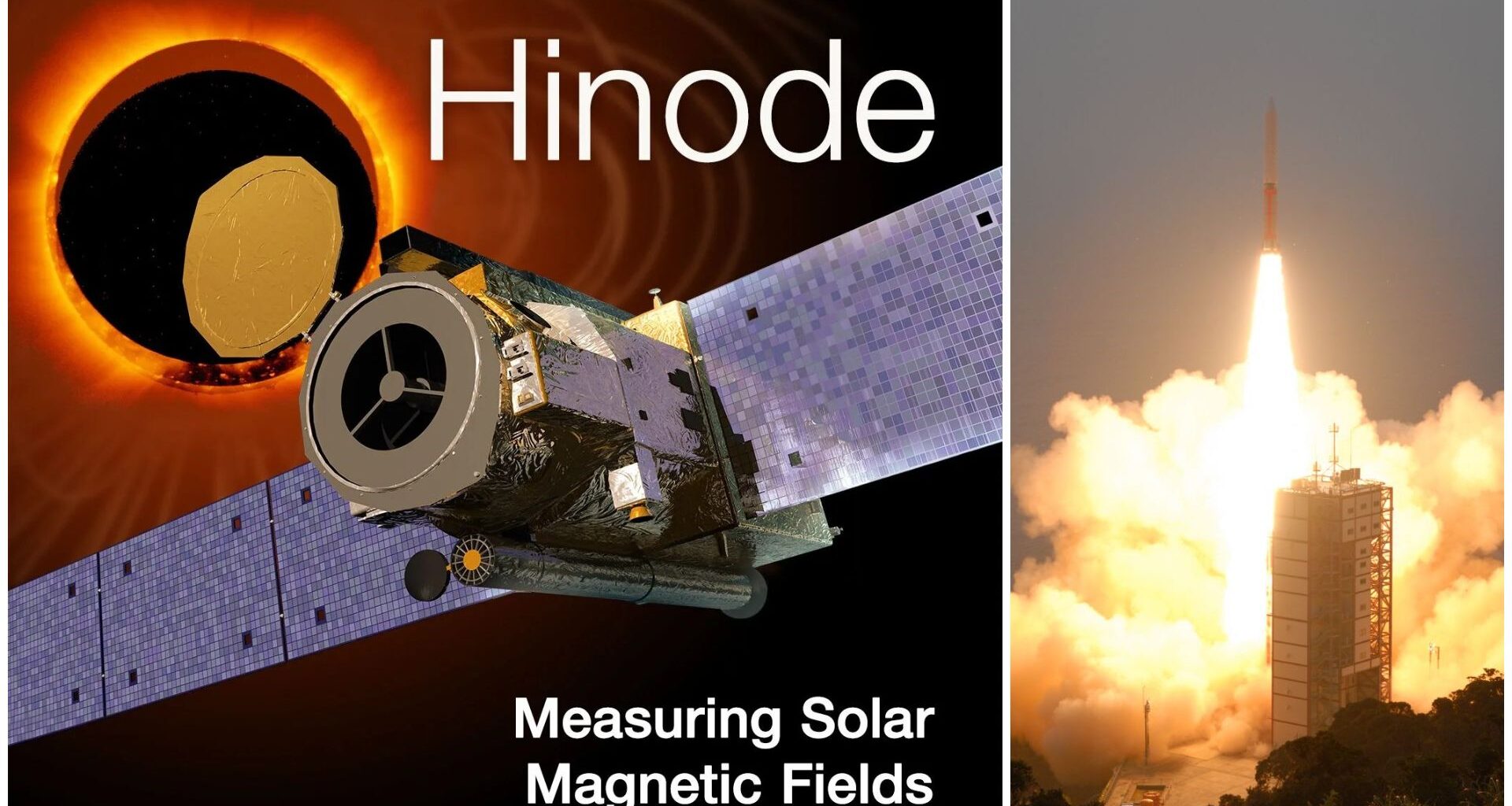
On Sept. 22, 2006, the Japanese Aerospace Exploration Agency launched a sun-observing satellite called Hinode, or Solar-B. It was named after the Japanese word for “sunrise.”
The satellite orbits about 400 miles (640 kilometers) above the Earth in a sun-synchronous orbit, which means it’s always facing the sun.
Since Hinode launched, it’s been measuring the sun’s magnetic fields and taking cool photos of solar flares, sunspots and transits across the sun.
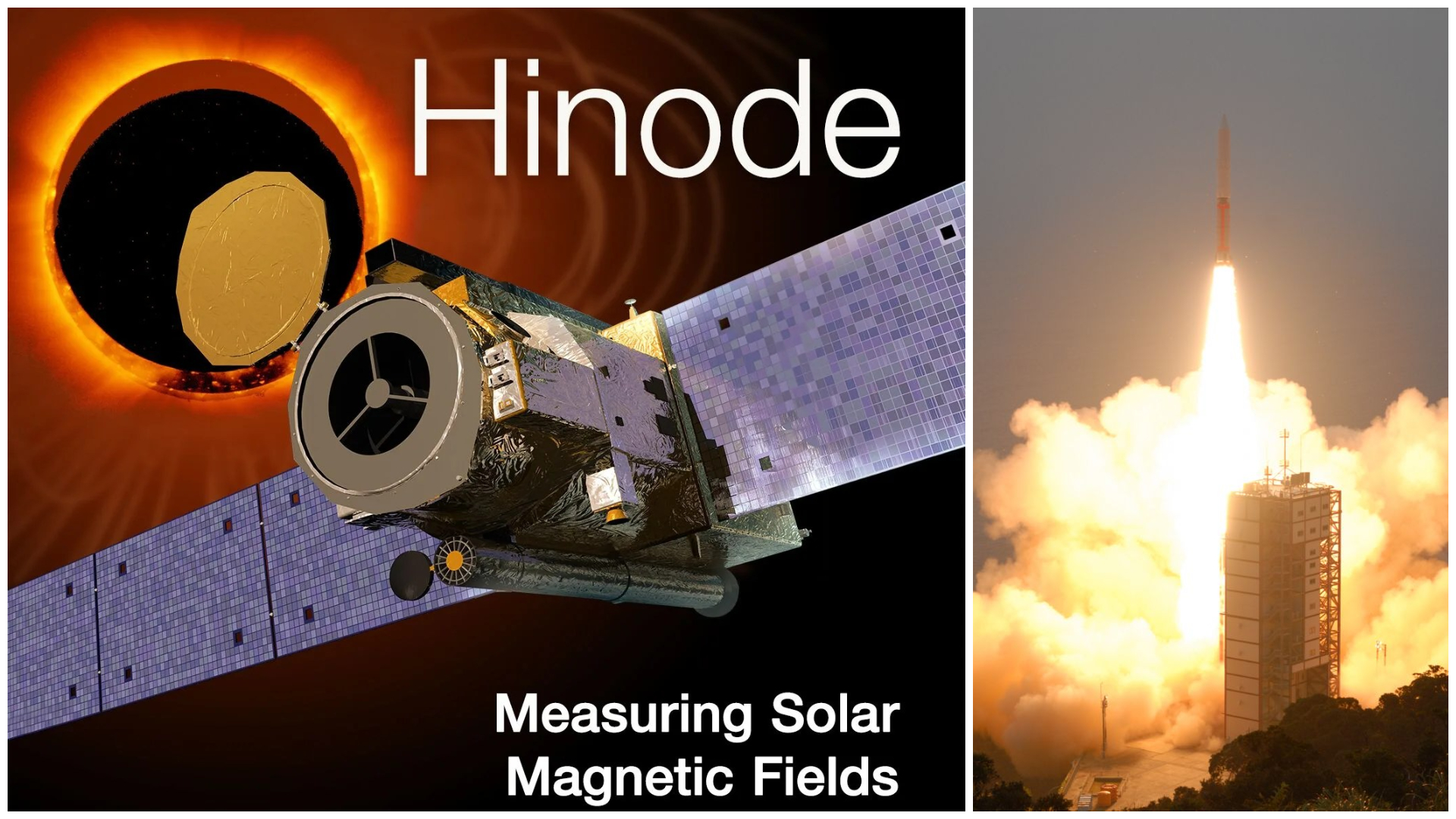
Japan’s Hinode solar telescope launches into space (right) and is seen in an artist’s illustration (left) in this image collage. (Image credit: JAXA/NASA)Why it mattered
Japan’s Hinode solar observatory, while led by JAXA, is a collaboration by Japan, the United States, the United Kingdom and Europe that has studied the sun for 20 years. Its Solar Optical Telescope is the first ever dedicated to measuring the strength and direction of the sun’s magnetic field at the photosphere, the surface of the sun, NASA has said.
Hinode also carried two other instruments, an EUV imaging spectromenter and X-ray telescope, to “understand the causes of eruptions in the solar atmosphere and relate those eruptions to the intense heating of the corona and the mechanisms that drive the constant outflow of solar material and radiation, the solar wind,” NASA added in an overview.
You may like
One strange coincidence of Hinode’s orbit, which circles the Earth once every 98 minutes, is its so-called “eclipse season.” During the summer months in the Northern Hemisphere, Hinode sees a solar eclipse on every orbit, with the Earth eclipsing the sun for up to 10 minutes at a time. Because Hinode always faces the sun, its orbit allows for continous solar observations for nine months at a time.
JAXA launched Hinode on an M-V rocket from the Uchinoura Space Center in Kagoshima, Japan. Due to differences in timezones, it was Sept. 23 local time in Japan at the time of the launch (though still Sept. 22 EDT).

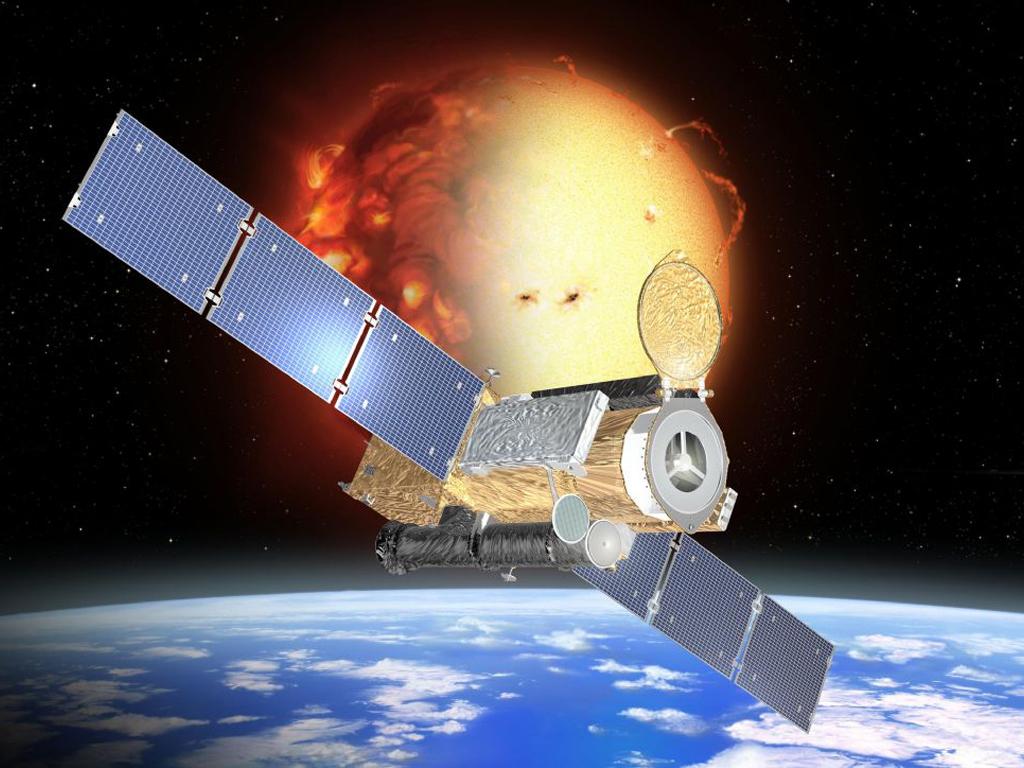
An artist’s concept of the Hinode spacecraft in its low orbit around Earth during the sun’s uneclipsed activity. (Image credit: JAXA)
Hinode’s cameras have captured spectacular video and imagery of the sun’s surface during its mission. The mission was originally extended through 2020, with mission scientists hoping Hinode would last until 2022. But it’s still going strong even after that milestone.
Want more space history? Check out our full On This Day In Space Story archive and watch our On This Day In Space videos on YouTube.
On this day in space! Sept. 21, 2003: NASA’s Galileo spacecraft crashes into Jupiter