
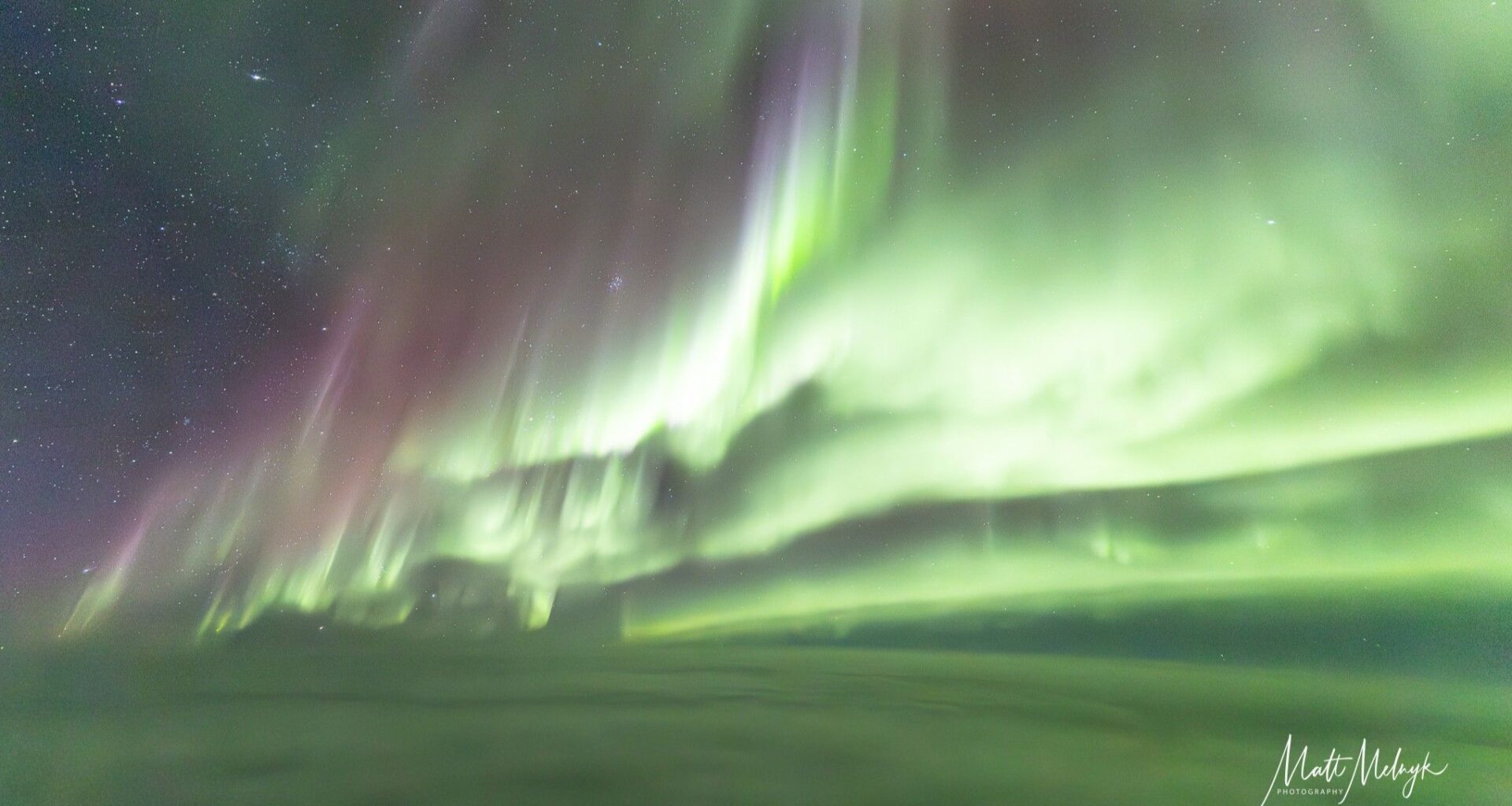
Aurora season is well underway, folks, and pilot Matt Melnyk arguably has one of the best seats in the house.
Cruising at 37,000 feet (11 kilometers) during a Boeing 787 Dreamliner flight from Calgary, Canada, to London, U.K., Melnyk was treated to a spectacular view of the northern lights dancing below a star-studded sky.
“It’s nice to finally see them again”, Melnyk told Space.com in an email. The show lasted about three hours as Melnyk flew over northern Manitoba and Hudson Bay on Sept. 22.
And this wasn’t his first show of the season. Melnyk also photographed the northern lights during a similar flight on Sept. 14 when the display erupted over Manitoba and Hudson Bay once again.
Image 1 of 3
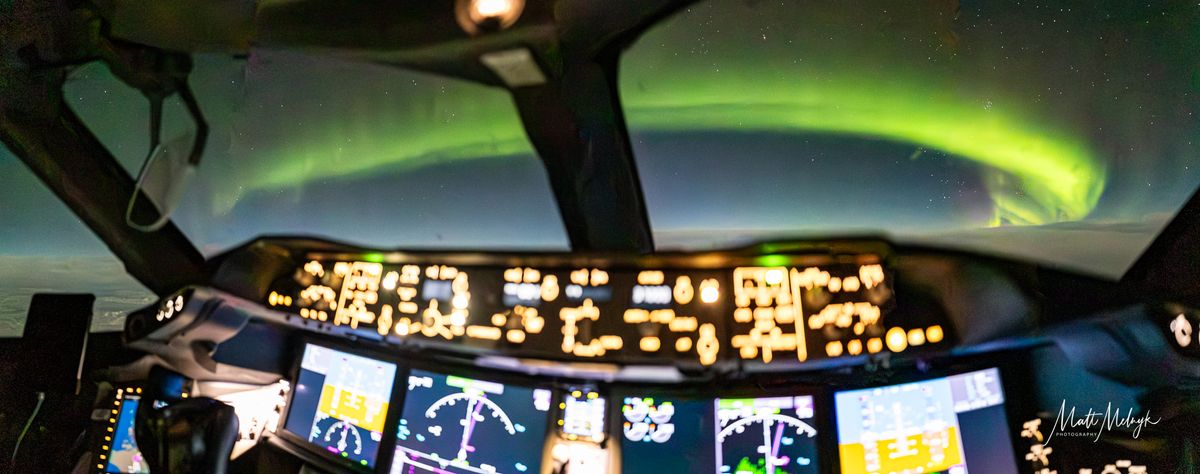
Best seat in the house at 37,000 ft on Sept. 22.
(Image credit: Matt Melnyk)
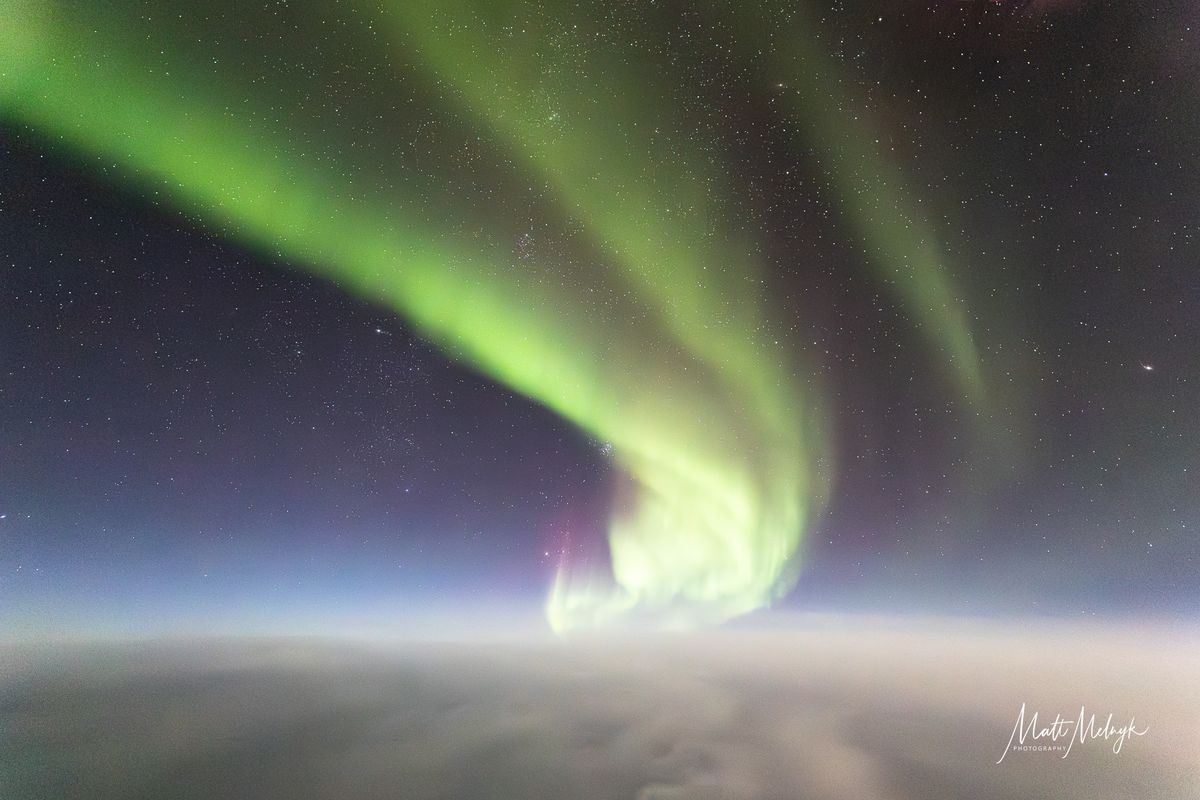
The aurora show on Sept. 22 lasted around 3 hours.
(Image credit: Matt Melnyk)
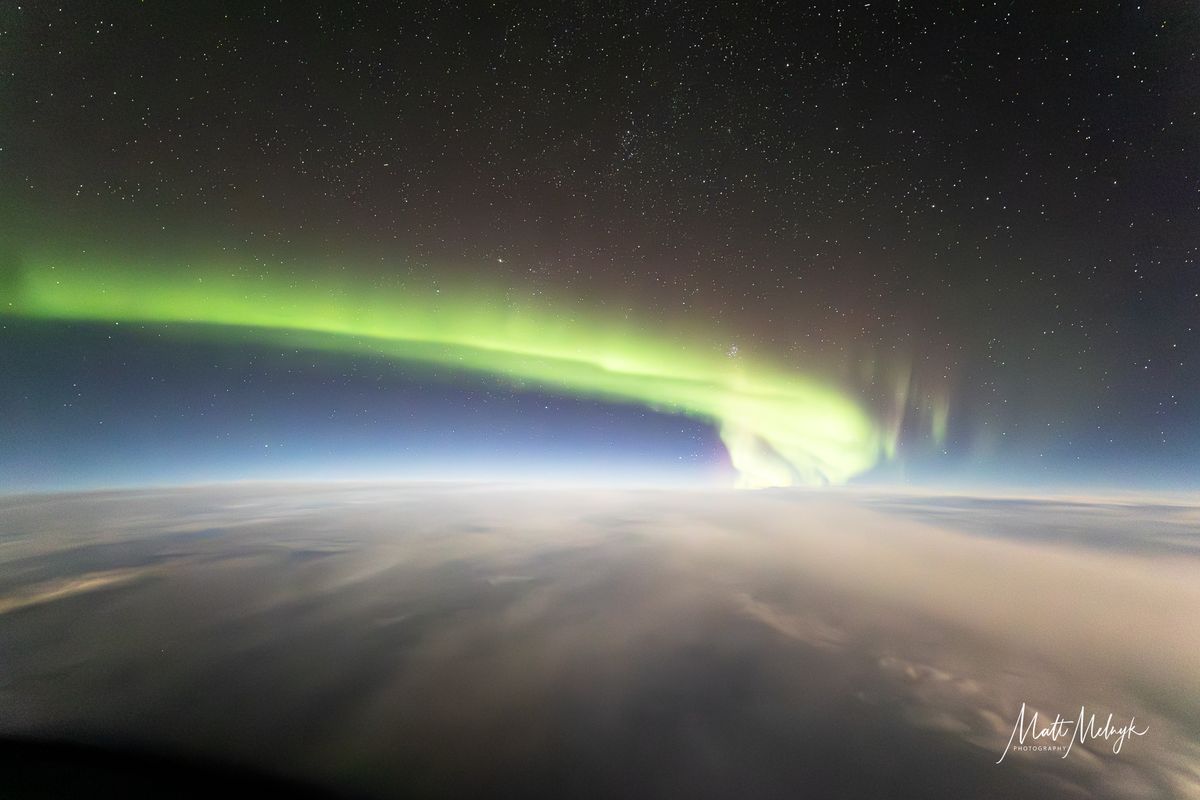
Long sweeping arcs filled the sky on Sept 22.
(Image credit: Matt Melnyk)
The dazzling shows herald the start of what could be a very promising northern lights season. The sun has passed the peak of solar maximum and is in the declining — and often turbulent — phase of its approximately 11-year solar cycle.
You may like
The combination can make the years following solar maximum particularly fruitful for aurora chasers. Solar physicist Pål Brekke previously told Space.com that peak auroral activity tends to occur a few years after solar maximum.
For the techies

(Image credit: Canon)
Melnyk captured the northern lights imagery with a Canon EOS R6 Mark II paired with a Canon RF 14mm F1.4 L VCM lens.
And there’s another reason September can be a good month for aurora hunters. Around the spring and autumn equinoxes, geomagnetic activity tends to increase thanks in part to the Russell-McPherron effect. Due to the geometry of Earth’s magnetic field relative to the sun, conditions become more favorable for the solar wind‘s magnetic field to connect with Earth’s, allowing energy to funnel more efficiently down to the poles.

With darker nights returning, a turbulent sun and a little help from the equinox, aurora season is certainly off to a promising start.