
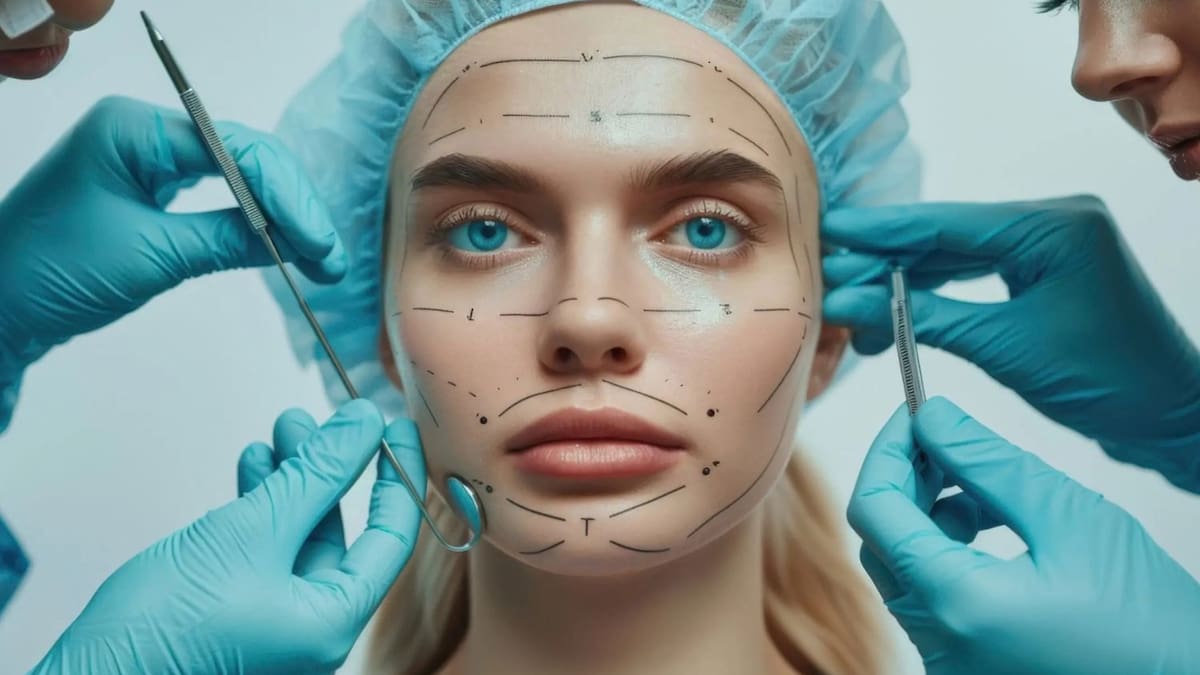
Medical tourism is on the rise, with people flocking overseas for unconventional appearance medicine treatments and cosmetic surgeries. But are they safe? And what’s available in New Zealand? Ashleigh Cometti investigates.
A coroner ruled last week that British businessman and influencer Igho Ubiribo died from a pulmonary embolism after
receiving a hyaluronic acid injection during a penis enlargement procedure in Thailand.
Investigations into Ubiribo’s death on March 6 are ongoing, including whether the Bangkok clinic held a valid licence and followed proper safety protocols after Ubiribo was injected with 40ml of filler.
Ubiribo’s death has sparked debate around the niche elective surgeries driving medical tourism. Thailand, South Korea and Turkey are popular destinations for those seeking specialised cosmetic interventions abroad for cost savings or legal access.
What began with breast augmentations and rhinoplasties has morphed into something else entirely, with technological advancements in the aesthetic space making even the most niche requests to “nip this” or “tuck that” possible.
But what are some of the most niche appearance medicine treatments and cosmetic surgeries available, and how safe are they?
Before (left) and after an earlobe revision surgery at Clinic 42.
Earlobe revision, repair or rejuvenation is said to be a low-risk cosmetic procedure to repair torn, split, stretched or ageing earlobes.
The surgery aims to restore the natural shape of earlobes, improving their appearance and allowing a patient to comfortably wear earrings again.
Performed under local anaesthetic in clinic, the procedure takes up to an hour with minimal downtime. Most patients resume duties 24-48 hours post-op.
It’s one of the many treatments on offer at Auckland’s Clinic 42.
“We have tried to avoid niche treatments until we have tried, tested and made sure they’re safe,” says Dr Ellen Selkon, Clinic 42’s cosmetic physician and director.
“We have done earlobe treatments for many years, as this is a real dilemma for some women when their earrings don’t sit correctly or their earlobes are asymmetrical.”
“These treatments are not requested often but we don’t advertise them. It is mostly word of mouth, or in-consultation discussions.”
Other plastic surgery clinics across the motu offer earlobe revision surgeries, including the private clinics of Dr Mark Gittos and Dr Charles Davis.
In July, Married At First Sight star Bec Zacharia was invited to Bali for rib contouring (also known as rib remodelling) as part of an influencer collaboration with compression garment company Snatched Waist.
The cosmetic procedure involves a patient going under general anaesthetic, while surgeons fracture the lower ribs and reposition them to create a smaller waistline.
A device called a piezotome vibrates and weakens the rib bones before the surgeon applies pressure to fracture the outer layer of the bone and sets it in place for a reduced waist.
Patients wear compression garments for several months post-procedure while their ribs heal.
The surgery is not widely practised in Australia or New Zealand. At the time of Zacharia’s procedure, both the Australian Health Practitioner Regulation Agency and Medical Board of Australia warned that such procedures carried risks, including collapsed lungs, nerve injury, infection and poor bone healing.
Before (left) and after Ruby Tuesday Matthews’ ponytail lift. Photos / Instagram
Ponytail Lift
Australian content creator Ruby Tuesday Matthews travelled to Ilchi Plastic Surgery clinic in Seoul, South Korea, in August for an endoscopic lift.
In a post shared to Instagram, 33-year-old Matthews said she booked the four-hour surgery (also known as a ponytail lift) to appear more “refreshed and awake”.
Ponytail lifts sit between a temporal lift (where eyebrows and eyelids are lifted) and a full facelift. Ilchi says using an endoscope helps minimise the incision, compared to traditional lifting surgeries.
The dissection range varies, but mostly the surgery is performed across the midface – a plane that spans from below the cheekbone to the temple – giving the illusion of a tightly pulled ponytail to address sagging or slackening skin.
In New Zealand, a ponytail lift can be achieved by non-surgical PDO thread lifts, a minimally invasive, temporary procedure that uses dissolvable medical-grade sutures to lift and tighten sagging skin. PDO thread lifts are offered at clinics like The Face Place and Skin Institute.
Endoscopic techniques like those offered at Ilchi are also available from plastic surgery clinics across the country.
Witch Chin Lift
Another lifting procedure offered at Ilchi is the Witch Chin Lift (also known as mentopexy), designed to reshape a droopy or elongated chin without filler.
Soft tissue and muscle can sag and hang over the edge of the chin, which creates a deep fold. This can be the result of ageing, weakening muscles, or after facial surgery.
At Ilchi, the procedure involves a small incision under the jawline, before the surgeon lifts, trims and fixes the sagging muscle and soft tissue back to their original position.
The results smooth the deep chin crease, balancing the lower face and refining the jawline.
Mentopexy surgery is available at selected plastic surgery clinics in New Zealand, including Dr Charles Davis, who performs chin augmentations in Wellington.
Are They Safe?
The risks vary depending on the treatment or surgery, but Selkon says while fatalities aren’t common, “even one [death] is too many as they are all elective procedures”.
“My opinion is that it is very risky to head overseas for surgery,” Selkon says.
“Where some of the results are good, if you do have complications, then it can be hard to find a local surgeon who will want to handle your care.”
Complications can be minimised by going to an experienced practitioner trained to perform the specific procedure, she adds, citing the list of qualified doctors published on the New Zealand Society of Cosmetic Medicine (NZSCM) website.
Selkon says the Clinical Aesthetic Network New Zealand (CANNZ) and NZ Aesthetic Nurses Association (NZANA) have credentials showing their nurses are trained and audited.
Before going under the knife (or needle), Selkon recommends booking a consultation where you can ask questions, including seeing before-and-after photos.
“[People] do need to realise that every procedure may have complications and side effects and [practitioners should] make sure you are aware of these. Ask how the practitioner will deal with this should it happen,” she says.
Selkon believes New Zealand needs to improve training, monitoring and patient care in aesthetics.
“In Australia they have a body that covers all cosmetic medicine practitioners. We need the same thing here to ensure that all healthcare providers have the same training and patient-centred approach,” she says.
In the event of an emergency, “All practitioners should have full medical resuscitation equipment on site and know how to use it.”
What’s Next?
Selkon predicts that as research develops around ageing, new drugs, products and techniques will come to the fore.
“Gen Y [Millennials] onwards have mostly looked after their skin much better than Gen X and Baby Boomers did – so they will automatically age better,” she says.
While surgical techniques will continue to advance, Selkon predicts non-surgical body treatments will hit their peak, with targeted treatments for wrinkly arms, decolletage and buttocks continuing to evolve.
“Batwing and buttock treatments are up-and-coming. While they’re not as frequently asked for in Aotearoa as they are overseas, they are still becoming popular,” she says.
Selkon says it’s important not to fall prey to fleeting aesthetic trends.
“10 years ago big cheeks, big lips were all in, now we’ve reverted to a much more natural look,” she says.
“Some of the women who had permanent filler or cheek implants 10 years ago are now regretting that and having them removed.”
More beauty
The top beauty trends that emerged from the NZFW runway; experts share their go-to products to use backstage; wellness rituals to combat burnout and how to achieve great eyebrows.