
On a miserable early spring afternoon in Sydney’s CBD, the streets are quiet as businesspeople, tradies and the occasional shopper ducks between the overhangs to dodge the persistent drizzle.
It’s a Tuesday and probably not the kindest day to visit one of the city’s most iconic department stores, David Jones Elizabeth Street, to make an assessment of how the nation’s retail woes are playing out in real time, but even this otherwise unflappable news.com.au reporter was left surprised.
Want more finance news? Download our new app for even more coverage
A few weeks ago, I had visited David Jones’ main rival, Myer, about a three-minute walk away, and found strangely quiet scenes as a few shoppers and tourists pottered around. Myer later explained it was undergoing a major overhaul of its ground level hall and was planning something spectacular to make it the talk of the town.

Outside Myer, it was clear what the challenge was for Australia’s department stores as Gen Z shoppers flocked in large groups inside Mecca – a trendy beauty brand that was once retailed in the department store across the road, but is now doing its own thing with stand-alone shops popping up in Australia’s CBDs.
I was expecting to find similar scenes in David Jones on this uncharitable afternoon, but the retailer appears to be trying to make the best of a difficult situation in eye-popping fashion.
Luxury brands exit David Jones
Over the past few months it has lost some of the world’s best known fashion labels, Christian Dior, Gucci and Chanel, that would have no doubt made it a destination for affluent shoppers.
It is understood that months of payment disputes have pushed the luxury brands away from the 188-year-old department store giant owned by Anchorage Capital Partners.
Gucci has pulled out entirely, Dior recently stopped supplying shoes and leather goods, and Chanel has halted footwear sales while retaining its cosmetics line.
In response, David Jones is racing to protect its remaining brand portfolio, which still includes Givenchy, Bottega Veneta and Polo Ralph Lauren.
When you walk into David Jones’ flagship Sydney store, it’s clear the retailer is not holding a vigil for the brands that have called it quits.
Where Gucci and Dior long had a prime position in the ground-floor accessories department, shoppers are now greeted with a borderline psychedelic experience in the form of an expanded sales area for sunglasses brand Gentle Monster.
A humanoid robot wearing thongs sat perched on a sofa ready for selfies with customers and a giant robotic face behind a glass case slowly moves its head and eyes to follow you as you try on $600 sunnies surrounded by mini abstract sculptures.
Upstairs on the seventh floor, where the shoe department once hosted a luxury collection of mini-boutiques, Louis Vuitton, Chanel, Gucci and Dior are no longer there.
Instead, the space has been turned into a Coco Chanel pop-up perfume installation that is set up like a French cafe, complete with tables topped with perfume menus, chairs, mock-up newspapers and a stand where you can try various scents.
There was nobody sitting at the tables or trying out the perfumes, but then again, it was a midweek afternoon and the stand seemed to be creating a bit of a buzz as shoppers coming up the escalators clocked it.
“Oh my god!” said one Gen Z shopper out with her mates. “I’m taking a picture. My mum would love that.”
Another way David Jones is trying to keep both luxury and everyday shoppers coming back is through their tastebuds.
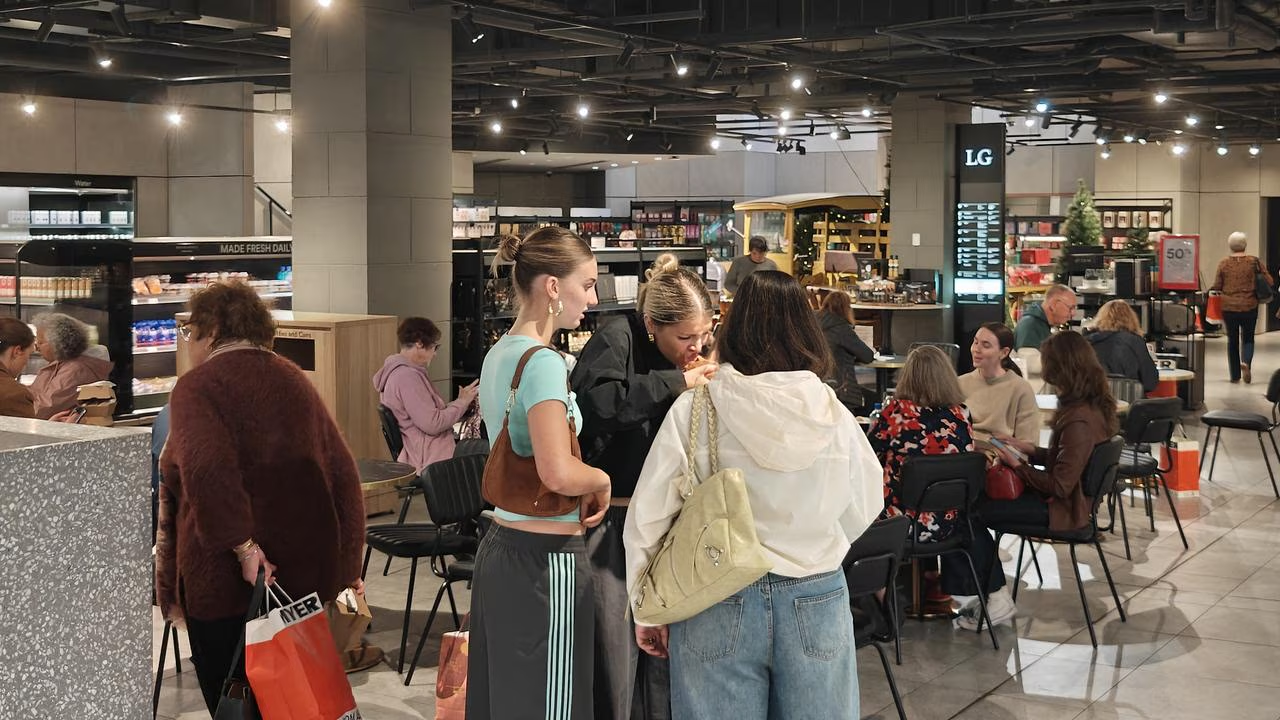
I took the lift down from the seventh floor to the lower ground food hall (after buying myself a discounted North Face jacket) and discovered where the real action was.
It was 2.30pm, not what you would consider lunchtime, but the floor was buzzing with hungry shoppers.
The centrepiece for those with expensive taste is likely the oyster bar which reopened this month, serving fresh shellfish paired with fine wines, but it was very sleepy at the time of visiting. Instead, shoppers flocked to the bakery and Wok Bar and every table in the centre of the hall was filled.
All in all, it was a nice little outing.
$95.5 million loss
The busy scenes will be welcomed by David Jones chief executive Erica Berchtold, who has been in the top job since June and took the helm at a very challenging time for the Aussie retail sector.
Soaring inflation and high interest rates have hit hip pockets hard and Aussies have less spare cash than ever before, spelling trouble for retailers.
David Jones has not been immune as it slid to a pre-tax loss of $95.5 million in the year to June 29, accounts filed with the Australian Securities and Investments Commission show, worse than the $74.1 million loss in the previous year. Sales at the retailer fell 8.7 per cent to $2 billion.
In the face of challenges as luxury brands exit, Ms Berchtold said changes were afoot for the department store’s relationship with luxury brands.
“Rather than locking in confirmed footprints of these brands for long periods of time, we’ll do pop-ups, we’ll do trunk shows, and we’ve got some other exciting things to fill in those spaces,” she said in a statement.
“I have a clear view of where I want to take David Jones that I have shared with the landlords and we will continue to work together in implementing that plan – including what our future store footprint might look like.”
Ms Berchtold is spearheading a massive strategic overhaul after taking the reins from former boss Scott Fyfe earlier this year.
Determined to keep high-end shoppers walking through the doors, Ms Berchtold has been touring stores across the country, while holding discussions with suppliers and landlords to map out DJ’s plan for the future.
The department store giant operates 38 stores, but it has shut several this year and reduced the amount of space it leases in shopping centres.
Ms Berchtold said David Jones had not told any landlords that it is going to close more stores. She added “no landlord has asked me to close a store”.
“I have a good relationship and regular dialogue with the company’s landlords, and they are aware that I am resetting the operating model to focus on ensuring the business is modernising supply chain and fulfilment, improving productivity, reviewing commercial and brand partnership models, growing its online capability and increasing differentiation through a stronger private label offer,” Ms Berchtold said.
News.com.au has reached out to Gucci, Dior, Chanel and Louis Vuitton for comment.
Department stores face ‘identity crisis’
Yet Macquarie University Professor of Marketing Jana Bowden said the department store sector is suffering from “retreating relevancy and an identity crisis”.
She told news.com.au Ms Berchtold is focusing on fashion, online luxury growth and bringing the magic back to the department store experience – what consumers always remember their experience to be back in the day.
However, she said there is a disparity between what customers experience in the flagship store and what they see in other David Jones stores around the country.
“One amazing experience-laden flagship store with an oyster bar and glitzy layouts can’t make up for 10 other suburban, lacklustre store experiences where staffing is thin,” Prof Bowden said.
She noted that premium brands are increasingly stepping away to offer dedicated stand-alone experiences, leaving department stores in a difficult position.
“DJ’s is stuck in limbo as neither a specialist store nor a generalist store,” Prof Bowden said. “There’s got to be consistency across the store experience when you are trying to lift the whole brand … Right now, consumers are cost-conscious and value-hungry, but they still want multichannel, engaging retail formats.”
Myer suffers second-worst loss in 126 years
David Jones isn’t the only department store doing it tough. Iconic department store Myer this week revealed a massive financial hit as a “volatile trading period” dragged the company deep into the red.
It was the store’s second worst financial year in 126 years of trading.
In its latest market update, Myer confirmed it would skip paying out a final dividend to shareholders as the company recorded a net loss of $276.5 million in the 52 weeks to July 25, 2026.
Its apparel business – which includes Just Jeans, Portmans and Jay Jays acquired in a $890 million deal signed January 2025 – is also struggling.
According to the latest results, strong sales out of Just Jeans were offset by falls in other brands, particularly Portmans.
Myer warns things will get worse before getting better, flagging further falls in 2027.
Overall the retailer posted total sales of $4.09 billion – up 0.7 per cent, and a loss of $276.5 million. It wrote down another $279.6 million to “goodwill, brand intangibles, and stores”.
Myer executive chair Olivia Wirth said the store struggled through a challenging economic period over the past 12 months.
“We expect this volatility in consumer behaviour and discretionary spending to continue over the next 12 months,” Ms Wirth said.
“Consistent with the trends we observed in June and July, trading through the early part of FY27 has remained uneven, with softer conditions experienced in August followed by improving trading momentum through September, despite recent challenges in global shipping.”
She said despite these changes, the business is continuing to strengthen in key areas including record loyalty engagement and expanding its brand and product offering.
“While we remain cautious about the near-term consumer outlook, we believe that our strategic actions are strengthening the Group’s competitive position, resilience and supporting the creation of long-term shareholder value,” Ms Wirth said.
— with Cameron Micallef
Read related topics:Sydney