
In 2017, a young analyst like me didn’t have the luxury of being dispassionate about cycles or the patience for foundation building. I didn’t even know what a cycle was in venture. I had creative energy and a deep desire to be part of many deals. Meanwhile, my friends at consulting firms seemed to lead glamorous lives. I couldn’t help but question my “clever and courageous” decision to enter venture capital. It was beginning to look more foolish than bold. At 24, your frame of reference is often limited to your immediate peer group. Even though I believed there was more to life than just a career, I couldn’t shake the comparisons.
One thing I did feel uniquely confident about was writing. It was the one pursuit that set me apart. I soon started a blog list on Quora called “The Life of a Junior VC”, where I curated articles I enjoyed reading on tech, business and India’s evolving start-up landscape. People seemed curious to understand the complexities of Indian start-ups. I didn’t realise it at the time, but I was laying the foundation for something larger.
Even as the investment climate cooled, entrepreneurship showed no signs of slowing. India’s first start-up wave, between 2007 and 2015, largely drew inspiration from Silicon Valley. The world viewed it as “copying the West”, and investors referred to it as “X for India”. But in 2015, the focus began to shift inward. Start-ups emerged with a sharper lens on Indian problems.
ShareChat built a vernacular-first social network. Meesho enabled women to resell apparel through WhatsApp. Moglix launched a B2B marketplace for industrial goods. Rapido created a bike taxi platform tailored to Indian traffic. PhonePe spun out of Flipkart as a payments app. Razorpay focused on building a gateway for start-ups. Groww launched in 2016 as a trading platform. Infra. Market tackled procurement for construction. Alakh Pandey started PhysicsWallah on YouTube to make quality coaching accessible.
These weren’t just copies of Western models. Each one emerged from a uniquely Indian insight. Meesho recognised that Indian women have a significant influence on apparel buying. ShareChat identified the need for a simplified social platform. PhysicsWallah tapped into the unmet demand for online education. PhonePe capitalised on India’s mobile-first internet access. These weren’t just start-ups; they were mirrors to India’s evolving digital identity.
While established VCs were pulling back, new investors entered the scene. The riskiest stages, pre-seed and seed, became the new frontier. Funds such as Venture Highway, Stellaris, Pi Ventures and Fireside Ventures sprang up to take those early bets. Samir Sood and Neeraj Arora, with ties to Google and WhatsApp, formed Venture Highway. Samir and Neeraj, when at Google, had invested in Erasmic, which became Accel. Helion alumni Rahul Chowdhri, Ritesh Banglani and Alok Goyal launched Stellaris. Kanwaljit Singh founded Fireside to back consumer brands. Manish Singhal started Pi Ventures to focus on deep tech. These fresh players injected new energy into a quiet ecosystem.
Venture Highway backed Meesho and Moglix early on. Y Combinator took bold bets on Razorpay, Groww and Meesho. Around the same time, India began to see the emergence of a new category: direct-to-consumer (D2C). Inspired by US start-ups like Casper, which was a D2C mattress company, Indian brands began bypassing traditional retail.
Mamaearth launched with a single product, a baby-safe mosquito repellent and got backing from Stellaris and Fireside. Their partnership was born from perfect timing, as the funds and the start-up were beginning. All these start-ups weren’t obvious winners at the time, but they were built on conviction.
What seemed like niche plays were doorways to much larger markets. A baby-safe product served the broader market of new mothers. Social resellers became a segment of the growing e-commerce base. Payment gateways for start-ups fed into a massive payments ecosystem. These companies followed the classic path of disruption: start small, win trust and expand. Clayton Christensen, an American academic, called it serving the “unprofitable” segments that incumbents ignore. He termed this the “path of disruption”.
By late 2017, the ecosystem had begun to gain momentum. Byju Raveendran, once a CAT teacher who filled stadiums, transformed his classes into an EdTech giant. Initially focused on the 2 lakh CAT aspirants, BYJU’S had expanded into the K-12 segment, reaching over 26 crore students. What started as a niche had become a juggernaut. It even attracted investment from Zuckerberg’s foundation. Unacademy took a different path and raised over $50 million.
Founders also explored categories beyond horizontal e-commerce and vertical-focused platforms gained traction. Home services had become a hot trend in Powai Valley, with start-ups like TaskBob, HouseJoy, Doormint and LocalOye emerging from IIT Bombay. Unfortunately, none of them survived. The one that did wasn’t in Powai Valley and was called UrbanClap, founded by an IIT Kanpur and UC Berkeley team. By simply surviving the 2016 funding winter, UrbanClap gained a lasting edge. Survival in the start-up world is winning.
Used car sales also became a viable category. Cars24 and Spinny both launched in 2015. Cars24 was founded by Vikram Chopra and Mehul Agrawal, who had previously built FabFurnish. Spinny’s founders were also seasoned entrepreneurs. The rise of these companies reflected a broader shift. India now had ‘ex-founders’ whom investors were willing to bet on again.
E-commerce enablers also began to grow. Shiprocket, originally a D2C storefront, pivoted to logistics and had revenue of about Rs 20 crore in 2017. Unicommerce, founded by Snapdeal’s former vice president, Karun Singla, was acquired by Snapdeal and focused on providing backend software for inventory and data management. Interestingly, Shiprocket’s pivot was away from what Unicommerce was trying to solve. Both ended up going deeper. Pivots are an interesting feature of the start-up ecosystem and not a bug. Start-ups are, at their core, hypotheses about how the world works. Founders believe there’s a specific need that they can solve. Like hypothesis testing in statistics, most start-ups fail. YouTube began as a dating site. Slack was a tool for gamers. Instagram started as a check-in app. Meesho was first a seller storefront. Delhivery began as a grocery delivery app. The initial idea often changes. That’s why investors say: back the jockey, not the horse.
Pivots, however, rarely emerge from nowhere. They usually evolve from the original idea and remain in adjacent spaces. What matters is that the founder is running a race in a large, growing and full-of-opportunity market. Founders must be emotionally and intellectually honest to make the pivot. Ultimately, they need to address a real problem and build something that aligns with the flow of money. Funnily enough, as companies explored new business models in India, the flow of money itself became a hot category for startups.
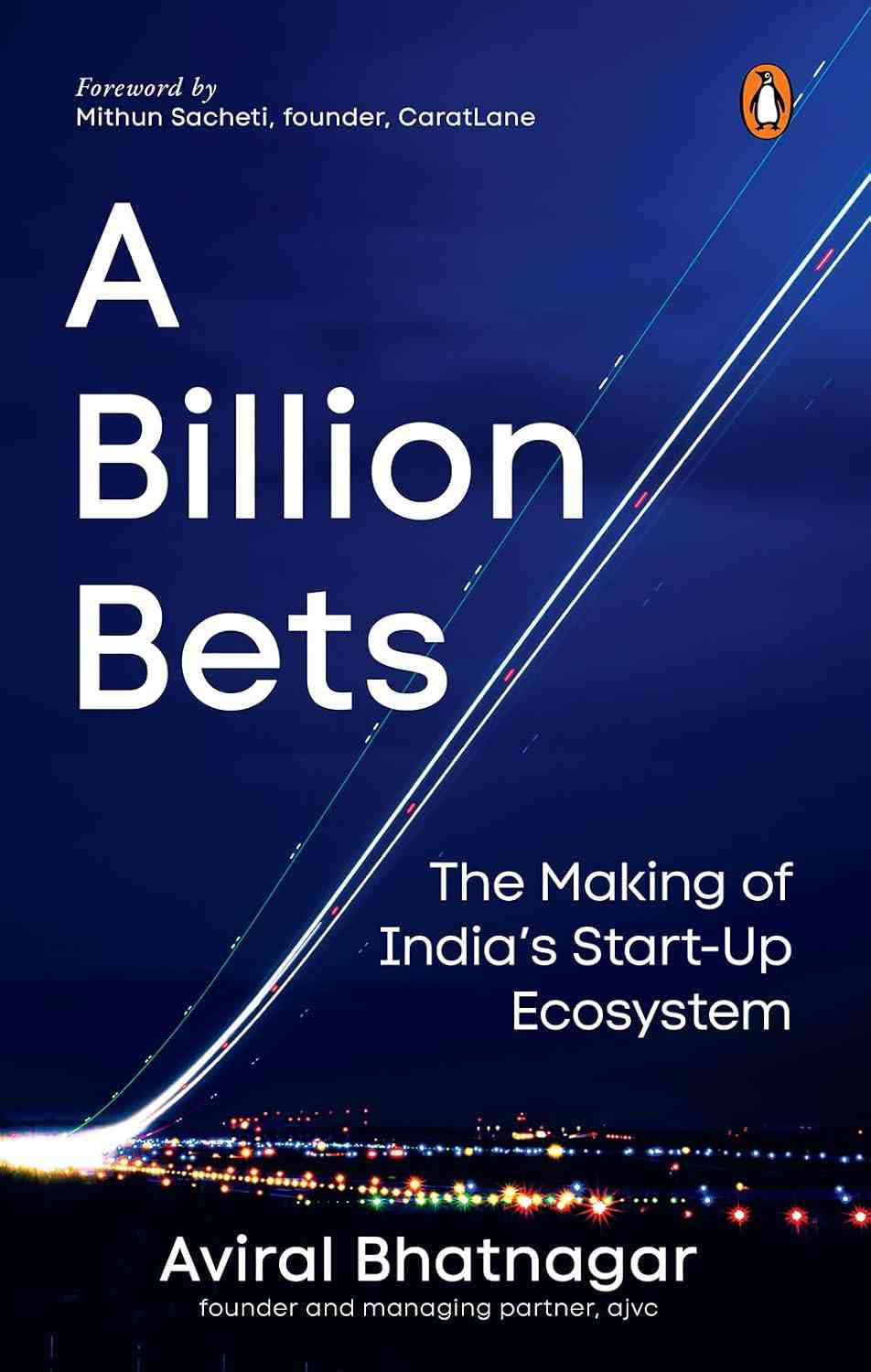
Excerpted with permission from A Billion Bets: The Making of India’s Startup Ecosystem, Aviral Bhatnagar, Penguin India.