
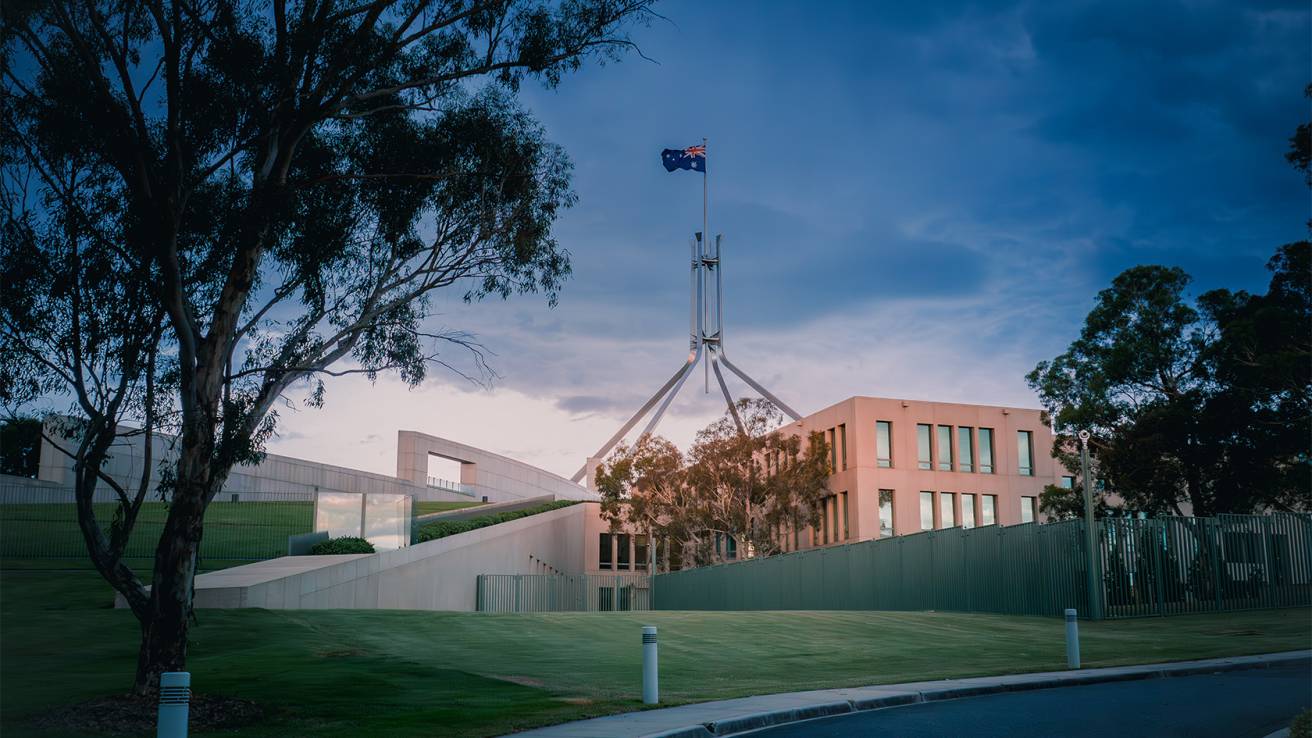
Australians have historically been more willing to believe the 1990s Pantene shampoo maxim “It won’t happen overnight, but it will happen” when it comes to hair care than any warnings about the slow creep of authoritarianism.
To annunciate the latter can attract significant scorn — labelled, nearly, as treasonous rhetoric — as if an understanding of the brittle systems of government in the West might somehow equate to a disbelief in the project of Australia itself. “Love It or Leave” is surprisingly fertile ground for such a barren phrase.
It is precisely this reflexive dismissal of concern about our institutional well-being that clears the ground for the erosion of it, which in turn invites, or gives oxygen to, the platitudes of an easy populism. In Australia, we tend not to sweat the little things. She’ll be right, until she is not right.
An example. Over the past decade or so, my reporting has focused increasingly on the tiny abuses of process and rules within, typically but not exclusively, Australian government departments and agencies. Sometimes these are at the direction of ministers; sometimes they are deeply stitched into the practice of the bureaucracy as a face-saving measure.
Related Article Block Placeholder
Article ID: 1266781

When the Coalition was in power, its supporters found ways to rationalise administrative sleight of hand as a trivial detail. An evaluation report of the controversial Cashless Debit Card program is withheld for months and only released under pressure. The body that oversees freedom of information is starved of funding. A prime minister secretly becomes another five ministers.
Independent. Irreverent. In your inbox
Get the headlines they don’t want you to read. Sign up to Crikey’s free newsletters for fearless reporting, sharp analysis, and a touch of chaos.
By continuing, you agree to our Terms & Conditions and Privacy Policy.
When Labor came back to government, some of its supporters made various arguments in defence of opacity and parliamentary trickery. Actually, freedom of information laws should be watered down. Senate inquiries are annoying. Climate change is not as important as winning power in the next election cycle. And so on.
The debate teams had swapped sides, but the arguments were largely the same because the problem remains the same between governments of different political persuasions. Power is its own constituency. It exists to protect itself.
And so the little things do, in fact, matter. There is no guarantee that Australia will get a full-blown populist in ultimate power, but there is no guarantee that we are, despite our best assumptions, immune to this outcome. What sclerotic rules and oversight mechanisms will meet them when they come to office?
Nobody wakes up to sudden authoritarianism. Yes, it is a form of power that ultimately takes — liberties, speech, more power for itself — but not all at once. People relinquish themselves to it, much as a public might make allowances for one government to get away with bending norms or rules. Over time, these bends become clean breaks.
Donald Trump is an odious figure. A liar, a grand narcissist and abuser surrounded by key figures and billionaire backers who are, in some respects, even worse than he is. To name just a few of them, Stephen Miller and Elon Musk didn’t have to ruin half as much of the American state as they might have needed to. That job had been done for them in the decades prior. Graft, capital and an increasingly muscular, politicised layer of bureaucratic management neutered oversight. People routinely became targets of state power, not its principal object.
Certainly, the distance to a more fully authoritarian ruler in the Australian context may be much greater, but why should we wish to bridge this gap by giving up today the institutional protections we can save?
Pauline Hanson has been having a dream run in the Australian press of late. A poll, of all things, suggested she could be prime minister one day. She was even grilled about foreign policy on the Murdoch channel — she did not know the Indonesian president’s name, but why would she, knowing things isn’t really part of her platform — in an apparent gotcha that seemed to only work for her and her supporters.
Related Article Block Placeholder
Article ID: 1262496
I don’t think it is compulsory that a populist autocrat has red hair. But what Hanson and Trump do have in common, however, is a willingness to first court and then rule over the media. We elevate them by talking endlessly about these figures on even the flimsiest of pretexts. Good or bad news, it doesn’t really matter. But we talk.
Rarely do we give even a sliver of the same journalistic attention to the mosaic of structural, often administrative, deprivations across governments and corporate Australia that threaten transparency, services and even life. These make regular people angry, and it is no small irony that the populist needs that anger to win. This is not to say that the right-wing forms of populist power do not feed on racism and fear — they do — but that the ordinary rage of a people unlocks greater harm still.
It is not impossible to stand up to figures like Donald Trump when they come. Our job, little by little, is to make sure power is not already consolidated for them when they reach the top. If nothing else, it’s a matter of self-respect that we try.