
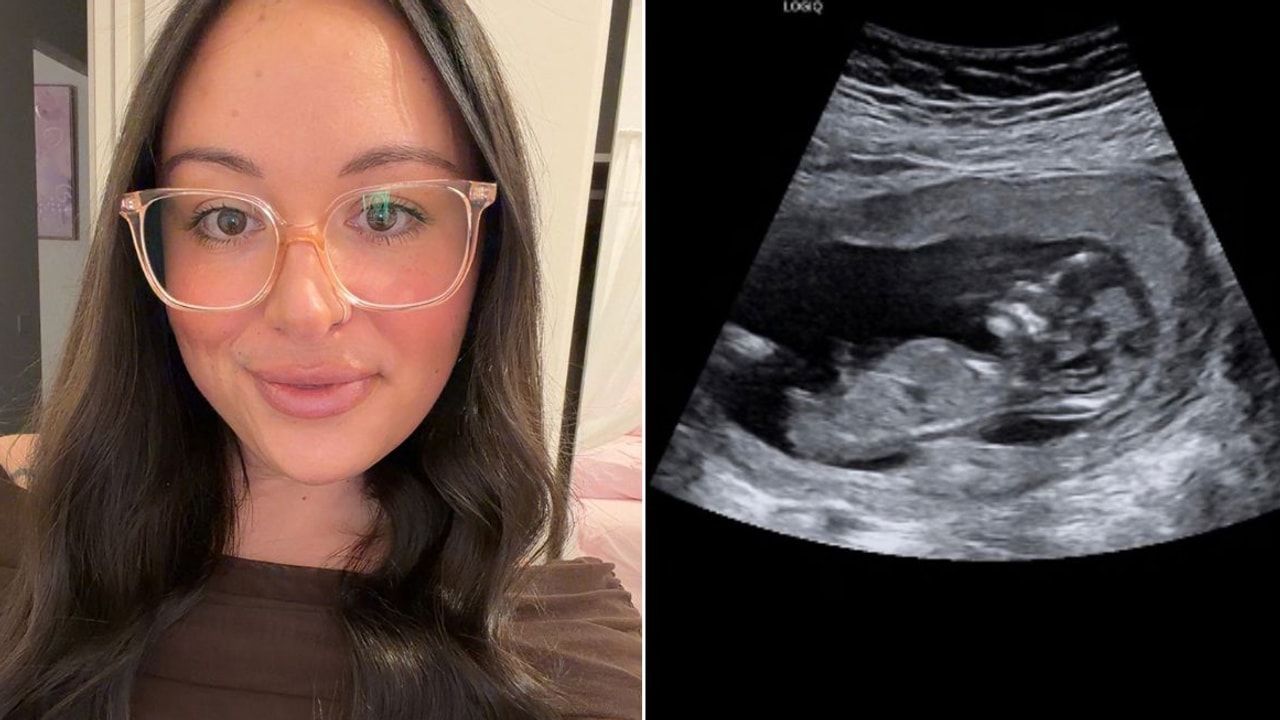
We often say that behind every statistic is a human story. But what about the Aussies who never even make the count?
Brooke Walker is one of those invisible stories.
The 35-year-old from Melbourne experienced her first of two miscarriages in 2019 at around six weeks, with a second at around five weeks gestation in 2024.
“I was always the babysitter of the family. Everyone always called me the mum of the family because I was always wanting to be around their babies and help them and look after them,” Ms Walker told news.com.au.
“I just knew that one day I wanted to be a mum”.
The breakdown of her engagement and exhausting appointments have meant her path to motherhood has been far from easy.
Her first loss was traumatic.
She’d presented to the emergency room and waited up to seven hours for a physician, only to be met with cold dismissal.
A doctor told her: “If you didn’t take a pregnancy test so early, you wouldn’t have even known you were pregnant” in the hours after losing her baby.
“I thought to myself, no wonder why people don’t go to a hospital or talk about a miscarriage when you’re treated like that so early on,” she reflected.
“That miscarriage, and the experience I had, just sticks with me all the time. My second miscarriage, I feel it, but it’s not as much as the first one.”
The most devastating part of the entire experience is that the loss isn’t included in national health data.
“I definitely think it is quite sad that the data doesn’t reflect the true number of miscarriages that we do have,” Ms Walker said.
New national data published by the Australian Institute of Health and Welfare revealed that three in 10 women had previously experienced at least one miscarriage, while one in 10 had two or more.
Unfortunately, these stats don’t present a thorough picture.
The numbers were collected from just five of our states and territories, and women who didn’t go on to have a subsequent birth after their loss were excluded.
Doctor Hector Georgiou from Melbourne IVF said a lot of the data is “built around births” meaning our recording of pregnancies that end earlier uses a “much less comprehensive system”.
“If a woman miscarries and never goes on to have a registered birth (whether by choice, secondary infertility, or simply not yet), she’s invisible to the collection,” Dr Georgiou told news.com.au.
“Indeed, they have experienced a significant reproductive and often very emotional event. Yet, our national data systems don’t necessarily record it.”
Accurate numbers would also mean better supports and services for families.
“Better data is ultimately about more than statistics; it is about making sure that people’s experiences are visible and that services are designed around the reality of their lives,” Dr Georgiou continued.
“In my day-to-day practice, I see how much pregnancy loss can affect people’s confidence in their ability to become parents, their decisions about future pregnancies and, sometimes, their wider sense of wellbeing. We need to make sure that those experiences are recognised and supported”.
Ms Walker made the decision to make a third attempt at pregnancy as a solo mother by choice.
Currently, she’s 17 weeks pregnant with a baby boy after turning to IVF to make her dream a reality.
“I don’t want to say it’s easy, because I don’t think IVF or anything about it is easy, but it’s been a really positive experience. I’ve got so much family and so much support around me that it’s made the journey a seamless one,” she said.
“I wouldn’t change it for the world, to be honest. Everything led me to where I am now”.
After her first visit, Dr Hector was able to determine a health concern with her blood, placing her on aspirin throughout IVF treatment, her entire pregnancy and up until six weeks post-partum.
Her pregnancy has come with a degree of caution.
“I have so much anxiety around the pregnancy because of my previous losses,” she admitted.
It’s why she is determined to speak out, ensuring that even though her losses remain aren’t recorded in official statistics, they still count.
“I think it’s really hard because miscarriage is such a taboo subject. So I don’t think a lot of people speak about it. Which is really sad,” she said.
“I am very open in terms of my miscarriages. I will tell anyone who listens just to make other people feel less alone”.