
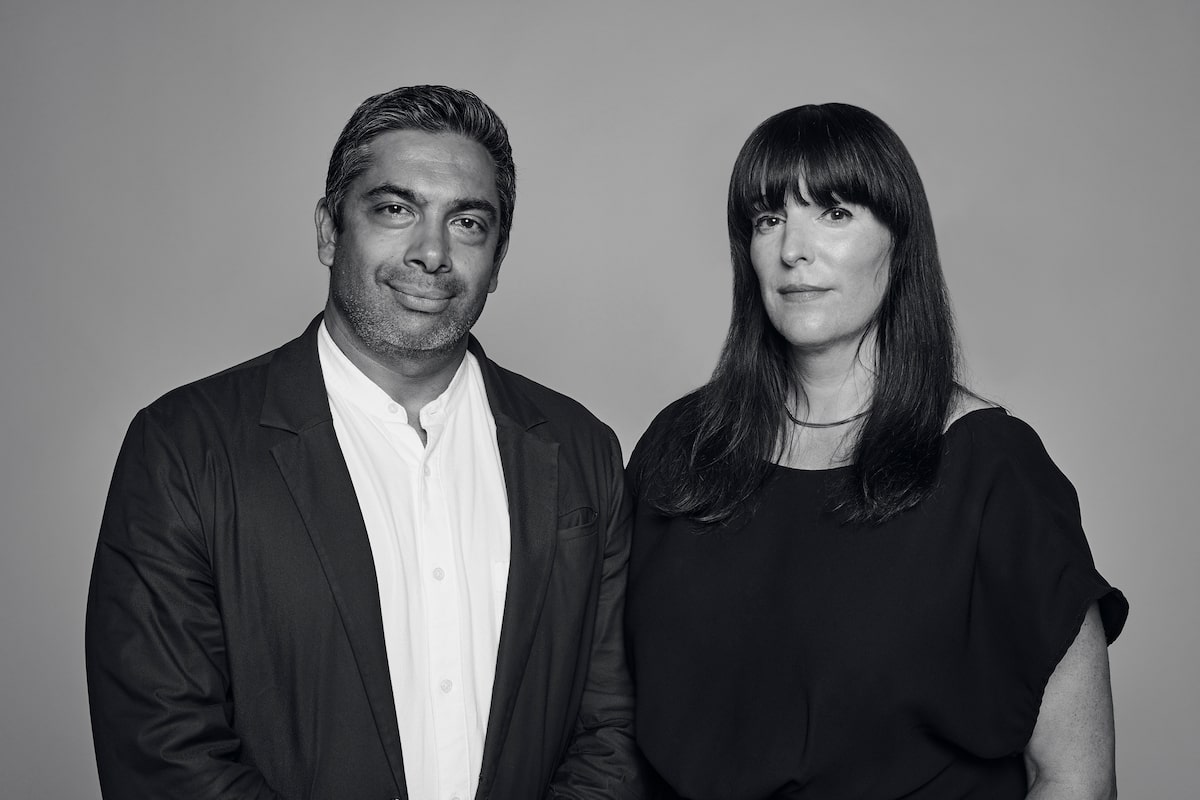
Sirish Rao and Eva Respini said that their roles would overlap more than a traditional artistic and executive director would, especially with fundraising, but also in some programming.Vancouver Art Gallery/Supplied
The Vancouver Art Gallery’s board of trustees have named Eva Respini and Sirish Rao as its co-chief executive officers in a rare dual appointment to a top job in Canada’s visual-art sector.
The pair have been interim co-CEOs for the past 18 months after Anthony Kiendl’s departure as director and chief executive officer. Respini has been promoted from curator-at-large to chief curator; her remit will include artistic priorities as well as the overseeing of progress on the gallery’s long-delayed, now shrunken future home. Rao will also serve as executive director, handling operations and finance while retaining his long-standing oversight of Art of Wellbeing Lab and Centre for Global Asias.
This kind of double-headed leadership structure is common in the performing arts, where institutions are often headed by both artistic and executive directors. It’s less common for large national visual-arts museums and galleries, which often fall under a single executive’s vision – though more dual-CEO examples are emerging at Canadian galleries, including at Saskatoon’s Remai Modern.
In a joint interview, Respini and Rao said that their roles would overlap more than a traditional artistic and executive director would, especially with fundraising, but also in some programming. They will carry their respective experiences – Respini as long-time curator, including at New York’s Museum of Modern Art, and Rao as a publishing entrepreneur and leader of South Asian cultural enterprises – into their equal roles.
New Vancouver Art Gallery to be smaller, more Canadian than ambitious original plan
“I’m really looking at the future of the gallery, including the capital project,” Respini said, referring to the gallery’s new building. “He’s much more focused on minding the shop – that the today is also being taken care of.” But she acknowledges the necessary overlap: “I’m very much focused on the today as well because we’re only as good in our new building. And we’re only as good as how we are today.”
Rao said he describes Respini “affectionately as a museum beast, and myself not being one.” Together, he said, he hopes they can orient the Vancouver Art Gallery as a place to answer the big questions of our time at a moment when major cultural institutions face significant challenges.
“There is the need right now for institutions like museums to behave much more nimbly, much more entrepreneurially, to understand that their models are under great flux,” Rao said.
The Vancouver Art Gallery, one of Western Canada’s most prominent art galleries, has faced a variety of financial struggles in recent years. With attendance and revenue at a 15-year low last year, the gallery cut about 30 per cent of its work force and expenses. And its ambitious plan to replace its current Robson Square home in a former courthouse with a tower six blocks away has been significantly downsized after cost projections reached $600-million.
For the Vancouver Art Gallery’s Eva Respini, it’s all about the art. Period.
It’s now expected to be three, rather than nine, storeys tall. The Vancouver firm Formline Architecture + Urbanism and Toronto’s KPMB are set to design the new building.
Dana Claxton, a gallery trustee, photo-based artist and member of Wood Mountain Lakota First Nation, said in an interview that in their year and a half as interim co-CEOs, Respini and Rao showed both a shared vision and an ability to make difficult decisions in difficult times. “They knew those things had to be done, and brought things back in order in a good way,” she said.
Respini and Rao have endeavoured to make the gallery’s permanent collection more consistently available to the public on the building’s third floor. The first floor is hosting That Green Ideal: Emily Carr and the Idea of Nature, the institution’s biggest solo exhibition of the B.C. painter’s works in more than two decades. With the exception of four loans, Respini said, the works are drawn entirely from the gallery’s own collection.
“We’re looking quite seriously into building an international tour for that,” she said. “That’s another way where we’re utilizing our collection – not just in-house, but also as a way to talk about Canadian artists, and the way in which they connect to the world outside of Vancouver and B.C.”