
Experts don’t think there’s a single cause of anxiety, a mental health condition that affects millions of UK adults. Genes, chemical imbalances, and environmental conditions might all play a role.
But a paper published in Molecular Psychiatry, which analysed 25 different studies, showed another possible link: it found that people with anxiety typically had less choline in their bodies than those without the condition.
Assistant Professor Jason Smucny, of the University of California, Davis (UCD), said: “This is the first meta-analysis to show a chemical pattern in the brain in anxiety disorders.”
He said the analysis suggests nutritional approaches – like appropriate choline supplementation – “may help restore brain chemistry and improve outcomes for patients”.
What is choline?
Choline is an essential nutrient that systems like our liver, nerves, metabolism, and muscles rely on to function.
Our liver makes some choline, but not enough to meet recommendations. The substance has been dubbed “underconsumed and underappreciated” by researchers, who say that about 90% of the US population is “well below the [adequate intake levels] for choline”.
Meanwhile, a 2024 study found that “in the last decade, choline intake among [European] adults has been insufficient”.
What might choline have to do with anxiety?
The Molecular Psychiatry study we mentioned earlier compared the levels of neurometabolites (which are made during the brain’s metabolisation process) among those with and without anxiety.
They found that the 370 participants with an anxiety disorder had, on average, 8% less choline than the 342 participants without the condition.
UCD’s Professor Richard Maddock, who was the study’s senior author, said that while an 8% lower amount “doesn’t sound like that much”, in the brain it is “significant”.
This study only found a link, and not a cause, meaning we certainly can’t say that choline deficiency causes anxiety.
In fact, Prof Maddock himself stated, that we “don’t know yet if increasing choline in the diet will help reduce anxiety” and said more research is needed.
However, he added that “someone with an anxiety disorder might want to look at their diet and see whether they are getting the recommended daily amount of choline” – especially since most of us aren’t getting enough of it to begin with.
Of course, in the case of anxiety, this should be done in conjunction with appropriate professional care, and not instead of it.
What are some good sources of choline?
The European Food Information Council (EUFIC) said that adults over 18 should aim for 400mg of choline a day, with the exception of pregnant and lactating people, whose “needs can go up to 480mg and 520mg of choline per day, respectively”.
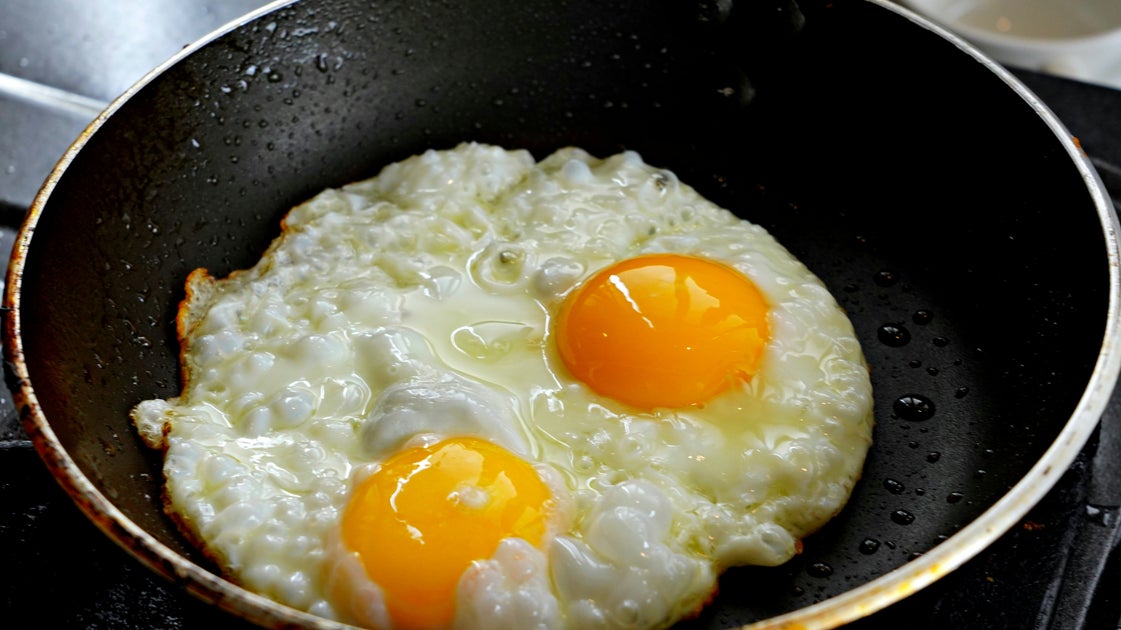
Egg yolks are a a very rich and easily-absorbed source of choline. Two fried eggs deliver 73% of your daily dietary reference value for choline, for instance.
Meat (like beef and chicken breast) and fish, Whole grains, Vegetables (especially potatoes, shiitake mushrooms, and cruciferous veg, like broccoli and cauliflower),Fats and oils, in that order.
The EUFIC says it’s very unlikely someone would consume too much choline from food alone. The recommended upper limit is 3.5g a day.