
Users of City Beach have been warned of prolonged beach closures even after the removal of a 31-tonne whale carcass.
The 13-metre carcass, believed to be a female about 20 years old, was removed from South City Beach on Wednesday after being discovered on the beach early Monday morning.
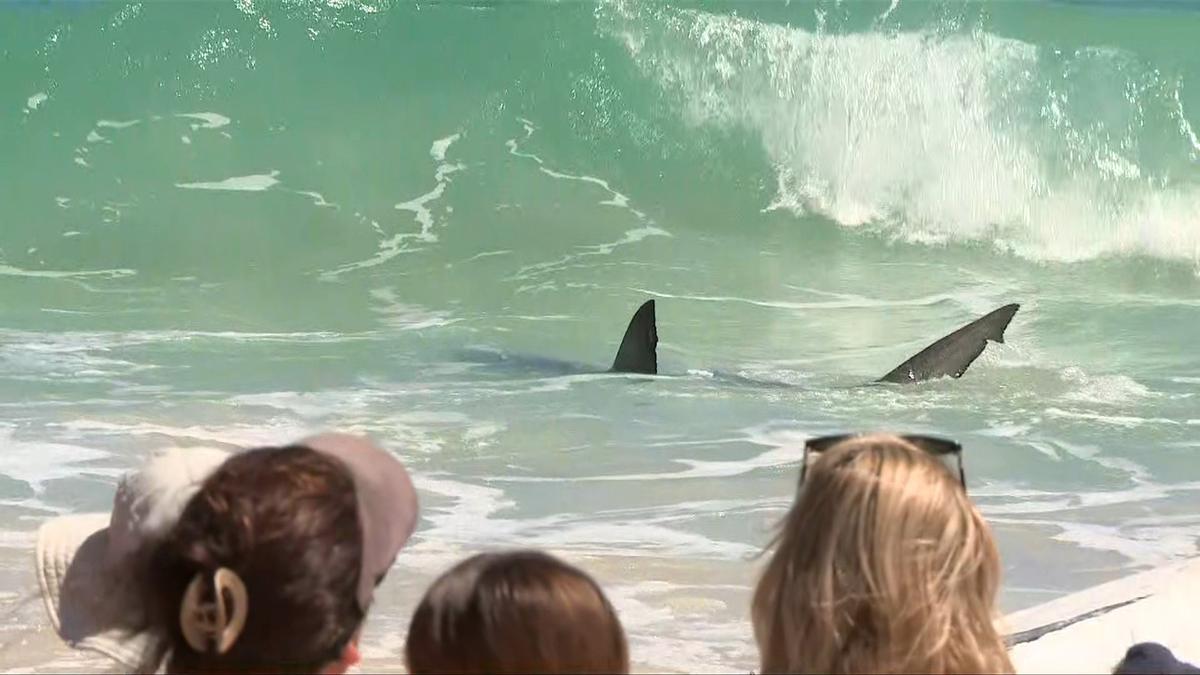
The carcass attracted sharks alarmingly close to the shore.
A Westpac Life Saver Rescue Helicopter report recorded a 5m white shark just 10m offshore from the City Beach BEN sign at 8.05am on Tuesday, while a 4m white shark was spotted about 30m offshore at 3.28pm.
At time of writing, there was no confirmed timeline for when the beaches will reopen to the public.
Town of Cambridge mayor Gary Mack said on Wednesday the carcass would be removed from the beach and taken by truck to landfill.
The operation will cost between $60,000 to $100,000.
“Which depends on the cost of having the workers down here, the cost of the contractors, and also there is a fee to take the carcass,” Mr Mack said.
Mr Mack said the focus on Wednesday was to remove the carcass “as soon as possible and as safely as they can”.
“Obviously we want the beach open as soon as we can, but that’ll happen not just after the carcass is removed but after it’s been advised by government authorities that it’s safe to do so,” he said.
According to Mr Mack, the carcass could not be taken out to sea because of the difficulty of the operation and concerns it would remained offshore and continue to attract sharks.
Mr Mack warned the public not to use drones over the operation and not to bypass beach closures.
“That has been interfering with the helicopter rescue service, (that’s) very distracting for our workers,” Mr Mack said.
“If people persist and ignore warnings, then we do have the ability to issue an infringement.
“We’re really asking for the public’s co-operation.”
The town did not have a final cost or an exact number of infringements notices issued by Wednesday morning. An infringement can attract a $250 fine.
Scientists finished their work on the carcass, after taking measurements and gathering data.
Mr Mack said a person who was filmed jumping on the carcass was “very unwise”.
“If that person slipped and went into the water while those sharks were around there, I think that would be very dangerous,” he said.
“We’ve got to dispose of it respectfully and bury it somewhere as you would with any deceased animal.”
The town has also been forced to use rangers and parks/gardening staff to assist, which meant they were diverted from their regular duties.
A Town of Cambridge spokesman said multiple issues would need to be considered before the council could confirm when the beach will reopen.
Shark experts have warned liquids and the smell of the carcass could remain in the waters around the beach for at least a week after the carcass is removed.
“Following removal, the town will consider any remaining material, shark activity, official agency advice and local conditions before deciding when the beaches can safely reopen,” the spokesman said.
Macquarie University Fish Lab head Culum Brown said sharks had an “exquisite” capacity for small and expected they would be attracted to the site for quite some time.
“The juices and the smell from that carcass will be seeping into the sand, leaching through into the sand and it’ll take several tide flows, depending on how high up on the beach it ends up,” he said.
“I assume they’ll tow it away at some point and throw it in a landfill, but it’ll take several tides to flush that fully out of the sand.”
The sharks have left regular beachgoers asking when it will be safe to return to the water, particularly after swimmer Greg O’Neill was killed by a 5m shark at Sorrento Beach.
A City Beach local told Western Suburbs Weekly they were tossing up when they will return to their regular swimming spot after multiple large great white sharks were spotted just metres off the beach. Fisheries officers have also tagged and released big sharks off Floreat Beach this week.
Alexandra Eftos said she was unsure on when she’ll get back in the water.
Ms Eftos said she would probably wait one to two weeks before swimming near the beach because of the number of sharks that had been hanging around after the whale incident.
“I’d probably want to wait like a week or two because the sharks have just been hanging around there like crazy. So it’s quite scary,” she said.
She said she might still swim in summer if the whale had been gone for a week, but would likely choose a different section of beach and go for only a quick dip.
“I’d probably go to the main beach, or like maybe Cottesloe or something instead,” she said.
She said lifeguards, drones or helicopters monitoring for sharks would make her feel safer, particularly because there is no permanent lifeguard post at the beach.
Ms Eftos said the shark alarms could be heard from her home, although they were louder for her parents, and the smell from the whale could be detected several streets away.
The Town of Cottesloe confirmed its beach was closed on Wednesday due to the increased shark activity related to the whale carcass.
The scheduled date for the shark barrier installation in Cottesloe is October 7, pending weather, swell and seaweed.