
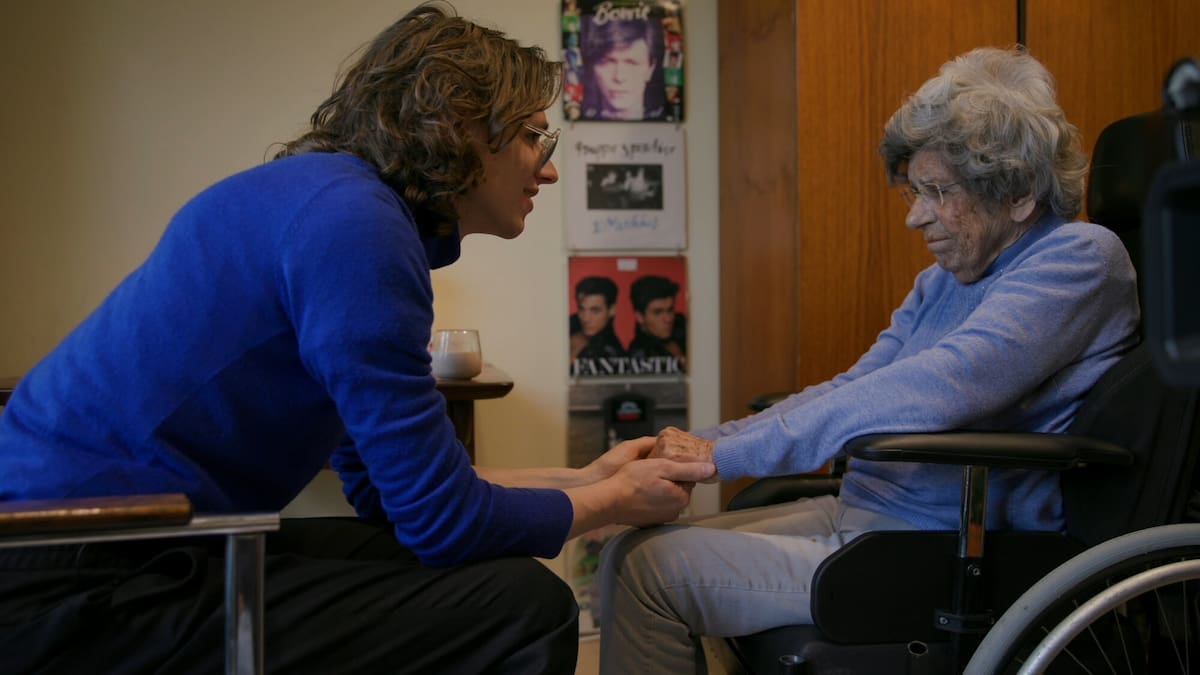
Toebes’ book, which explores different approaches to dementia care around the world, suggests we may need to reframe our view of the disease.
The Dutch nurse and activist spent more than three years living with residents in the dementia ward of a care home in the Netherlands.
With film-maker Jonathan de Jong, he wrote a book about the experience, The Housemates, published in 2023. That same year, they released the award-winning documentary Human Forever, in which the pair travel the world exploring different dementia care systems.
Now the book version of that documentary, also titled Human Forever, has launched in New Zealand and its authors say our attitude to dementia needs to change.
“When I was living in the nursing home, so many people wanted to visit me [there] to just have a look,” Toebes says.
“People would say, ‘Oh, that’s so cool, intergenerational living’.”
The reality, Toebes found, was that moving into that environment could deepen the sense of isolation and loss of identity that come with a dementia diagnosis.
Like when 96-year-old Lia, who he met at a care home in Apeldoorn in the Netherlands, told him: “I’m no use to anyone anymore … what’s the point of being alive?”
“We have to give space to those emotions,” he says.
“People with dementia don’t have to be happy all day … when you look at care organisations’ websites, you only see happy people, but the reality is that all emotions are part of life.”
During his travels to care homes, he realised it was a common theme.
“So many people with dementia told us … that where the suffering comes from is the fact that people start treating you as if you are the ‘other’, and start asking your legal representative what you want instead of [asking] you.
“Dementia comes with a big stigma of loss, and a loss of identity. We’ve made [it] a social death.”
Filmmaker Jonathan de Jong, left, and Teun Toebes are the authors of new book Human Forever, based on their 2023 documentary of the same name.
Toebes says people with dementia can be perceived as a liability.
“People think that if you open the door of a nursing home and everyone walks out, everyone walks in front of a bus. But if we look at the reality, it is way more nuanced.”
He says the care system in his homeland has been designed with “good intentions”, but can still take away people’s ability to enjoy life.
It’s not that safety is unimportant, but there is a need for balance so patients can keep up activities that help their wellbeing, he says.
“Going out for a walk becomes a risk assessment, or burning a little candle at Christmas becomes a risk analysis. All normal aspects of daily life become a danger, because we constantly ask ‘what if?’
“We’re so focused on optimising patient safety, but if we listen to people, it is not about having zero risks in your life, it’s about accepting risks which are normal in everyone’s life.”
That’s what the people they met with dementia during their travels wanted: as normal a life as possible, de Jong says.
“If we really want to improve the quality of life for people who are living with dementia, we should have a more honest conversation, a more nuanced conversation, and look at the different stakeholders at place in order to facilitate that quality of life.”
The Netherlands spends more than 4.1% of its GDP on long-term aged care. Nursing homes receive more than €100,000 NZ$200,000 per resident a year – the highest funding in the world. It hasn’t fixed all the problems.
“Even here we face similar challenges [to] different countries. So if money is not the answer, if it’s not about the amount of money, it is about what do we do with the money we have,” Toebes says.
“In South Africa, the community had a bigger role. In the USA, they had an intergenerational school. South Korea had a very different approach when it comes to the prevention of dementia; it’s not an individual responsibility only, but it’s a shared responsibility.”
The book Human Forever by Teun Toebes and Jonathan de Jong is now available in New Zealand.
New Zealand’s dementia action plan, created by Alzheimers NZ, Dementia NZ, NZ Dementia Foundation and te Mate Wareware Advisory Rōpū and presented to Associate Health Minister Casey Costello in September 2025, outlines that shared responsibility. Priorities include promoting brain health and improving community support for people living with dementia.
That can help restore a sense of belonging, de Jong says.
“No matter the diagnosis, we should see how we can give people the feeling that they matter again.
“That’s the core of good healthcare, when people are being seen as human beings.”
Toebes adds that if people still have a purpose in life, then they “don’t just live from meal to meal”.
“Sometimes the danger is that if we just organise a safe life, people are just sitting at the table the whole day … and is that the dignified life we want to live ourselves?”
The book also touches on prevention and how to stay well for longer as we age.
The Finnish Geriatric Intervention Study to Prevent Cognitive Impairment and Disability (FINGER) has identified five areas that can help prevent dementia: healthy food, physical exercise, mental stimulation, social activities and monitoring of vascular risk – heart attack and stroke, diabetes, high blood pressure and obesity.
The study’s results have shown more than 40% of Alzheimer’s dementia can be prevented by improving lifestyle and strengthening people’s social connections and motivation in life, Toebes says.
“It’s also about lowering inequalities within society and the care system, because we often see that people with the lowest socio-economic status develop dementia because [they] don’t have access to healthy food … so they are at high risk of developing cardiac diseases, diabetes and probably dementia.”
“In the end, we all want to have as healthy a life as possible for as long as possible,” de Jong says.
The pair hope their experience and book spark important conversations in New Zealand.
“Talk with your parents, uncles, relatives, neighbours, friends, [about] what would you want in life if you get dementia,” de Jong says.
“The book is a universal insight into how we cope with dementia today and how we can cope with it in the future, and especially [for] people are living with dementia, how we can facilitate their lives for the better.”
Human Forever: Searching the World for a Better Life with Dementia by Teun Toebes and Jonathan de Jong is available now.
Bethany Reitsma is a lifestyle writer who has been with the NZ Herald since 2019. She specialises in all things health and wellbeing and is passionate about telling Kiwis’ real-life stories.