
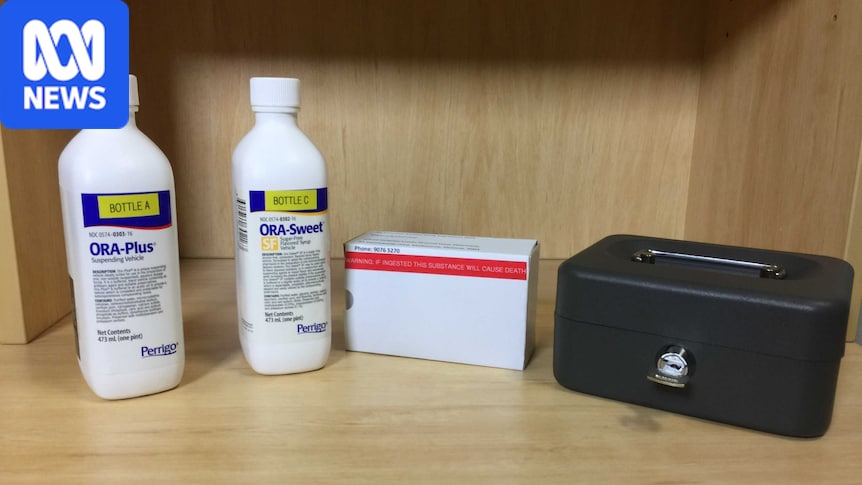
A case in which the partner of a voluntary assisted dying (VAD) applicant used the drugs to end their own life has been referred to the Victorian coroner.
The incident was outlined in the most recent annual report from the Voluntary Assisted Dying Review Board, which oversees compliance with VAD laws that came into effect in 2019.
If you or anyone you know needs help:Suicide Call Back Service on 1300 659 467Lifeline on 13 11 14Aboriginal & Torres Strait Islander crisis support line 13YARN on 13 92 76Beyond Blue on 1300 224 636Headspace on 1800 650 890MensLine Australia on 1300 789 978Statewide Care Navigator Service on 03 8559 5823
The report said the applicant had been diagnosed with cancer and was granted a permit to self-administer the medicine in February this year, but died in hospital two months later.
It is believed their partner then used the medication in the days afterwards.
The board and Victoria’s Department of Health carried out an investigation and found proper process had been followed.
“The Board has found no evidence that any aspect of the VAD request and assessment process, or the dispensing of the substance, contributed to the circumstances that followed,” the report stated.
“The program continues to operate safely, and this incident does not alter the Board’s assessment of the safety and integrity of the VAD framework.”
However, it said the issue highlighted the importance of grief support for the partners, families and carers of applicants.
“Dedicated grief and bereavement support services for VAD remain a recognised gap in the community,” it said.
“The circumstances of this incident reinforce the need for the program to strengthen the support available to contact persons and family members, both during the VAD process and after the applicant’s death.”
The matter has been referred to the coroner.
A care navigator program provides support for those using the program as well as their families and carers.
Regulator says noncompliance ‘low’
The incident is believed to be the first of its kind in Victoria.
The Victorian government said safeguards around the provision of the medication were robust and stringent.
“This was a tragic incident and we extend our sincere condolences to the family, loved ones and all those affected,” a spokesperson said.
“We know end-of-life care can be an incredibly difficult time for families and carers.”
In its report, the Voluntary Asssisted Dying Review Board said the rate of noncompliance remained “low” at about 2 per cent of applications.
Those noncompliances typically involved “administrative errors that do not present material risks to applicants”, it said.
There were more than 1,150 applications over the most recent financial year — an increase of about 40 per cent from the prior 12-month window.
However, about 400 applications were withdrawn before the substances were dispensed, most often because the applicant had died.
To be eligible, applicants must be suffering from an advanced illness that is expected to kill them within six or 12 months depending on their condition.
The majority of applicants in 2025-26 had a cancer diagnosis and the median applicant age was 74 years.
Amendments passed by the Victorian parliament late last year removed a ban on doctors initiating discussions about VAD with patients, among other changes set to take effect next year.