
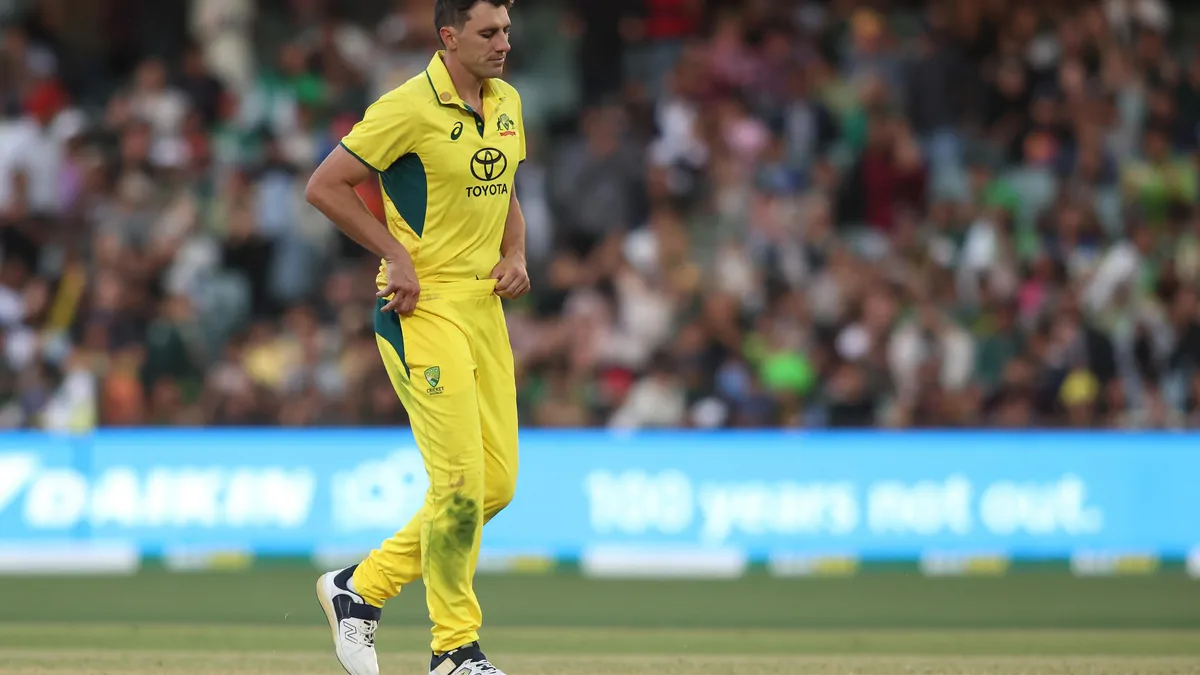
Australia have struggled before major tournaments previously and still found a way to win.
Before the 2023 World Cup, they lost one-day international series in South Africa and India. They then lost their opening two matches of the tournament before winning nine straight and lifting the trophy.
That history should prevent anyone from panicking over another series defeat to South Africa.
Sign up to The Nightly’s newsletters.
Get the first look at the digital newspaper, curated daily stories and breaking headlines delivered to your inbox.
By continuing you agree to our Terms and Privacy Policy.
But this time feels different. Australia are not simply trying to rediscover their best form. They are replacing experienced players, testing replacements, and trying to decide what their next one-day team should look like.
In the past 12 months, Australia have lost three of their five ODI series. Across those series, 27 players have been named in Australian squads, including injury replacements.
Some turnover is understandable. Injuries, rest, Test preparation and the IPL have all affected availability.
However, there comes a point when experimentation must provide answers.
Australia still does not appear to know who controls the middle order following Steve Smith’s ODI retirement. Marnus Labuschagne toured Pakistan and Bangladesh before being left out of the African tour. Matt Renshaw, Ollie Peake, Cooper Connolly and Joel Davies have all entered the discussion, but nobody has completely secured ownership of a position.
At the same time, Australia continue to reserve World Cup places for senior players who rarely appear in ODI matches.
Pat Cummins has played only two ODIs since captaining Australia to the 2023 World Cup. Yet the plan remains to have him return as captain in 2027.
We are told injuries, workload management and Australia’s Test schedule explain his absences. Some of that is understandable, particularly for a fast bowler with a history of back problems.
But not every absence has been caused by injury. Cummins has also been deliberately rested and preserved for Test cricket. He joined the squad in South Africa but sat out the opening two matches, with the possibility of playing the final ODI as preparation for the Test series.
That makes ODI cricket feel like a warm-up rather than a format he captains.
What about the players doing the work between World Cups? Nathan Ellis, Xavier Bartlett, Spencer Johnson and others travel, perform and attempt to build careers through these series. They are judged on every match and know one poor performance can cost them their place.
Then, when the World Cup arrives, will they be moved aside for Cummins, Mitchell Starc and Josh Hazlewood?
Those three have earned respect. They helped Australia win the last World Cup and remain outstanding bowlers. But previous success should not hold a place for four years.
Captaincy makes Cummins’ absence more difficult to justify. A captain should help establish the team’s identity, define roles and learn which younger players can handle pressure.
Mitch Marsh has been doing that work. He has led changing teams, fronted the media after losses and dealt with injuries and collapses.
If Marsh conducts the rebuild, why should he automatically return the captaincy when Cummins is ready for the World Cup?
South African coach Shukri Conrad recently questioned whether this was still the same Australian side. He was referring to their reduced on-field aggression, but the question goes deeper.
I believe Australia has lost some competitive presence. The strongest Australian teams created pressure through performance, body language and the belief that they would not go away.
From my experience, opponents could sense that they still had to finish the job, even when they appeared to have control.
That presence cannot be rebuilt by players arriving only when a trophy is available.
Australia are entering a difficult transition. When the 2027 World Cup begins, Marsh will be 35, Adam Zampa 35, Cummins 34, Hazlewood 36 and Starc 37.
Age is not the issue. The concern is how many senior players Australia are attempting to preserve while other players carry the team through the years between tournaments.
This increasingly appears to be cricket’s new system. Bilateral series develop younger players, while established names are protected for ICC events.
That creates two standards. Young players must earn selection through ODI cricket. Senior players retain it through reputation.
Cummins does not need to play every match, but two ODIs since the World Cup is not enough for the captain of a rebuilding side.
If he is going to lead Australia in 2027, he must play a meaningful block of cricket before it. If his body and Test commitments make that impossible, Marsh should be formally appointed captain and allowed to build the team he will lead.
A World Cup position, particularly the captaincy, should not be held in storage for four years.