
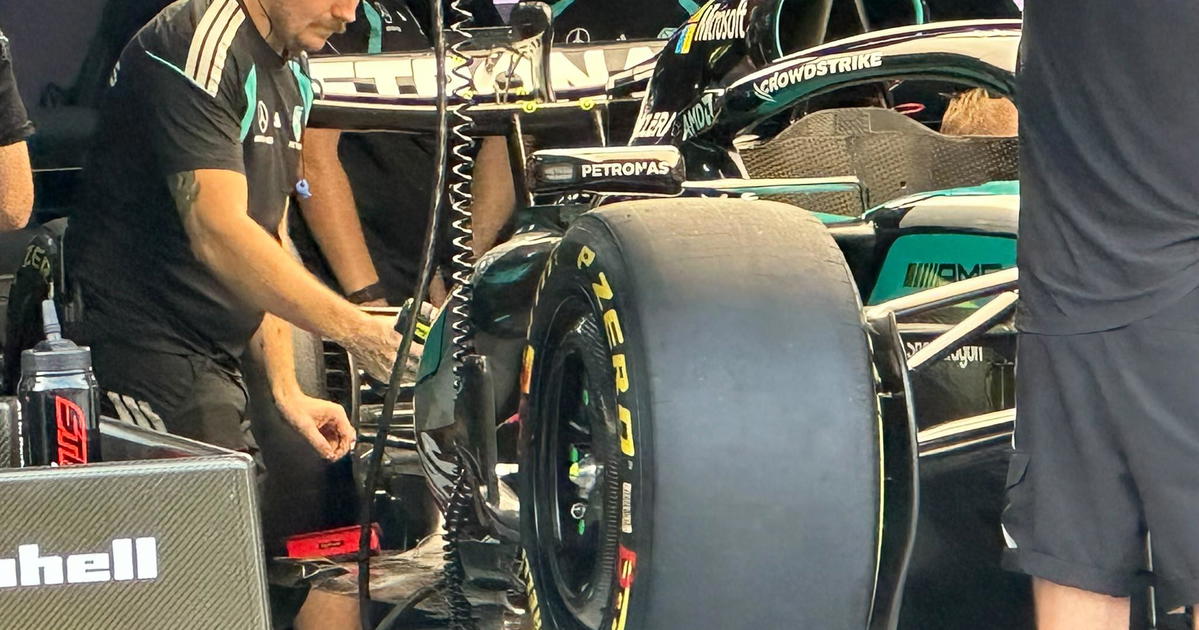
Mercedes has arrived at the Sepang International Circuit with an extensive aerodynamic upgrade designed to boost the overall downforce generated by the body of the W17.
The Bahrain Grand Prix in Malaysia marks the first significant update delivered by the Brackley-based squad since the round in Montreal, back in May.
The changes are most visible around the sidepod profile, which now features a straight ramp angled towards the rear of the car. The bodywork at the back of the sidepods now drops right down to kerb height in front of the rear wheels.
The new sidepod shape is also highlighted by the angle of the cockpit-level gills, though it is even more apparent in the specification built for the climates of Sepang and Singapore.
The gills positioned further back, at engine hood level, show just how radically the rear section has been slimmed down.
That specific bodywork angle is designed to guide the airflow towards the rear axle without letting it separate from the surface.
The floor has also been significantly reworked around the diffuser throat, altering the pressure distribution at the exit.
Check out the W17’s upgraded sidepod below! Article continues after…
Downforce gain without a drag penalty
The combined effect of the new sidepod profile, which conceals a completely revised internal airflow, and the updated floor is understood to produce a notable increase in downforce, in the region of almost four per cent, without any corresponding rise in drag.
As outlined in the preview of these changes, the update does not overhaul the aerodynamic concept of the W17 but rather sharpens it in terms of outright performance.
It is expected to improve the car’s dynamic balance in sections of track where the W17 has so far lacked downforce and traction, namely on the exit of slow corners — one of the few genuine weak points of a car that owes much of its success not only to the strength of its power unit but also to its overall balance.
Sepang, with its two long straights and sequences of fast corners, appears to be the ideal venue to put that development to the test, one that Mercedes engineers are understood to have targeted from the car’s early design phase.