
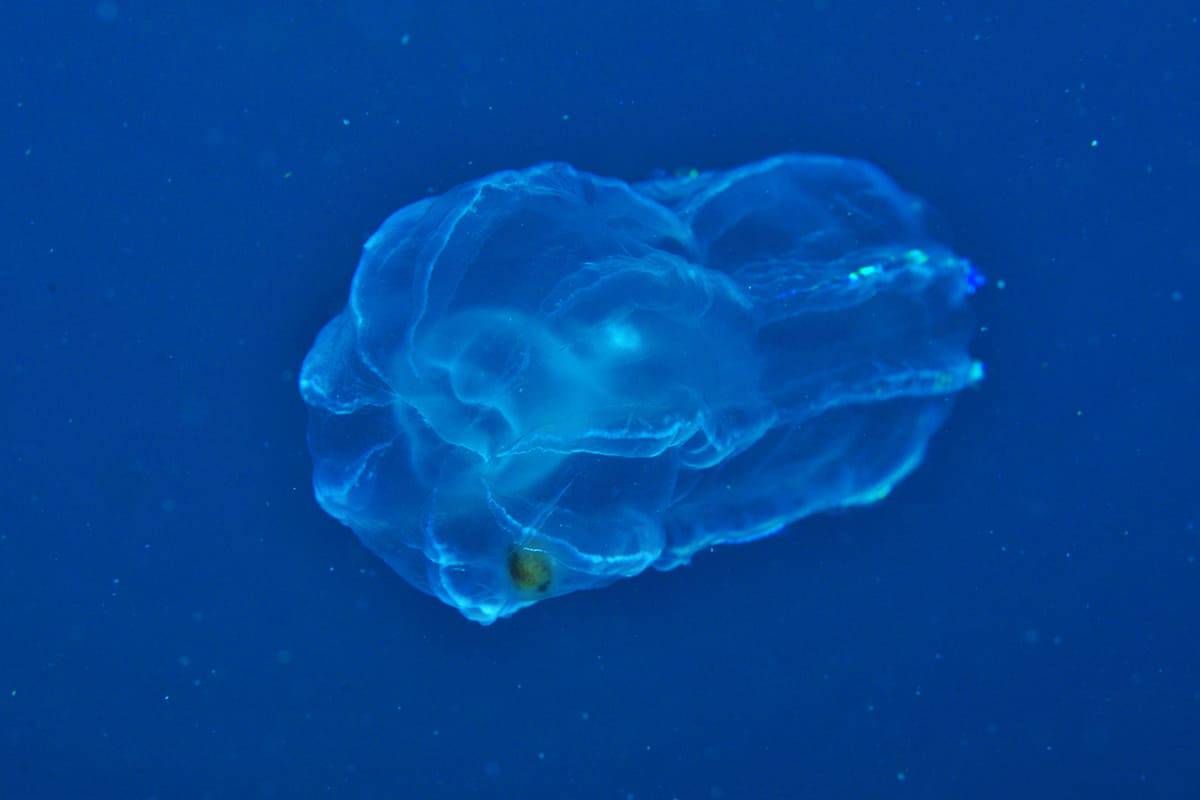
Among their finds: the elusive “ghost shark” chimaera, discovered in Australia’s Coral Sea and described as a distant relative of both sharks and rays, diverging from those lineages almost 400 million years ago. Other discoveries included symbiotic worms inhabiting the glass-like skeletons of deep-sea sponges near Japan’s volcanic seamounts, and a vividly colored ribbon worm, whose pigments and toxins may hold potential for future Alzheimer’s and schizophrenia treatments.
©Yetugraphic/Shutterstock.com
Why New Species Matter Right Now
The urgency behind this work is clear. Scientists estimate as much as 90% of ocean species remain undocumented, and new species may be wiped out before they’re even described. Dr. Michelle Taylor, Head of Science at Ocean Census, summed up the race against extinction: “For too long, thousands of species have remained in a scientific ‘limbo’ because the pace of discovery couldn’t keep up. We are now breaking that bottleneck.” She emphasized that quickening the pace of discovery means more than identifying new creatures; it arms policymakers and marine stewards with crucial data needed to protect the ocean’s fragile ecosystems.
Previously, the window between a species’ first collection and its formal scientific description averaged 13.5 years, a delay that can make conservation too late for the species involved. Addressing this, Ocean Census recognizes ‘discovered’ as a formal status, rapidly uploaded into their NOVA digital platform, a tool offering transparent, open access to findings within weeks or even days.
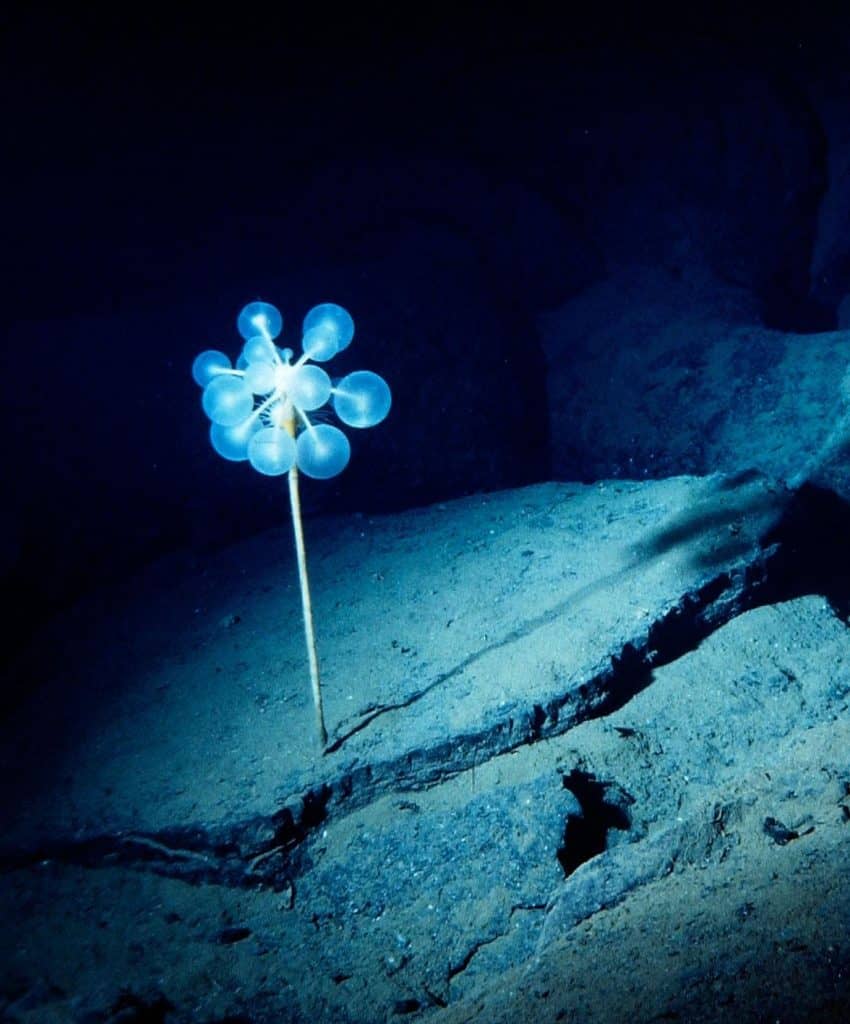
©”Campagne GEOCYARISE – Eponge carnivore Chondrocladia lampadiglobus (Ifremer 00703-81529)” by null is licensed under BY 4.0. – Original / License
The Stories Inside the Discoveries
Behind the numbers are stories of adaptation, survival, and evolution. Consider the ribbon worm, less than three centimeters long, whose colors serve as a warning to would-be predators: beneath their bright exteriors lie potent chemical defenses. Or the pale, mysterious shrimp discovered in a Marseille sea cave by Dr. Hossein Ashrafi, whose striking coloration and anatomy suggest previously unknown ecological strategies in the crowded Mediterranean coast.
Taxonomists, geneticists, marine biologists, and ecologists have joined forces through workshops and global collaborations to accelerate species identification. The newly formed genus Meteoronia, for example, encompasses two deepwater shrimp species, both living in association with bivalve hosts, yet diverging dramatically in their features. Another collaborative study, built from 1986 material, has described 50 new terebrid species (venomous marine snails) and clarified long-standing classification mysteries.
A Network Built for Speed and Scale
The Ocean Census’s ambition is backed by a network of more than 1,400 scientists from 660 institutions in 85 countries. Their approach draws on cutting-edge genetic barcoding, high-resolution imaging, and data-sharing practices designed to power both science and policy. The open-access NOVA platform feeds knowledge directly into national and global strategies, underpinning frameworks like the High Seas ‘Biodiversity Beyond National Jurisdiction’ Treaty and the Kunming-Montreal Global Biodiversity Framework.
©Dennis Jarvis from Halifax, Canada / CC BY-SA 2.0 – Original / License
While billions are spent on missions to Mars and the moon, the Census’s founders point out that revealing the mysteries of Earth’s oceans is modest by comparison, yet potentially far more consequential for life on this planet. Ocean Census co-founder Nekton is seeking $100 million in additional funding to unlock $75 million already pledged by partners, moving closer to a bold target: cataloging 100,000 new marine species.
A Sea of Possibility, Still Largely Uncharted
As the Ocean Census advances, the discoveries don’t just add to species lists, they broaden our sense of what is possible. Scientific workshops following deep-sea expeditions now bring together international teams to share expertise, techniques, and the exhilaration of rewriting what the world knows about ocean life. Many of these findings, like the newly recognized ‘glass castle’ worm or the Mediterranean shrimp, offer timely reminders: the unknown and remarkable often lies closer than we think, still waiting to be found, studied, and protected.