“This is the new reality in football. I don’t have to like it – in truth I don’t care much for it at all – but what is the alternative for clubs who want to compete?”
They were the words I wrote in 2009 for the Fox Sports (now DAZN) website, upon hearing the news that Manchester City had been taken over by Sheikh Mansour & his Emirati millions.
Seventeen years later, City are mired in the biggest scandal English football has ever seen. Found guilty of breaching 114 financial regulations. The club maintains its innocence and will appeal the decision – and don’t rule out a challenge to the High Court at some stage in the future.
But after all this is resolved, what next for the Premier League, for City and for their fans – of which I am one?
Firstly, let me say that if the guilty verdicts are upheld, then there can be no complaints. Whatever you think of the rules (more on which later), the club knew what those rules were and had a duty to abide by them. If they have flouted them to the extent outlined in the Commission’s report, then the punishment will have to be severe.
Does that include relegation? Possibly – but where to? The Premier League and the English Football League (where relegated Premier League clubs drop into) are separate entities, and to forcibly relegate a club would require the co-operation of the EFL and its clubs.
Stripping of titles? Again, possibly – but more likely (given the complexity of then sorting out multiple compensation claims that would inevitably follow), is that they are voided, or an asterisk added to the historical record.
 Photo: Getty Images
The most straightforward option open to the Premier League is the docking of competition points. This has precedent with (smaller) cases such as Everton & Nottingham Forest. Given the sheer scale of charges, one could expect any deduction to be punitive, enough to forcibly relegate City into the Championship, with the bonus that the EFL is obliged to accept any relegated club, as happens on a yearly basis now.
There will inevitably be a fine of enormous magnitude. Whether those measures will be enough to sate the anger of other clubs and their fans remains to be seen.
Once the City outcome has been decided, the focus will shift to the longer term. This is the area where the Premier League is going to come under the most scrutiny.
Do the rules need tightening up? Or do they need to be scrapped & completely rewritten?
It’s my belief that the latter is the best course of action. While in no way defending rule breakers (again – they knew what they were, and signed up to them), it’s clear that the current FFP & PSR rules act as a barrier to ambitious clubs, in that clubs can only spend a percentage of their income.
Aston Villa & Newcastle United have found this to their cost in recent seasons – being forced to sell their best players to stay within the rules. Additionally, it’s WHERE those players have ended up that best illustrates the problem.
Newcastle sold Sandro Tonali, Bruno Guimaraes, Anthony Gordon and Alexander Isak. Excluding Barcelona (Gordon’s destination), the other three went to Spurs, Arsenal and Liverpool respectively.
Similarly, this summer, Villa sold Youri Tielemans, Morgan Rogers and Ezri Konsa to Manchester United, Chelsea and Arsenal. All members of the “establishment” with huge accumulated wealth & incomes, although in the case of Manchester United at least, huge debts too.
If the Premier League merely wants to maintain the status quo, then the current rules benefit those clubs exponentially. What chance a club (forget Leicester City – that was a once-in-a-lifetime aberration, and they are currently in League One), breaking through the glass ceiling if they cannot spend at least some of their owner’s money?
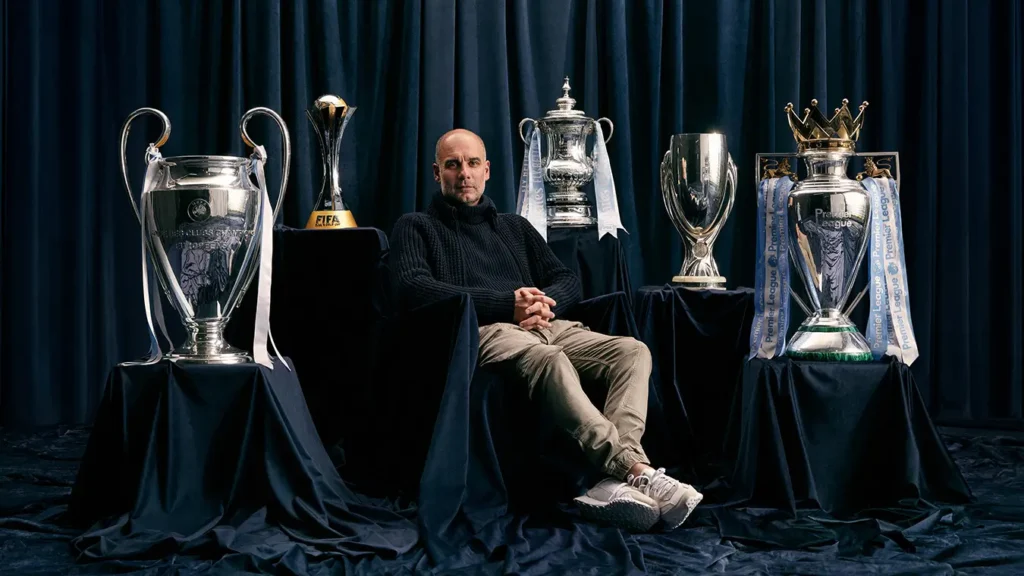 Pep Guardiola’s iconic legacy. Photo: Manchester City / X
Let us not forget that back in 1995 (before any financial rules), Blackburn Rovers won the Premier League, largely on the back of owner Jack Walker’s ability to pay for the likes of Alan Shearer, Chris Sutton, David Batty & Tim Sherwood – all big stars at the time.
That story was roundly praised as a “fairytale” – and Rovers were only unable to continue their success because the Premier League was at a moment where the financial gap was nowhere near what it is today. The likes of United, Liverpool and Arsenal were quickly able to regroup and restore the “natural” hegemony.
Ah, I hear you say – but Walker was a lifelong fan of the club, an individual who wanted to plough his hard-earned cash back into the club he loved all his life. City are owned by a nation state with unlimited wealth reserves, thus skewing the competition?
I agree – to a point. But this is where the Premier League’s own “Fit & Proper Person’s” test comes in. They agreed to the City purchase themselves, and City insist the club is owned by Sheikh Mansour as an individual. So, how can they complain when that individual (no matter what his personal connections) spends his own money on his own business, just as Walker did all those years ago?
Which brings us back to the rules.
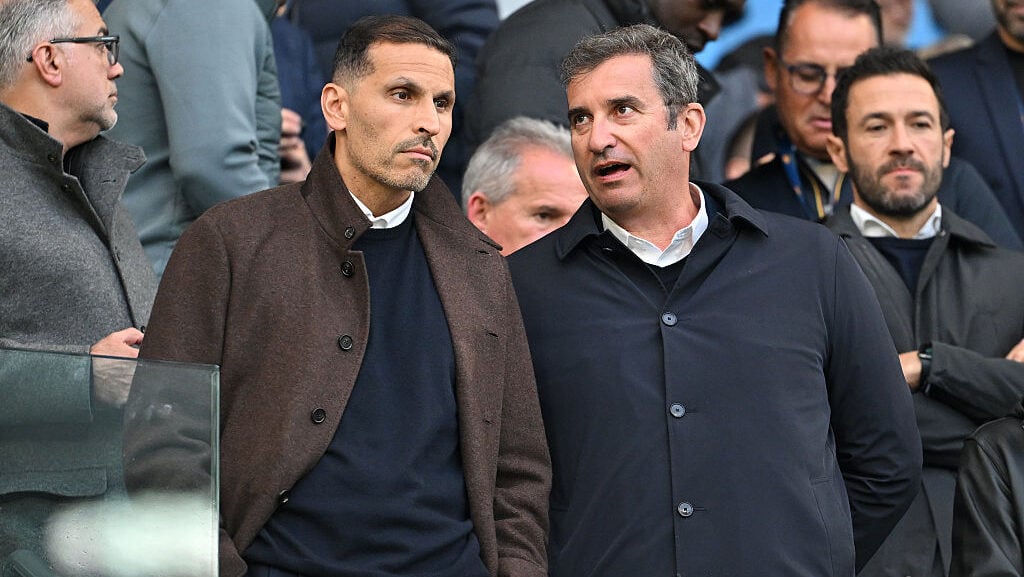 Manchester City chiefs have to land an appeal to see this overturned. Photo: Getty Images
However much I might disagree with them, City would appear to have broken them quite extensively. Pending any appeal outcome, this places us fans in a difficult predicament.
Do those memories of Aguerooooo, Rodri’s Champions League-winning goal, or the 100-point season automatically become null and void? Of course not. We lived them in the moment. We are not responsible for club owners’ decisions – what were we supposed to do? Not cheer a goal because we suspected a sponsorship deal might have been over-inflated? Ridiculous.
Still, there is the matter of where the club goes from here, assuming their guilt is upheld.
Wherever they may find themselves – be that in the Championship, League One or whatever – the fans are the permanent face of the club. It collectively belongs to all of us.
At the moment, most City fans I know are steadfast in their resolution that we’ll still beat this. While I’d love to be wrong, I can’t see it.
In my opinion, once all appeals are exhausted (and assuming the same outcome), the owners must leave. The stain of what has happened means the club will never be allowed to recover if the same owners are in place. The finger of suspicion would never be far away.
Will Haaland, Semenyo, Anderson & co all depart if we are in the Championship? Probably. But others will replace them. New heroes will emerge, and perhaps we can get back to talking about their exploits, rather than balance sheets.
Of course, there are knock-on effects of this in Australia too, where City Football Group owns Melbourne City, and plays a not-insignificant role in the running of the league, with Simon Pearce both their Vice-Chairman and an APL Board Member. He was a key figure in the club’s attempt to “unbundle” from Football Australia a few years ago.
APL say they will “consider” the findings of the Independent Commission. Melbourne City are not charged with any rule-breaking – but again, if guilt is established following appeal, it is difficult to see how Pearce can be allowed to continue in his role, given his standing as a Board Member at Manchester City.
As for the Premier League – they can thank the work of Der Spiegel (German newspaper) and Rui Pinto of Football Leaks for doing much of the heavy lifting in finding the material upon which they ultimately based the charges. The fact this work came from outside shows there is much for them to do in the areas of governance & compliance.
They must also look with fresh eyes at their FFP & PSR rules – for however Manchester City might be guilty (or not), they are clearly not fit for purpose.
I’ll leave the final words to football finance expert, Kieran Maguire, who said this when appearing on BBC Radio Manchester.
“If you take a look at the early years of the Premier League, the clubs that paid the highest wages tended to win the Premier League or finish 2nd or 3rd. How could Manchester City break into that? They had to do that by spending money in terms of player recruitment and more money in terms of player wages, which then led to this concept of financial fair play… which has nothing to do with fairness, it’s all to do with protectionism. It is not there – either to make football profitable, because 19 clubs out of 20 lost money last season – or sustainable. We don’t have a profitable or sustainable Premier League, so therefore why do we have rules?”
Your Next Read