
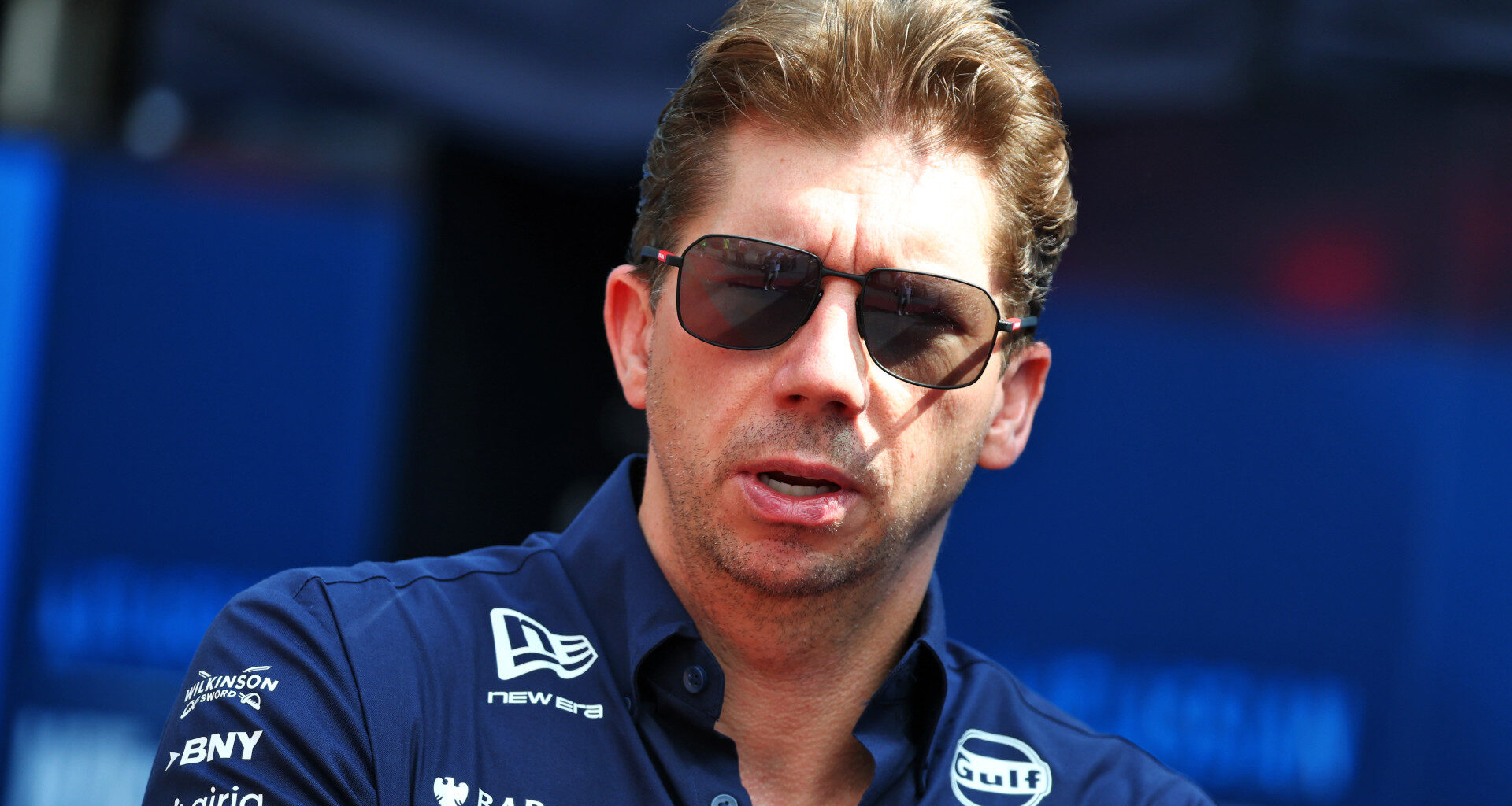
 James Vowles says the cost cap is making F1 into a two-tier competition. Image: XPB Images
The Williams team principal used Friday’s press conference at Sepang to argue the financial rules have delivered the stability F1 wanted but have failed to reduce the performance gap across the grid.
Teams are operating under a $215 million limit on performance-related expenditure in 2026, five years after the cap was introduced.
Vowles was careful to separate Williams’ own problems from his wider criticism, accepting responsibility for mistakes that contributed to the team slipping backwards this season.
“First and foremost, I own the mistakes that we made this winter, and we need to detach that from that question. So we have gone backwards. We had a car that was overweight,” he explained.
But he said the cap was originally intended to achieve three things: financial sustainability, greater sporting equality and a more compressed field.
“We wanted long-term financial sustainability, and I think in that goal, not just have we achieved it, but we’ve exceeded it,” Vowles added.
“The two others, though, that went with it were sporting equity and, effectively, compression of the field, so effectively competitiveness that compressed together.
“Those are the three goals of cost cap, and those two have failed.”
Vowles pointed to the continued dominance of Mercedes, Red Bull, McLaren and Ferrari as evidence that the competitive picture has not tightened.
According to figures he cited, the leading four teams have collected 83 percent of the available points during the five seasons under the cap, compared with a share in the 70s over the previous period he examined.
“In other words, we have made the situation worse, where the top four are the top four and all the rest of us are fighting over, ballpark, 17 percent of the points.”
“Number of times on the podium used to be 10 percent of the time, now it’s 5 percent of the time. I can give you a whole bunch of statistics, but the cost cap has made it worse, not better.”
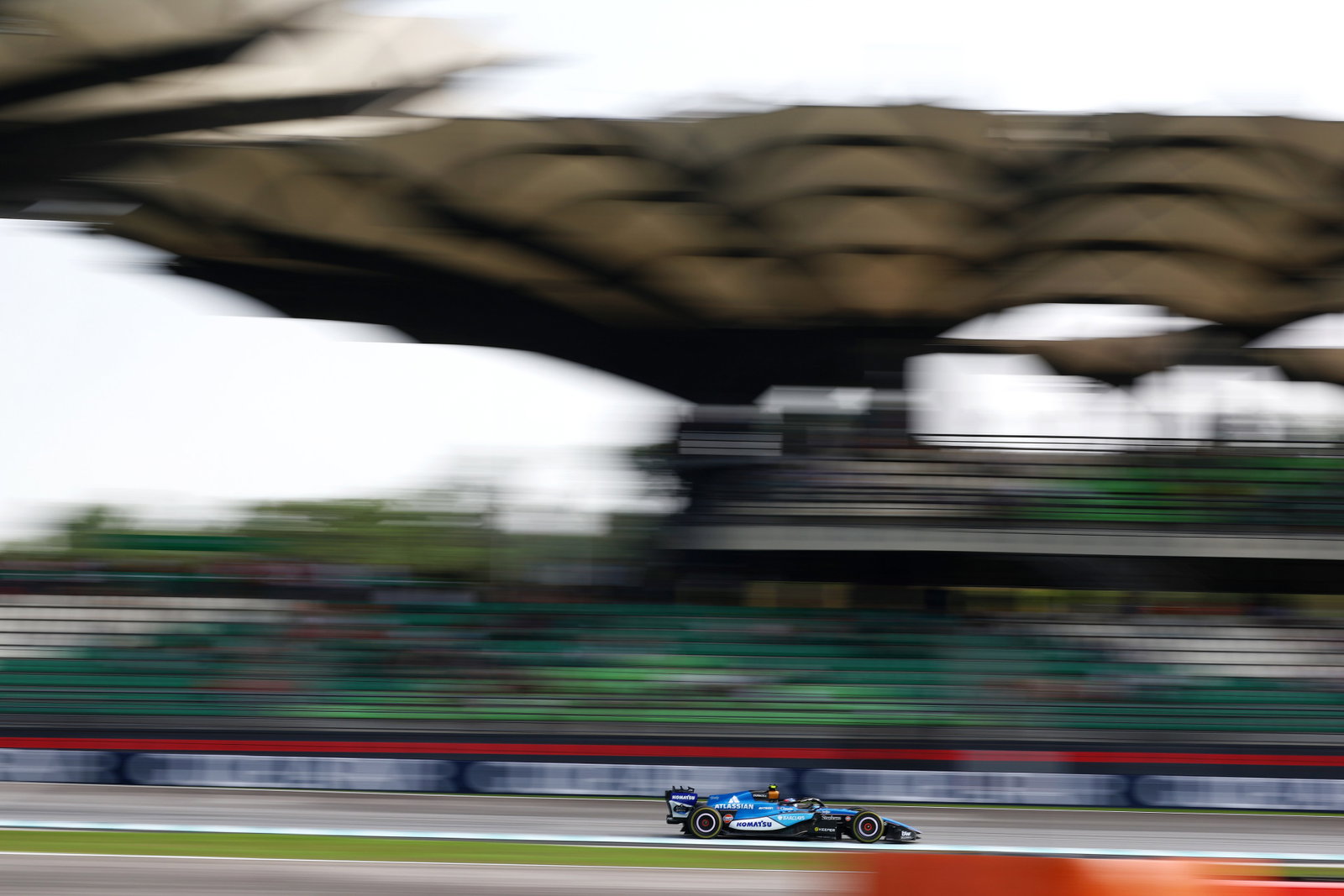
Williams finished well down the order in both practice sessions in Malaysia. Image: XPB Images
For Vowles, the problem is particularly acute for teams attempting to undo years of underinvestment while working within the same financial limit as rivals that already possess more advanced facilities and processes.
His move from Mercedes to Williams ahead of the 2023 season gave him first-hand experience of that gap, with money that could otherwise be directed towards performance instead required to modernise the operation.
“What I hadn’t appreciated or realised when you do that jump is just how little exists,” he said.
“When you’re in a cost cap, I’m not spending money on the car. I’m spending millions, tens of millions actually, just on basic systems, so you just know where a part is in the factory.”
“So that’s not going to the car, it’s not going to a front wing, it’s not going to an upgrade. It’s going on systems that I need to do just to do the very basics.”
“So, we’re caught in a cost cap trap, because if I do anything short-term, and I always talk about investing in the future, now you understand why.
“If I do anything that’s about this year, I will slow myself down in the future, and I can’t do that.”
Vowles said that leaves Williams facing a choice between pursuing short-term gains and continuing to build the foundations it believes are necessary to become competitive in the future.
He later estimated it costs Williams around 30 percent more than his previous team simply to produce a basic car because of inefficiencies across its tools, supply chain and other systems.
Vowles does not want the cap removed, instead arguing F1 should consider a mechanism that gives teams more scope to address those inherited weaknesses.
“The solution isn’t to take cost cap away,” he said.
“As I said before, we have a brilliantly financially stable sport now as a result of it, but we do need to think about what mechanisms we have in there to make sure we’re all playing with the same tools and the same mechanisms, because today we’re not.”
One possibility raised by Vowles was linking additional allowance to championship points or finishing position, with any benefit phased in over time rather than providing an immediate jump up the order.
He stressed the aim would still be to reward the best-performing teams, saying a team such as Mercedes should continue to win if it does the strongest job.
“What you’re trying to do is dig out, honestly, 20 years, in my case, of underinvestment that I can’t really do in the cost cap,” Vowles added.
“Let’s get that back on the table.”
Alpine executive advisor Flavio Briatore agreed the regulations could be simplified, suggesting F1 put all relevant expenditure under one overall limit rather than continuing with multiple exclusions.
“For me, the best is to put everything inside the budget cap, whatever is the number,” he said.
Ferrari team principal Fred Vasseur offered a counterpoint, noting the sport already varies wind tunnel access according to championship position and highlighting the financial health the cap has helped create.
“What we have to keep in mind is that before the cost cap, 2018, 2017, 2016, for sure the business in general was much worse, but we had also five or six teams in bankruptcy or almost in bankruptcy,” he said.
“And it’s not just the fact that the business is going well, it’s the fact that we are sending the message that everybody can compete, right or wrong, but this is the message.
“And this is also attracting new investors and new OEMs in the business.”
Formula 1 introduced the cost cap in 2021 in an effort to improve teams’ financial sustainability while also creating a more competitive and closely matched field.
2026 F1 Bahrain Grand Prix in Malaysia – Schedule, TV times & more