
Leger-Walker was the youngest basketball player to represent New Zealand at 16 years, 202 days old, having played at St Peter’s School, Cambridge.
The Hamilton local went on to play four years of college basketball at Washington State University. The college senior transferred to the University of California, Los Angeles, but knee trouble – an ACL (anterior cruciate ligament) injury – ruled her out of the entire 2024-25 season.
This year she returned to become an NCAA (National Collegiate Athletic Association) champion, the first Kiwi woman to do so.
Charlisse Leger-Walker won the NCAA women’s national championship with UCLA. Photo / Getty Images
Leger-Walker is currently on a four-year, $2 million contract with the Connecticut Sun.
The point guard told the Herald she took the same route as any other Kiwi.
“When I was growing up, even though it was a dream of mine, it definitely is hard when you don’t have anyone you can see doing that and really being in that space. One of the coolest things for me now is having that responsibility of showing what is possible.
“There’s no secret to making the WNBA. It is hard work. It is putting the time in. It is putting yourself in the right situations to try and get the opportunities to play against really good people.
“The college pathway … a lot more people are going, and I think there’s more education around it and what could be possible.”
Here is Leger-Walker’s practical guide to making the WNBA from New Zealand.
Shirking tall poppy syndrome
New Zealand’s well-known culture of tall poppy syndrome is ideal for keeping us humble, but it can put youngsters off aiming for greatness.
When asked what ingredients make a potential WNBA prospect, Leger-Walker said self-belief is number one.
“I think we definitely limit ourselves and almost have this fear of standing out in New Zealand and wanting to pursue your goals at a really high level. That is the fastest thing to crush your dreams.
“You really have to believe in yourself and put yourself in situations that day by day you’re making steps towards that goal. But I would say it’s so possible. Anyone from New Zealand can do that.
“We have the talent to play over here. It’s just putting your head down and really working for it.”
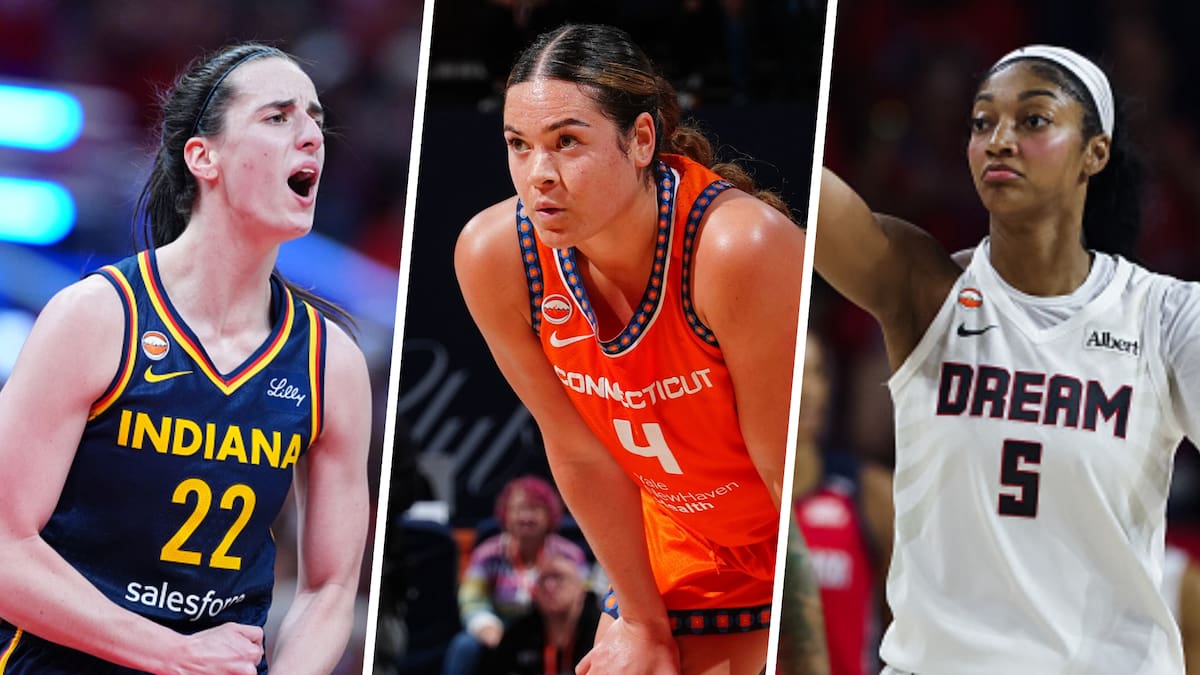
Charlisse Leger-Walker (centre) has provided a guide to joining the likes of Caitlin Clark (left) and Angel Reese (right) in the WNBA. Photo / Getty Images
Playing at the highest level available
Standing out in New Zealand is the best way to gain experience against overseas talent, gauge a youngster’s ability and attract the attention of college scouts.
Basketball New Zealand runs age-group teams from Under-15s to Under-19s, which compete at Oceania, Asia or World Cup events. There are three national selection camps each year, held in February, April and October. Twenty-four athletes are selected for each camp, where they are exposed to the national team style of play, physical testing and international preparation.
“If you are in those New Zealand teams, that’s probably the easiest way because you’re getting exposure to international competition,” Leger-Walker said. “A lot of scouts go to those World Cup tournaments, all of that.
“But you can also make sure you have the highest level of basketball that you’re playing, whether that’s high school, reps, your secondary school nationals.”
Charlisse Leger-Walker was the youngest basketball player to represent New Zealand at 16 years, 202 days old, and wants to play for the Tall Ferns at the 2028 Olympics. Photo / Photosport
Film and advertise yourself
This is where ignoring the tall poppy syndrome comes in handy. When it comes to making waves from the other side of the Pacific, networking is everything.
To get offered a college deal in the United States, scouts will need ample video footage of a youngster succeeding at a high level.
“That way you can really send it out to coaches, you can connect with people who have connections in the States,” Leger-Walker said. “Just really put yourself out there so that coaches can see that footage of you. Because if they can’t see anything, it’s really hard for them to measure you up to people they’re seeing in America.”
Routine outside of basketball
A laser focus on basketball will undoubtedly garner improvement in any budding WNBA player. However, Leger-Walker highlighted the importance of switching off from the sport to avoid burnout.
“Being at college for six years, definitely you have to figure out your own routines and stuff like that. Having that balance of not having your whole thing be basketball all the time.
“That’s one of the most overwhelming things as an athlete; being so locked into your sport 24/7 that it’s just too much.
“Over my college years and all of that experience, I’ve really been good at finding a routine outside of basketball and just doing other things to help with that balance of being a professional athlete.”
Nathan Limm has been a journalist with Newstalk ZB and the NZ Herald since 2020. He covered the Netball World Cup in Cape Town in 2023, hosts The Big League Podcast and commentates rugby and netball for Gold Sport.