
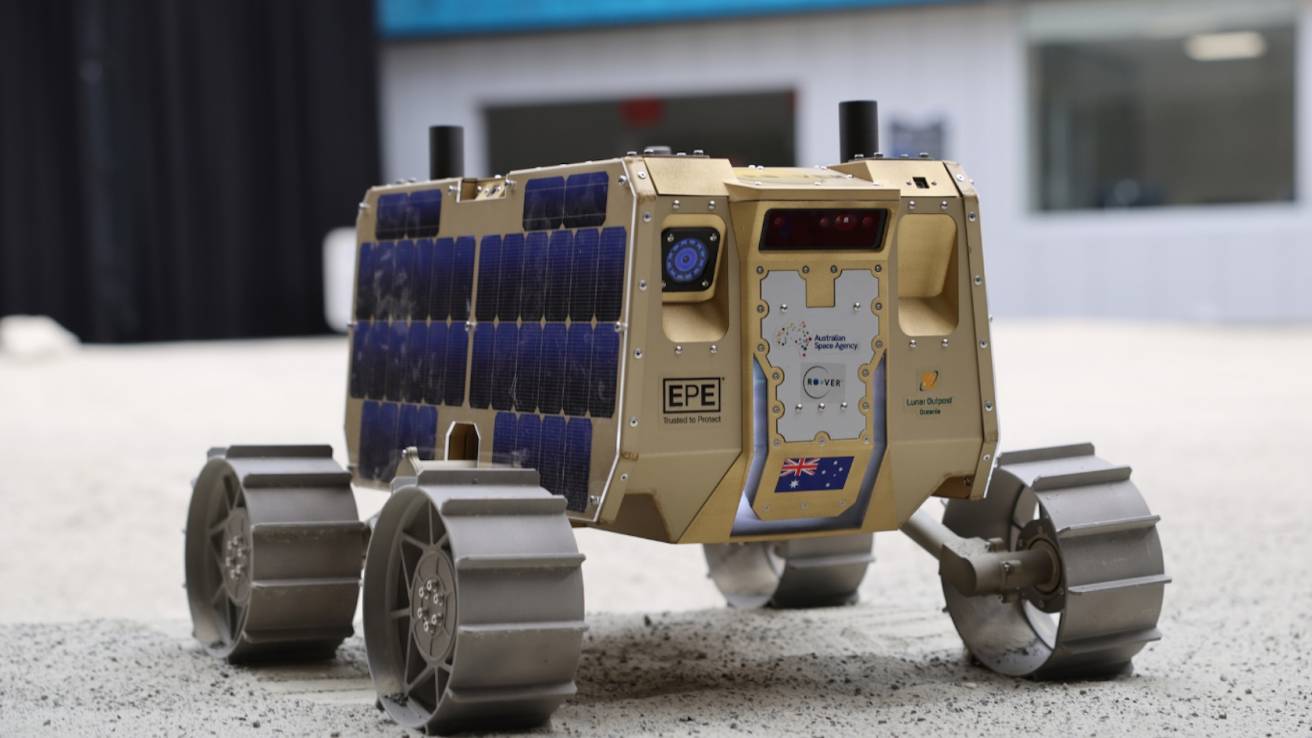
It looks like the love child of a lawn mower and pool cleaner, but the latest evolution of the Australian-made “Roo-ver” lunar rover has a considerably bigger backyard to explore.
The land drone, part of an Australian-led NASA mission to the lunar South Pole in 2030, was revealed Queensland University of Technology’s Lunar Testbed and Space Lab today during World Space Week.
The model is one of several being used to test and refine the design before it faces lunar conditions, which include dust and radiation, and temperatures ranging from minus 246°C to 121°C.
The Brisbane-based ELO₂ consortium developing Roo-ver, co-led by grantee EPE Oceania and technical lead Lunar Outpost Oceania, brings together startups, miner BHP, several universities and deep tech startups in advanced manufacturing and robotics, and is backed by around $42 million through the Australian Space Agency’s Moon to Mars Initiative.
NASA has selected Intuitive Machines to deliver the rover under its Commercial Lunar Payload Services program.
Once there, Roo-ver will be controlled from Australia, drawing on remote operations expertise developed in the resources sector. It will carry a NASA instrument to analyse lunar soil, known as regolith, supporting efforts to establish a sustainable human presence on the Moon as part of NASA’s Artemis program.
Get the best of Startup Daily straight to your inbox
Want to know the latest in startup news? Subscribe to our daily news and analysis coverage on what’s happening to ANZ startups, investors and the broader ecosystem. And best of all, it’s FREE!
By continuing, you agree to our Terms & Conditions and Privacy Policy.
Getting around will require specially designed wheels with raised grips, known as grousers, for traction on loose lunar dust.
“Roo-ver is a representation of Australian ingenuity and innovation,” Australian Space Agency head Enrico Palermo said.
“With our sights set on 2030, the countdown is on as we continue testing and refining Roo-ver.”
It’s one of several prototypes and development models created throughout the program and is one of the most complex robotics and advanced manufacturing projects in the country.
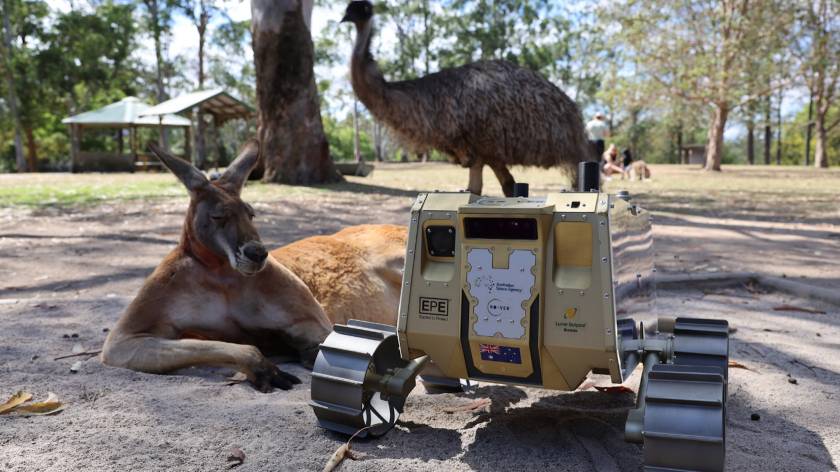 Hopefully the moon landing won’t be faked like this photo with non-lunar fauna. Source: Roo-ver