
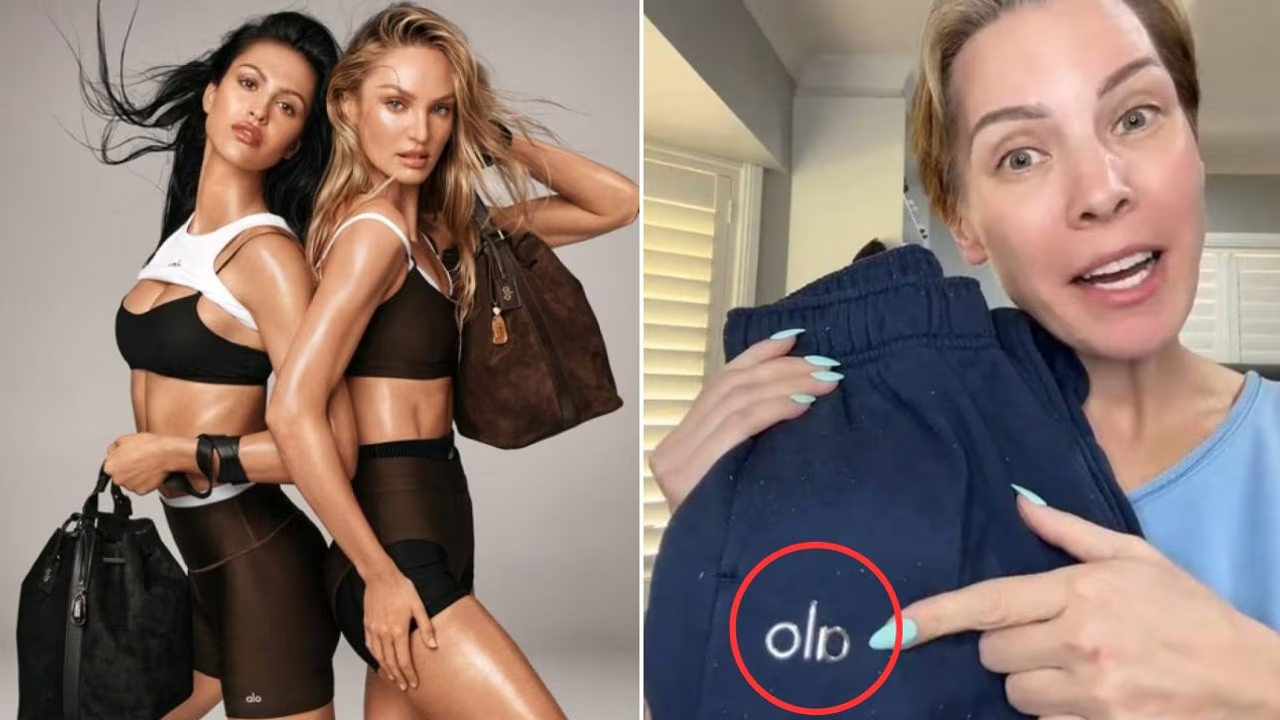
An Australian content creator has slammed global activewear brand Alo Yoga after the multibillion-dollar giant hit her TikTok account with copyright and intellectual property (IP) infringement claims following an honest product review.
Sydney-based TikToker Meredith was left in “disbelief” when the brand behind Kendall Jenner and Hailey Bieber’s favourite leggings targeted her account after she posted a video criticising the quality of its $150 tracksuits.
Obsessed with major fashion retailers? Download our new app and never miss a headline

‘A multibillion-dollar company being so scared’
Meredith, who has nearly 44,000 TikTok followers, posted a video showing severe fabric pilling on her Alo Yoga tracksuit bottoms and hoodie — items she bought with her own money.
“The entire Accolade range from Alo is problematic as it pills terribly when washing and wearing it,” Meredith told news.com.au.
“At most you get three cycles with it before it’s so badly peeled it looks terrible.
“For the price, it’s ridiculous to have items that look like you’ve owned them for 15 years after only 3 wash cycles.”
Shortly after publishing her critique, Meredith logged onto TikTok to find Alo Yoga had lodged copyright and IP infringement complaints against her video, leading to an immediate temporary take-down and a violation strike against her account.
“My initial reaction was disbelief,” Meredith relayed.
“A multibillion-dollar company being so scared of an honest consumer review by a no-one TikToker, to the point they need to lodge violations, is beyond comprehension.”
She added that Alo “chose war” and claimed she is “not one to back down”, especially when she knows she is in the “right”.
The battle to get the video back
Knowing her legal rights from her own background as a business owner, Meredith immediately appealed the strikes through TikTok’s internal platform mechanisms.
“I was aware enough … that the claims under which the violations had been lodged did not meet the requirements for copyright or intellectual property violations,” Meredith explained in a follow up video.
“I outlined that legally my video did not meet the violations claimed and that I had simply provided a consumer review which was well within my legal consumer rights.”
It took nearly three weeks for TikTok to review the appeal, during which the video remained offline.
TikTok ultimately ruled in Meredith’s favour, dismissing the claims and removing the strike.
However, Meredith says the damage was already done.
“They wanted the video stopped, so they knew the outcome was either going to be that I’d be intimidated … or I’d appeal it, and TikTok would take forever, by which point the algorithm is no longer pushing the video out,” she said in a TikTok video.
Fearing further retaliation, Meredith took drastic measures to safeguard her account.
“I blocked Alo as soon as they lodged the violations,” she said.
“As I had other positive Alo videos from over a year ago showing items I had purchased, I didn’t want them to work backwards and find them and report them.
“Three violations result in the suspension of your account, and I didn’t want to risk the platform I’ve built.”
What legal experts say
The situation raises serious questions about whether major brands are weaponising platform moderation systems to silence customer complaints.
Charlotte Hale, Practice Leader at LegalVision, warned that using intellectual property mechanisms to censor negative reviews carries significant risks for fashion labels.
“A brand may have a legitimate IP complaint if the video copies protected brand material, such as campaign footage, professional product photos, music, packaging artwork or substantial parts of advertising content,” Ms Hale explained to news.com.au.
“Simply showing a purchased garment while giving a genuine opinion is much harder to characterise as copyright or trade mark infringement.”
Ms Hale noted that under Australian copyright law, fair dealing exceptions exist specifically for criticism and review.
“The commercial risk for brands is overreach,” Ms Hale said.
“If an IP complaint is used to suppress criticism rather than protect copyright or trade marks, it can create reputational backlash and may expose the brand to arguments that the complaint was unjustified.
“A product review may be commercially uncomfortable, but discomfort is not the same as infringement.”
She also added that a heavy-handed IP strike can turn a small customer complaint into a “much larger brand trust problem”.
However, Principal Lawyer Avinash Singh cautioned that Australian copyright law strictly protects creators’ artistic works.
Under section 31 of the Australian Copyright Act 1968, the producer of an artistic work holds exclusive rights to reproduce or publish it, with rights to take down unauthorised content under section 115.
“In order to avoid this, consumers should ensure that they do not use any intellectual property of another company in any reviews they use,” Mr Singh revealed to news.com.au.
A growing trend among creators
Meredith claims she is far from the only creator targeted by the activewear label.
“As many other content creators have come out saying they are receiving the same violations and, in some cases, account bans, there seems to be a stance by Alo that they don’t want any content for their brand,” she said.
“Even positive reviews are being reported.
“It seems strange for a company that uses influencers like Kylie Jenner and Alix Earle to not want their products to be featured at all on social media. I honestly don’t understand what their strategy could be.”
When asked if she would ever shop at the store again, Meredith was definitive.
“Absolutely not. I won’t not wear my items as they cost a lot of money, but I certainly won’t buy from them again, and I’ll actively tell anyone who was considering purchasing from them not to.”
News.com.au reached out to Alo Yoga for comment.