
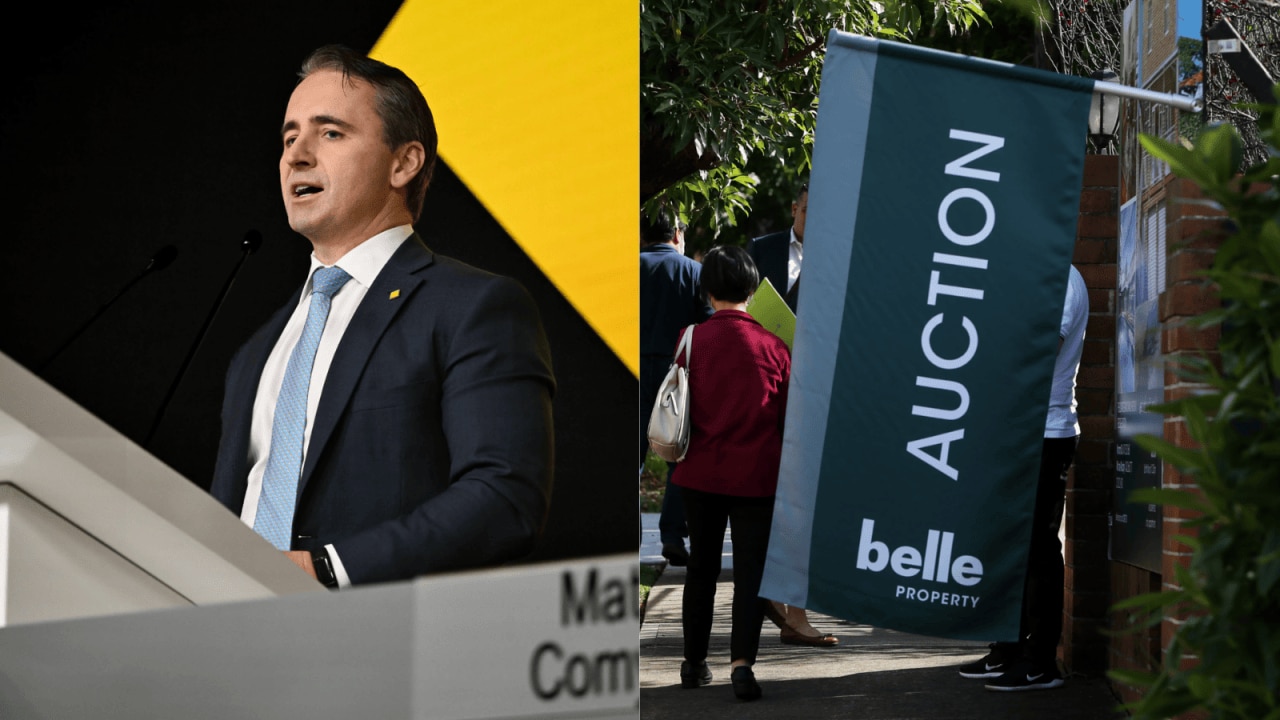
The boss of Australia’s largest bank predicts the nation’s housing market will bottom out “well into 2027” as rate rises and tax changes plague the property sector.
Property prices have fallen for six consecutive months after the cash rate was lifted four times this year and Labor announced tax changes that have discouraged investors.
Values are down 5.2 per cent on their March peak, according to data firm Cotality, with Sydney and Melbourne experiencing the steepest declines.
Commonwealth Bank of Australia CEO Matt Comyn said property prices were yet to “bottom out”.
“It’s hard to be precise but I certainly would expect it to be well into 2027,” Mr Comyn told ABC Radio.
He noted the impact this has on household wealth, but stressed there had been similar declines in recent history.
“It’s also worth saying that you know, of course, people watch house prices very closely – it’s the majority of Australian household assets and wealth,” Mr Comyn said.
“House prices fell by just over eight per cent in 2022-2023 on a national basis, and of course would be up something in the order of 60 per cent over seven years.”
Commonwealth Bank economists predicted a fall of about nine per cent in property prices before the September hike.
Mr Comyn said the major bank still backs this forecast but noted it would depend on future rate decisions from the Reserve Bank of Australia.
“That’s still the published forecast. But they would also be looking to see if, at the moment, they still have rates on hold from this point,” he said.
The CBA boss said the bank’s forecast will be revisited after the publication of quarterly inflation data.
“I think that most likely that will be reviewed around the November timeframe,” he said.
Major capital cities saw property values dive last month with Brisbane prices crashing the most at 1.5 per cent.
Sydney followed with a 1.4 per cent fall while Adelaide and Perth experienced a 1.3 per cent and 1.2 per cent drop respectively.
Cotality’s research director Tim Lawless said almost no suburbs in major capital cities were immune from the decline.
“97 per cent of capital city suburbs were down in value over the three months to end of September, highlighting the broad-based scope of this negative housing cycle,” Mr Lawless said.
It comes as investors are discouraged by Labor’s plan to limit negative gearing to new builds and properties purchased before budget night.
They are also disheartened by the government’s plans to slash the 50 per cent capital gains tax discount and replace it with an inflation-adjusted model with a minimum 30 per cent tax rate.
Read related topics:Housing CrisisInterest Rates