
The 2026 Major League Baseball postseason continued on Tuesday with a pair of NLDS Game 3s.
In the early game, the Atlanta Braves hosted the Los Angeles Dodgers for what figures to be a pivotal game in the best-of-five series. Ace Chris Sale finally took the mound for his first NLDS start, this time on full rest, but he and the Braves were unable to hold their own against Dodgers ace Yoshinobu Yamamoto and instead now face elimination in Game 4 on Wednesday.
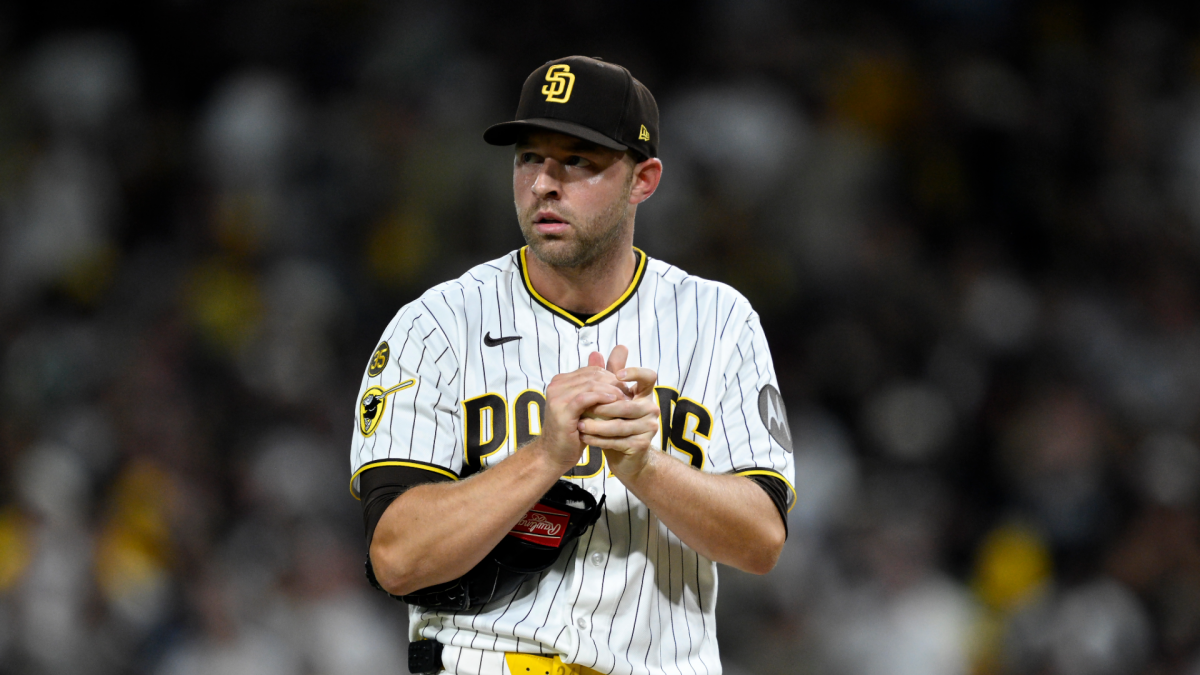
In the nightcap, the Milwaukee Brewers were looking to take down the San Diego Padres for good in a sweep that would send Jackson Merrill and crew to the NLCS. Instead, the Padres hung on and survived to fight another day.
Here are the final scores and schedule for Tuesday’s crucial action:
Dodgers 3, Braves 1 (box score); Dodgers up 2-1 in seriesPadres 4, Brewers 3 (box score); Brewers up 2-1 in series
To sum up all the NLDS Game 3 action, we’re here to declare a winner and loser from each of the two Tuesday contests. You can find those declarations just below.

Winner: Michael King, Padres
There were a few choices for this one. Jackson Merrill made a couple of sparkling, hit-robbing players in center (the second of which moved Brewers manager Pat Murphy to use adult language on live television). Xander Bogaerts made a run-saving play in the field and scored a sixth-inning insurance run thanks to some hustle and acrobatics necessary to dodge both a batted ball and the shattered barrel of Miguel Andujar’s bat. Oh, and he also turned a game-ending double play. Jake Cronenworth hit a clutch, tie-breaking home run in the fifth. In the end, though, we must go with Michael King and his high-leverage, multi-inning relief work.
It’s not just that King worked the eighth and ninth innings of a one-run game to secure the no-margin-for-error save. It’s that he did so a mere two days after starting Game 2 in Milwaukee and, in that outing, allowing just one run in five innings and 72 pitches of work. So, yes, that’s one day of rest.
“He came in the office today and said, ‘I’m available to pitch, I’m available to pitch the next day and I’m available to pitch Game 5,'” Padres manager Craig Stammen said of King after the game.
With the Padres’ season on the line, King notched a six-out save that required of him 40 tense, high-stress pitches.
In the ninth, he faced the Brewers’ two-three-four hitters and had to work around a pair of walks with Joe Musgrove and Robbie Ray warming up in the depleted bullpen. Adding to the importance of King’s relief appearance was that uber-closer Mason Miller was on paternity leave for Game 3 and lockdown setup man Adrian Morejon was seemingly unavailable. King had to get it done and he did, with a major assist from Mr. Bogaerts (who’s really the co-winner of this one):
With those two crucial innings, King went from rotation ace to relief ace in the span of a single game. Thanks in large measure to his bullpen cameo, the Padres live another day.

Loser: Dustin May, Brewers
The Brewers’ big trade deadline pick-up – acquired from the Cardinals at significant cost – hasn’t lived up to expectations. During the regular season, May pitched to a 5.65 ERA and 5.06 FIP in 10 starts down the stretch for Milwaukee, and in his Game 3 start against the Pads, he didn’t fare any better:


May started off strong, with two scoreless innings to open the game and a fastball that touched triple digits at one point. In the third inning, though, he allowed two runs on three singles and a sac bunt. May came back out for the fourth, but a walk followed by ball one to the next hitter ended his night. That meant a night of heavy lifting for the Milwaukee bullpen. It also meant, after many twists and turns, a Brewers loss. Speaking of which, the Brewers are now 6-24 in playoff road games. That .200 winning percentage is the worst in MLB history.
Winner: The Dodgers’ power
The team that hits the most home runs had the overwhelming edge in a postseason game – or any game, for that matter – and that was indeed the case on Tuesday. The back-to-back World Series champion Dodgers are no stranger to such a thing.
During the regular season, the Dodgers ranked second in MLB in slugging and tied for seventh in home runs. They were one of just nine teams in MLB to hit more than 200 homers during the 2026 season. No, hard-hitting DH Shohei Ohtani isn’t himself at the plate right now, but the Dodgers are hardly a one-man power attack. This season, L.A. boasted four hitters who tallied at least 20 homers in 2026, seven who had at least 15, and nine who reached double figures in homers.
In that game-turning top of the fourth of Game 3, Enrique Hernández, Dave Roberts’ No. 9 hitter, did this to a 1-0 changeup from Sale with a runner on:
That was a 2-0 Dodgers lead, and that was the 12th postseason home run of Hernández’s Dodgers career. He trails just Max Muncy (18) and Corey Seager and Justin Turner (13) on the franchise’s all-time list of career playoff homers. Hernández is now ahead of Duke Snider and Ohtani, who have 11 apiece.
Two batters later, it was Freeman:
On a night when Yamamoto was in peak form — he allowed one run in seven innings with 10 strikeouts and only one walk — and the bullpen did its job, that was more than enough.

Loser: Chris Sale, Braves
Game 3 started off on a high note for Sale. Braves manager Walt Weiss was able to avoid using him in Game 2, which meant he was on full rest as he took the bump on Tuesday at Truist Park. He looked in peak form early, as he struck out the side in the first. He did the same in the second inning and thus became just the eighth pitcher in MLB postseason history to have six strikeouts in the first two innings. In the third, he hit 100 mph with his fastball – a ball to Shohei Ohtani. He did get spared some damage thanks to a highlight catch in left field by Mauricio Dubón.
In the fourth, though, the Dodgers powered up at the expense of Sale and the Braves with a pair of home runs, including just the second by a left-handed batter – this one by former Brave Freddie Freeman – that Sale has allowed in all of 2026. As Inside Edge noted, it was just the second time in his entire career that Sale allowed a homer to a lefty on a fastball. The first was more than a decade ago.
That uprising staked Sale’s opposite number, Yoshinobu Yamamoto, to a 3-0 lead. By no means was Sale bad in Game 3 …


But three runs in five innings usually won’t get it done against a pitcher like Yamamoto across the way. And indeed it didn’t.