
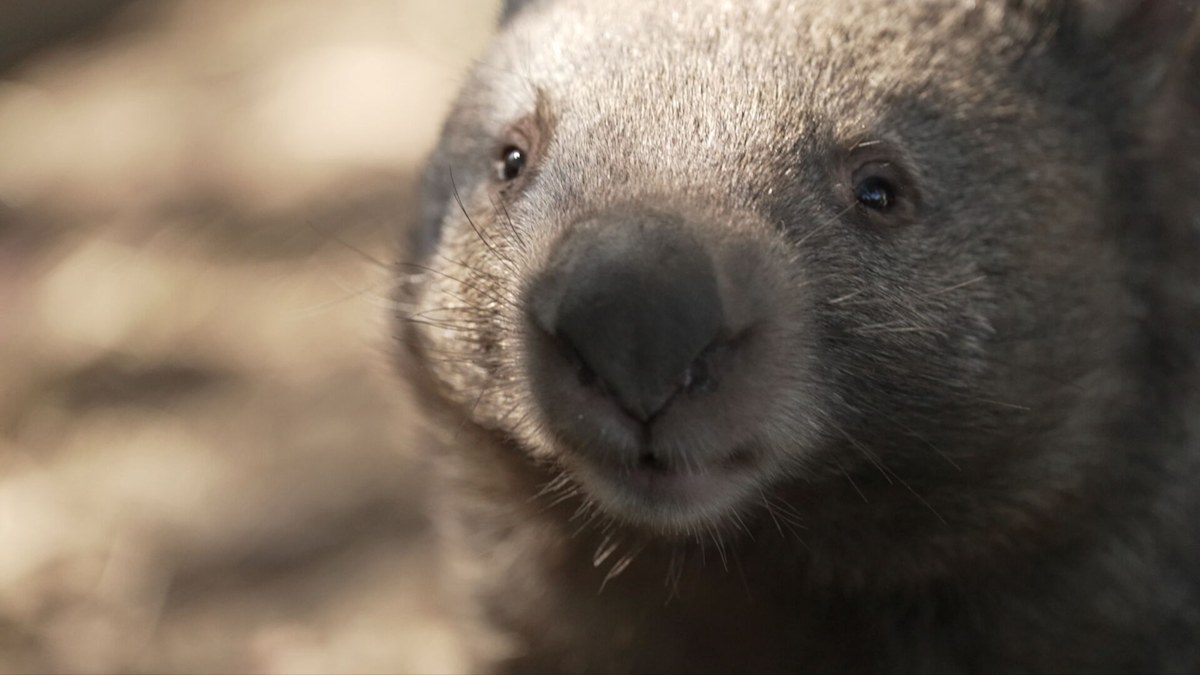
A Victorian council’s rabbit culling program is under investigation after wombats were allegedly trapped underground when their burrows were sealed.
Wildlife rescuers uncovered 12 blocked burrows in Hurstbridge, north-east of Melbourne, saving two wombats while others remain missing and are feared dead.
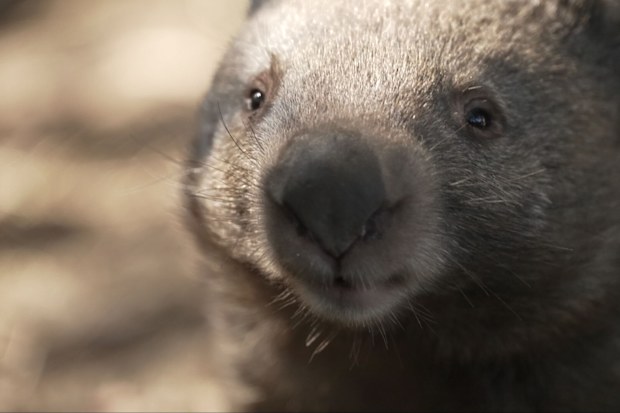
Wombat burrows accidentally sealed shut during council rabbit cull. A Current Affair
Volunteers discovered entrances filled with dirt, logs, and concrete during the council’s pest control operation.
“These wombats have been entombed,” Animal Justice Party MP Georgie Purcell said.
Wildlife rescuers said they first became concerned towards the end of August when wombats they had been monitoring and treating for mange suddenly disappeared.
“To see them slowly recovering and getting better and then vanish it was heartbreaking,” volunteer Linda Neilson said.
Neilson and other volunteers began digging open burrows at a reserve in Hurstbridge, with rescuers describing the operation as a race against time.
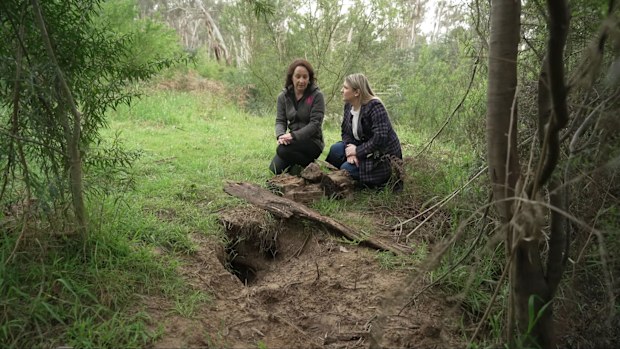
Volunteers discovered entrances filled with dirt, logs, and concrete during the council’s pest control operation. A Current Affair
“We were frantic, our rescuers were frantic, calling for help for people to bring shovels to uncover burrows,” Wildlife Rescuers vice president Narelle Trippett said.
Volunteers spent hours digging through entrances they say had been filled to ground level, making some burrows almost impossible to identify.
“If we didn’t know that there was a burrow here, it was undetectable,” Neilson said.
The volunteers said branches, logs and concrete were also found inside some of the burrows, raising fears wombats trapped below would have been unable to dig their way back to the surface.
Two wombats were rescued but several others known to volunteers and residents have not been seen since.
Trippett said it was impossible to know exactly how many animals might have been harmed.
“It’s hard to tell the exact numbers, it could be 100 wombats, we don’t know,” she said.
Residents have reported a smell of decay at several locations in Nillumbik, according to rescuers.
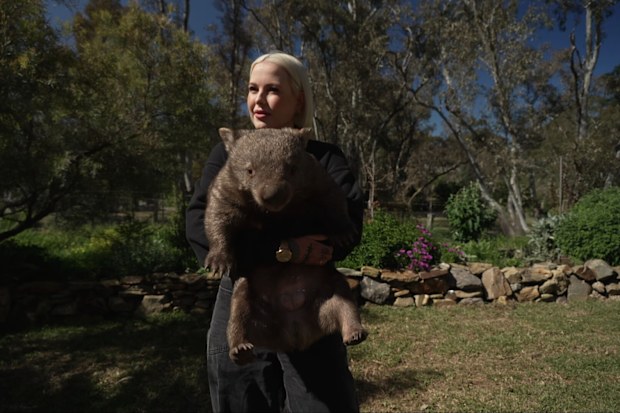
“These wombats have been entombed,” Animal Justice Party MP Georgie Purcell said. A Current Affair
“We’ve got residents complaining now of the smell across multiple locations in Nillumbik, calling us daily. We’ve had calls today,” Trippett said.
According to information published by Nillumbik Shire, the rabbit control program ran across 34 reserves between June and August.
The council described it as a “chemical-free rabbit control operation” carried out by a specialist contractor using ferreting, netting and warren-closure techniques.
The discovery of the blocked wombat burrows has now raised questions about how native animal habitat was identified before entrances were sealed.
Purcell has called for tougher statewide rules governing pest control work in areas inhabited by native wildlife.
“Suffocating any animal to death is a horrific way to go,” she said.
“It’s clear that the state government needs to develop guidelines for pest control companies to ensure that they’re not destroying wildlife while undertaking their service.”
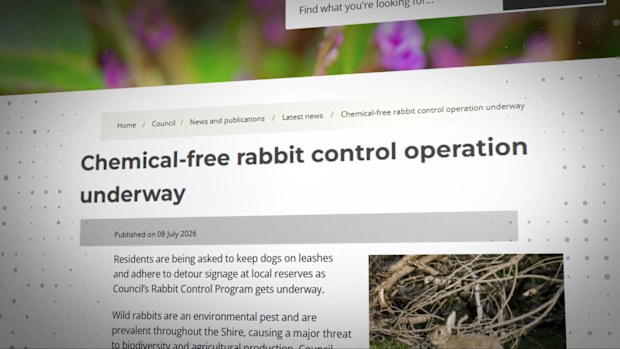
The council described it as a “chemical-free rabbit control operation”. A Current Affair
Residents are demanding answers about how the work was approved and carried out.
“I’d just like to know who authorised it and who they employed and what the process was,” resident Janet said.
Nillumbik Shire Council statement about rabbit control works
Nillumbik Shire Council has suspended all rabbit management programs while the Victorian Department of Department of Energy, Environment and Climate Action (DEECA) independently assesses information provided by Council and contractors in relation to rabbit control works carried out at Fergusons Paddock in August.
Council recognises this matter has created considerable distress and is deeply sorry for the distress this has caused members of our community, and in particular the dedicated wildlife carers and volunteers who give their time to help preserve our special environment.
We recognise that wildlife carers have raised these concerns because of their deep commitment to protecting native wildlife and we appreciate the information they have provided. When the matter was brought to our attention, we advised the contractor and they have since been reviewing and verifying the works that took place.
This week, activity of a number of wombats has been detected through the affected area. Whilst we are relieved to have this confirmed we acknowledge that some mange affected wombats are yet to be sighted, we are committed to ensuring our practices protect all wildlife.
Council is working closely with Wildlife Rescue and Mange Management to respond to the concerns that have been raised and to identify collaborative approaches to addressing them and further strengthening our wildlife protection measures.
Council is now working with DEECA to support their independent assessment to gather information to understand the circumstances of the matter and determine whether any further review is required.
Nillumbik Shire councillors and staff reflect our community’s passion for environmental protection, biodiversity conservation, climate action, sustainable land management and community partnership.
We value the important work of wildlife carers and volunteers as partners in this objective, and we are committed to making sure future pest animal management programs are carried out responsibly and with appropriate protection for native wildlife.
Council will cooperate fully with the DEECA process and adopt recommendations that will help reduce the risk of any future event compromising our native environment and ensure we continue to apply the strongest wildlife protection measures for any such future works.
Statement from the Conservation Regulator
The Conservation Regulator is investigating reported disturbance to wombats and active wombat burrows in Nillumbik Shire. Anyone with further information is encouraged to report it to Crime Stoppers Victoria. As this is an active investigation, the Conservation Regulator is unable to comment further at this time.