
Australian workplaces have largely accepted hybrid work as the new way of working, but one critical component of this shift has failed to keep pace: video conferencing (VC) technology. In fact, Logitech estimates that 85% of boardrooms are not optimised for video conferencing.
White-collar workers are all too familiar with the first five to ten minutes of a meeting wasted on connecting laptops, fixing audio problems or battling with an uncooperative camera, all while remote participants wait patiently. Often brushed aside in the moment, this meeting friction quietly compounds into significant financial and cultural costs for Australian businesses.
Logitech’s‘The Workplace Equation’ research study recently uncovered that technical issues in workplace meetings, such as failed audio or connection drops, lead to a median productivity loss of 12.2 minutes per person. Separately, data commissioned by TPG Telecom suggests small and medium-sized businesses lose an estimated $3.75 billion annually due to unreliable tech.
The Impact of Unreliable Tech
The cost of poor workplace technology doesn’t just impact employees during their 9-to-5 – it also follows them home. According to Logitech’s recent Ctrl Tomorrow study, 64% of Australian consumers and IT decision-makers say that technology friction at work affects their mood after hours. Conversely, 79% of respondents report experiencing peak performance and focus when their tech set-up works smoothly.
These findings paint a clear picture: outdated VC technology has a tangible impact on both productivity and employee well-being. With nearly all meetings now including at least one remote participant, modernising Australia’s hybrid workspaces is becoming a business priority.
Businesses increasingly need to justify the return on investment when upgrading their legacy systems. But with each failed meeting costing time for every attendee, the price of standing still is becoming easier to measure. That’s before considering whether current set-ups will be fit for purpose in five years’ time.
Reliable and Scalable Video Conferencing
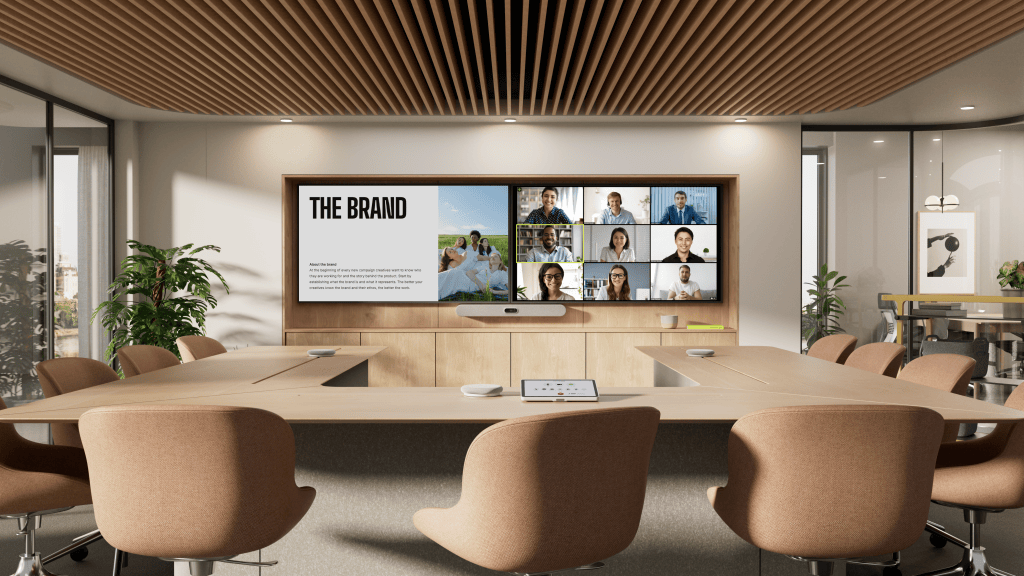
Logitech’s Gen 2 range has been developed around these friction points to reduce the hidden costs of meeting rooms. As the company’s latest generation of VC solutions, this new portfolio is designed for the coming decade of hybrid work, from the simplest huddle room to complex AV spaces.
The line-up features the Logitech Rally Bar 2, a new video bar built for all spaces that combines video and audio with features such as AI noise suppression. Alongside this is the Tap Scheduler 2, a scheduling panel that signals when meeting rooms are available, and the Tap IP 2, a network-connected meeting controller.
These tools are designed for simple deployment, offer AI-powered features, and provide deep integrations with Microsoft Teams, Zoom and Google Meet. The suite also uses recycled materials, with the Rally Bar 2 specifically being Logitech’s first video bar made with an aluminium unibody.
The Rally Bar 2 also features the same sensor technology as Logitech Spot, which measures meeting room health and equips leaders with clear data to make informed choices that elevate workplace well-being.
As AI continues to revolutionise the workplace, it’s more important than ever that Australia’s meeting room technology ecosystem reflects this rapid change. Investing in future-proofed VC tools should drive uninterrupted professional collaboration, not inhibit it.
Discover how Logitech’s Gen 2 product suite is built for what’s next here.