
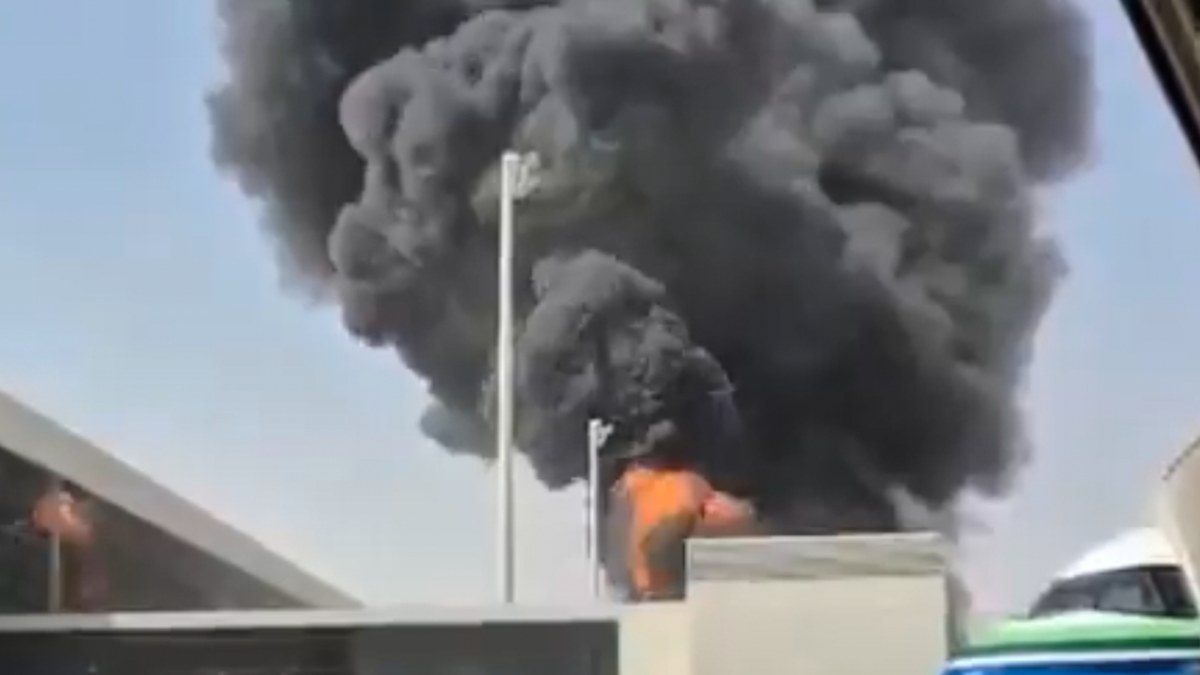
An attack on the international airport in Saudi Arabia’s capital killed has left 12 people dead and more than 300 people injured.
The attack on Riyadh International Airport on Saturday (Sunday morning AEDT) was the deadliest in any Gulf Arab country since the start of the Iran war.
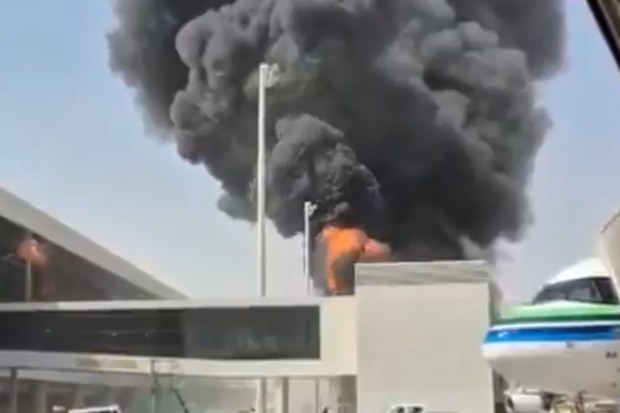
No one has claimed responsibility for the attack. UGC via AP
The war fronts have expanded to include the recent surge in fighting between the Iran-backed Houthi rebels in Yemen and Saudi-backed government forces there.
The statement, which did not assign blame for the attack, said the dead included four Saudi citizens as well as two Bangladeshi nationals, a Palestinian, a US citizen, an Egyptian, a Jordanian, a Syrian and a Sudanese.
It said the injured were being treated at several hospitals.
The Department of Foreign Affairs and Trade has been contacted for comment to see if any Australians have been impacted.
It has updated its general advice and told Australians to avoid the airport.
“Due to a serious incident at King Khalid International airport in Riyadh on 10 October 2026 afternoon, we advise all Australians to avoid any travel to the airport until it is secure and safe to do so. Follow the advice of local authorities,” the advice on Smart Traveller said.
The nation remains at level three on the Smartraveller warning system, “reconsider your need to travel overall.”
Nearby nations including Qatar and the UAE saw advice lowered to level two last week.
The attack – the latest of several in the past week on King Khalid International Airport – is expected to increase Saudi pressure on allies including the United States to provide military support for the kingdom.
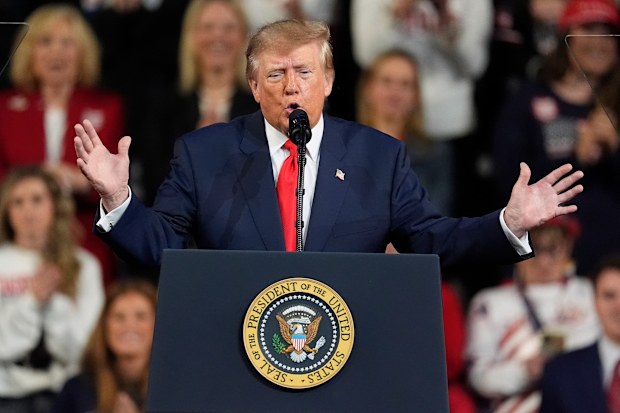
US President Donald Trump said he was considering whether to intervene in the Saudi Arabian-Yemeni conflict. AP Photo/George Walker IV
Shortly after the attack, President Donald Trump said he was evaluating whether the US should join Saudi strikes against the Houthis.
The Houthis claimed attacks earlier in the week on King Khalid International Airport that killed three Saudis, including a pilot.
On Saturday, a missile struck a complex housing terminals 3 and 4 for domestic flights, a regional official said, speaking on condition of anonymity because they weren’t authorised to speak to the media.
“We may. We’re going to look at it,” Trump said of intervening.
“We just found out about the recent attack. So we’ll make a decision. We move very quickly.”
The surge in attacks, including against other Saudi airports, military facilities and oil infrastructure, has come in the week since a Saudi-led coalition launched a major military offensive against the Houthis.
There was no immediate statement from the rebels, who earlier accused Saudi Arabia of striking Sanaa International Airport in the Houthi-held Yemeni capital.
Riyadh airport operations have been suspended
Saudi civil aviation authorities earlier said airport operations were suspended and the extent of injuries and damage was being assessed. An official notice to aviators said the suspension was through midnight.
The airport had a heavy police presence, with all entrances blocked, and lights around the complex were dimmed.
Flights diverted elsewhere, the Flightradar24 tracker said.
Countries including the United States, Britain, Germany, and Canada warned citizens to avoid the airport.
The attacks on Saudi Arabia, the world’s top oil exporter, have rattled markets and the region.
And yet the Saudi energy ministry hours after the latest one was still promoting a major international energy conference set to begin in Riyadh on Sunday.
Fighting in Yemen between the Houthis and Saudi-backed Yemeni government forces has escalated, with the Saudi-led coalition providing air support for government forces attempting to reverse recent Houthi gains along the Red Sea.
Those gains gave the rebels better surveillance of shipping on a corridor that is a crucial alternative to the Strait of Hormuz, where Iran has been attacking ships.
Though the Houthis have told the AP and others they are only targeting Saudi shipping as part of a blockade in retaliation for one imposed on them, concerns about wider attacks persist.
The Houthis previously attacked other ships after the war in Gaza began, calling it solidarity with Palestinians. A US bombing campaign sharply limited that.
-Reported with Associated Press