

October 11, 2026 — 5:00am
Save
You have reached your maximum number of saved items.
Remove items from your saved list to add more.
No gift articles left
You’ve used all of your gift articles. 3 more will become available on the 1st of every month.
Close
AAA
Compensation payouts for patients harmed in Victorian public hospitals have more than quadrupled over the past decade, soaring to a record $254 million last financial year as childbirth injuries take a heavy toll.
New figures obtained by The Age under Freedom of Information laws reveal that the state government’s insurer has spent more than $1.1 billion on settlements for injured public hospital patients and their relatives since 2015/16.
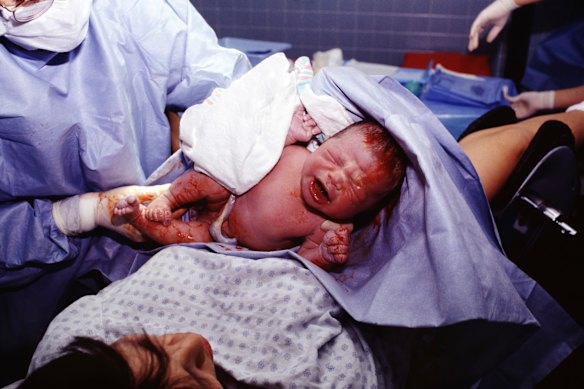 Obstetrics is the specialty with the highest volume of compensation claims due to its high-risk nature.
Overworked and understaffed healthcare workers and an increased awareness of birth trauma, mental health and legal rights are fuelling the skyrocketing payouts for patients and their families, according to medical negligence lawyers and doctors.
Daniel Opare, Shine Lawyers’ deputy head of medical law, said understaffing in hospitals increased the risk of patients being injured.
“There are many cases where there’s a policy that says someone with a condition should be triaged within 30 minutes and instead this person is left for five hours and within that time might have a heart attack and pass away,” he said.
Opare has also observed a rise in claims involving children born with cerebral palsy as a result of what he believes is poor obstetric care.
The state’s population growth is also driving the rise in payouts.
“There are more people attending hospitals, and therefore more opportunities for things to go wrong,” Opare said.
Data obtained by The Age also shows a steady rise in the number of payments made by the state’s insurer as part of medical negligence claims. The volume of payouts has nearly doubled over the past decade, reaching 723 in 2024/25.
One of Opare’s clients, Shane Robertson, became blind in one eye following a routine cataract procedure at University Hospital Geelong last year.
Robertson, who was 61 when he was operated on last September, woke up from the surgery with no vision in his right eye.
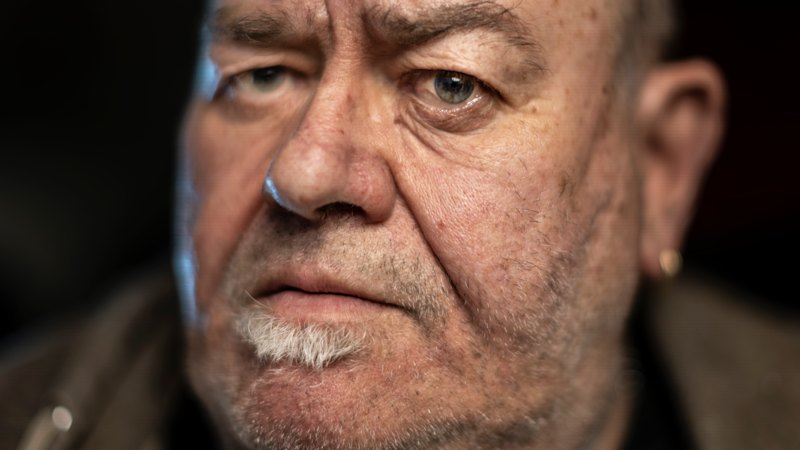
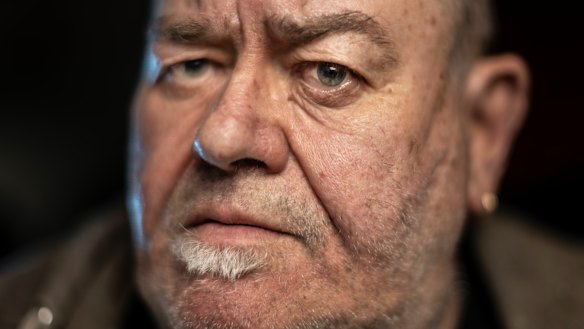 Shane Robertson is seeking compensation from Barwon Health after he lost vision in his eye following a cataract surgery in September 2025. Jason South
“It was like looking through a glass of blood,” he recalled. “I couldn’t see anything except for red.”
Robertson said an anaesthetist at the hospital accidentally perforated the depths of his retina with a syringe during the procedure, causing permanent damage.
While emergency surgery removed the blood that had pooled in his eye, his vision is now impaired by a large, black blur. “It’s like someone has splashed me in the eye with black ink,” he said. “All I can see is shadows. My vision was previously clear.”
He’s had to retire early from his job as a light engine mechanic and can no longer play golf.
 University Hospital Geelong.Joe Armao
A spokesman for Barwon Health, which runs University Hospital Geelong, said it regretted that Robertson had experienced “this rare and known complication”.
“A review of his care has been undertaken by the clinical team,” he said.
A spokesman from the state government’s insurer, the Victorian Managed Insurance Authority (VMIA), said there was often a significant lag between when an incident occurred and when a related claim was resolved.
“It can take time for the full extent of an injury to become apparent and stabilise sufficiently for a legal claim to be brought, especially when the injury is to a newborn,” he said.
The spokesman said obstetrics was the speciality with the highest total costs of claims relative to the volume of services.
“This is because incidents can result in injury to the woman and her baby (or babies, for multiple births),” he explained.
Since 2018, the VMIA has offered hospitals financial rewards if they train clinicians working in birthing suites in key risk areas. These include neonatal resuscitation, fetal surveillance, maternity emergency and instrumental births.
Early results from this initiative indicate that there has been a 25 per cent reduction in neonatal morbidity, a 48 per cent reduction in neonatal birth trauma, and a 33 per cent reduction in admissions to neonatal intensive care.
Lawyer Tom Ballantyne, national head of medical negligence at Maurice Blackburn, has noticed a significant uptick in medical negligence claims against hospitals over the past decade.
He attributes this shift to patients becoming better informed about their legal rights, mental health, birth trauma, and medical treatment — a trend fuelled by online resources and AI tools such as ChatGPT.
“When I started 20 years ago people were mystified by the idea of medical negligence,” he said.
“It used to be doctor knows best, but a patient in 2026 doesn’t think like that.”
Ballantyne said the increases in compensation payouts also reflect rising medical and care costs.
To claim pain and suffering damages in Victoria, patients must prove they have suffered a significant injury. This requires a permanent impairment level above 5 per cent for physical injuries, or at least 10 per cent for psychiatric injuries.
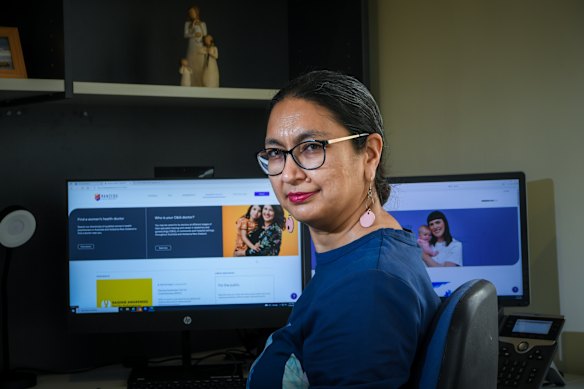 Dr Nisha Khot, president of the Royal Australian and New Zealand College of Obstetricians and Gynaecologists.Justin McManus
Dr Nisha Khot, president of the Royal Australian and New Zealand College of Obstetricians and Gynaecologists, said obstetrics and orthopaedics generated the bulk of compensation claims due to their high-stakes nature.
“It is high risk, and because there is both a mother and a baby, you are essentially looking after two patients,” Khot said. Increased advertising from law firms has also fuelled claims, she said.
She said families pursued litigation to cover long-term care needs for their loved ones.
“They genuinely need the financial resources,” she said.
While the vast majority of claims are settled out of court, Khot said the threat of litigation took a heavy toll on healthcare workers who were simply trying to do their best. This threat can lead to what Khot describes as “defensive medicine”.
“This might include emphasising the risks of different ways of giving birth, and recommending one over the other,” she said.
She called for stricter limits on the length of doctors’ shifts to protect staff and patient safety.
It’s an issue that’s also at the forefront of public hospital doctors’ ongoing industrial dispute with the Carroll government. The Australian Medical Association and Australian Salaried Medical Officers Federation (ASMOF) are calling for a cap of 12½ hour shifts and a guarantee of three consecutive days off during a fortnight.
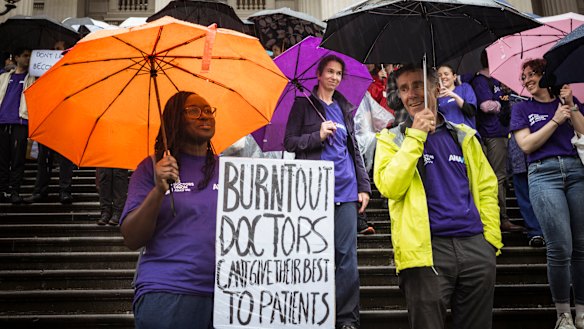 Hundreds of members of the health industry braved torrential rain to protest on the steps of state parliament.Chris Hopkins
“They are being rostered on for 84-hour weeks and frequently work even longer when emergencies occur,” ASMOF president Dr Roderick McRae said last week.
“They are often completely exhausted and burnt out, with little opportunity to rest between shifts. The threat that this systemic fatigue presents to patient safety is simply unacceptable.”
Related Article
Health Minister Ingrid Stitt said the government took patient safety seriously and expected hospitals to learn and improve when things went wrong.
“Victorians rightly expect safe, high-quality care,” she said.
Stitt said the government had established Safer Care Victoria and introduced Australia’s first statutory duty of candour to strengthen transparency and accountability when patients suffer serious harm.
“Through Safer Care Victoria we’re working with health services to identify risks, share lessons and improve care to reduce preventable harm,” she said.
Opposition health spokeswoman Georgie Crozier said she was shocked by the “staggering amount” of money being paid out to injured patients.
She said preventing these injuries would allow these funds to be redirected into hospital staffing and essential health infrastructure.
“We need to understand why these mistakes are happening.”
The money paid by the state’s insurer to settle claims can include damages, private health insurance rebates, repayments to Medicare and an allowance for plaintiff legal costs.
Last year, in a landmark case being scrutinised by lawyers and those working in maternity care, dentistry academic Larissa Gawthrop was awarded $275,000 in damages for assault, battery and negligence after she was pressured into having a vaginal examination while giving birth at Bendigo Hospital.
The Supreme Court heard that Gawthrop provided the hospital with a birth plan that stated that she declined “all vaginal examinations unless there is an urgent medical reason to do so”.
The court heard that the mother was “corralled and worn down” into having a vaginal examination before the hospital would admit her or allow any pain relief.
Start the day with a summary of the day’s most important and interesting stories, analysis and insights. Sign up for our Morning Edition newsletter.
Save
You have reached your maximum number of saved items.
Remove items from your saved list to add more.
No gift articles left
You’ve used all of your gift articles. 3 more will become available on the 1st of every month.
Close Henrietta Cook is a senior reporter covering health for The Age. Henrietta joined The Age in 2012 and has previously covered state politics, education and consumer affairs. Email her via henrietta.cook@theage.com.au or henrietta.cook@protonmail.comConnect via X, Facebook or email.From our partners