

News
With one billion people predicted to have the condition by 2050, it outlines practical opportunities for GPs, including identifying at-risk patients.
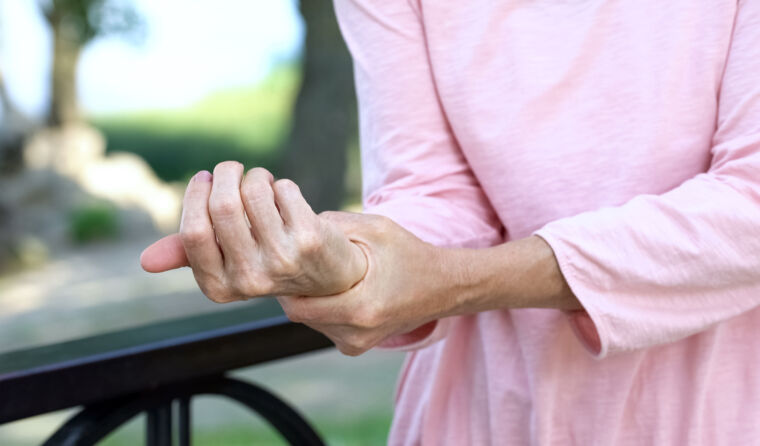
Experts are calling for improved integration of osteoarthritis into chronic disease care models, as the condition is predicted to impact one billion people by 2050.
Global rates of osteoarthritis are rising sharply, as an estimated one billion people will be living with the musculoskeletal condition that currently has no cure – an increase from 600 million people in 2023.
And it is not properly integrated into service models for chronic disease, according to a new Lancet paper, which examines the burden of osteoarthritis and lays out a new health policy roadmap for ‘resilient, people-centred’ health systems.
The roadmap comprises three strategic priority areas:
Build capacity for national surveillance on burden and cost and include musculoskeletal health into national policy
Expand quality, affordable, person-centred care, including by integrating osteoarthritis into primary and chronic disease care through a life-course approach
Slow the trajectory by targeting excess body weight and joint injury, including workplace and sport-related injuries
Lead author Curtin University Professor Andrew Briggs says the condition is ‘inadequately integrated’ into healthcare delivery for chronic disease care, and often inappropriately prevented and managed.
‘Case numbers are increasing in all countries, not just Australia, and that’s attributed not only to an ageing population, but increasing risk factors for other chronic diseases, and GPs will understand and know this well,’ he told newsGP.
‘From a primary care position, more people will be attending, and if more people are attending and there are not more services being made available, that’s going to be a really difficult situation.’
While ‘promising’ medicines are on the horizon, Professor Briggs says there are currently no disease-modifying drugs for osteoarthritis, with the mainstay of treatment remaining to manage symptoms and improve function.
He says part of the challenge lies with GPs providing patients with solutions that are non-pharmacological.
‘We know that medicines have an important role, but core treatment for osteoarthritis is largely non-pharmacological,’ Professor Briggs said.
‘It’s education about how to manage weight loss for people who are overweight, and engaging in physical activity for those who are not active, and that often requires time in consultation, and or referral to supportive services like allied health.’
He also highlights that osteoarthritis ‘faces an image problem’ – being perceived and dismissed as an unavoidable part of ageing with limited management options, not integrated into service models for chronic diseases, and remaining ‘largely invisible in national health policies’.
‘The purpose of the roadmap is to bring the attention about the scale of the problem to government, so that services can be scaled up as case numbers grow, so that people who attend a GP have an option of accessing information that’s reliable and up to date, and for those who need it, can access appropriate supportive services,’ Professor Briggs said.
As this week marked World Arthritis Day, more than two million Australians are estimated to be living with osteoarthritis, making it the most common form of arthritis. Knees, hips and hands are the most affected.
The Lancet researchers say rising obesity rates, joint injuries and ageing populations are driving the predicted increases in cases in the lead up to 2050.
Using a multidisciplinary group of international experts, including people with lived experience, they propose a ‘globally relevant roadmap’ for health policy responses for prevention and care.
This includes adopting a life-course approach and targeted prevention of the two key modifiable risk factors of excess body weight and joint injury.
It says integrating osteoarthritis into primary and chronic disease care should be via a person-centred approach, including changing how the condition is talked about.
‘That really requires a self-management perspective from the point of view of patients,’ Professor Briggs said.
‘And from a GP perspective as well as primary care providers, recognising and responding to important risk factors are also relevant.’
With overweight recognised as a strong risk factor for hyponeopsia arthritis, the roadmap covers the importance of managing excess body weight for a range of conditions, including arthritis, as well as preventing recurrent joint injury or occupational exposures that are hazardous to joints.
‘Australia is a global hotspot for anterior cruciate ligament injuries of the knee, and there’s good evidence that repetitive knee injuries are a precursor to knee osteoarthritis,’ Professor Briggs said.
‘So, if someone’s presenting with knee injury and has not been rehabilitated … whether that be from sport or work, then ensuring that patient has access to rehabilitative care and injury prevention advice and programs is really important as well.’
As the authors recognise the growing role of osteoarthritis in disability, health and societal costs, they are calling for health systems to recognise it as a major chronic disease.
‘Global health demographics and disease burden profiles signal that it is time to extend global health targets for non-communicable diseases beyond premature mortality towards reducing avoidable morbidity,’ they write.
‘Particularly from conditions such as osteoarthritis with high disability attribution.’
The RACGP’s Guidelines for the management of hip and knee osteoarthritis is currently undergoing an update, due for release in mid-2027.
Log in below to join the conversation.
arthritis chronic disease care disease burden joint injury musculoskeletal health obesity management osteoarthritis preventive health
newsGP weekly poll
Have you ever found out that a patient has previously failed to disclose their use of GLP-1 medicines to you as their usual GP?