
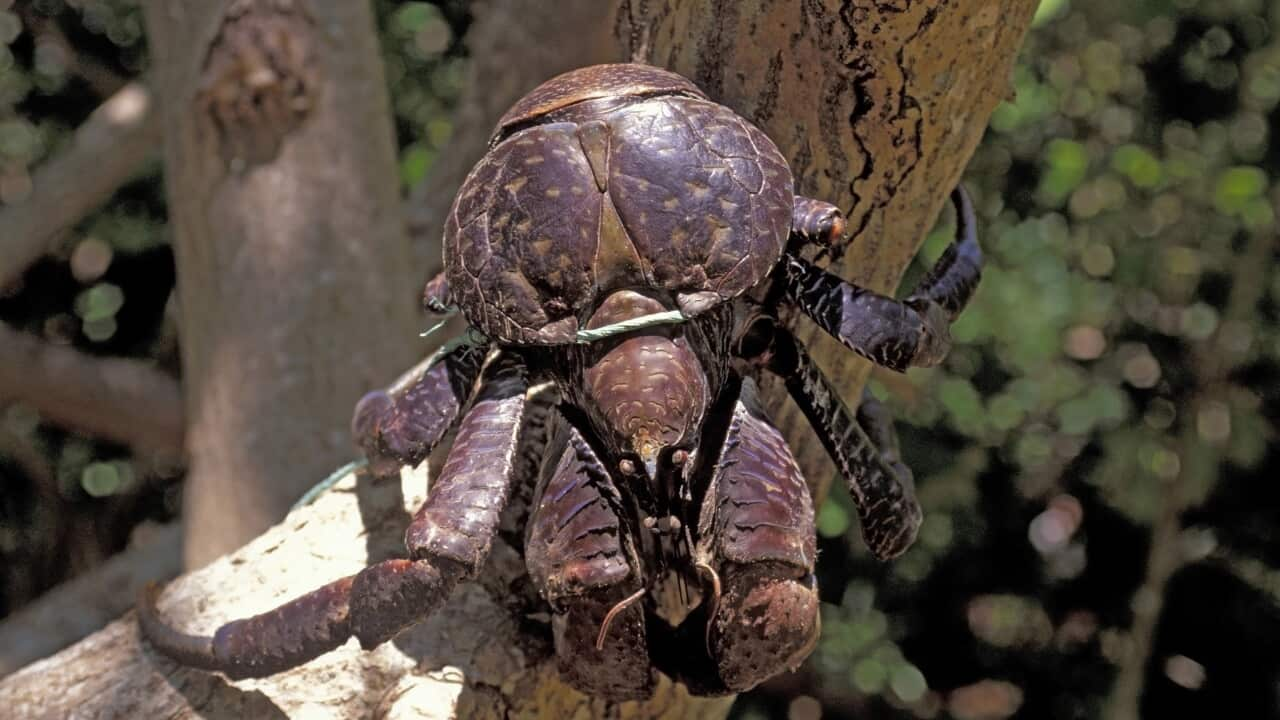
IN BRIEFA research team investigating aviation star Amelia Earhart have landed on Nikumaroro Island.The atoll is home to a large population of giant nocturnal coconut crabs.
Giant coconut crabs that roam a remote Pacific island where researchers are searching for Amelia Earhart’s missing plane are so numerous that the team is sleeping offshore rather than on land.
A joint team from Purdue University and the Archaeological Legacy Institute has arrived on Nikumaroro Island in Kiribati to investigate a mysterious object that some believe could be the wreckage of Earhart’s aircraft, hoping to solve a disappearance that has baffled investigators for nearly 90 years.
After a five-day, 1,500km voyage across the South Pacific, the team began clearing a path through dense vegetation to reach the so-called Taraia Object, encountering several giant coconut crabs along the way.
The crabs, the world’s largest land-dwelling crustaceans, are among the reasons the 17-member expedition will spend nights aboard its ship rather than on the uninhabited atoll.
Earhart and her co-pilot vanished on a flight around the world in 1937, and despite several search missions, neither their remains nor that of the plane have ever been found.
Your trusted source for staying up-to-date with the world around you. Get free daily news updates and analysis, straight to your inbox.
The researchers on Nikumaroro will investigate the Taraia Object, an unidentified shape first spotted in satellite imagery in 2020 and visible in aerial photos dating back to 1938.
They believe the object could be the remains of Earhart’s plane, while competing Earhart explorer Ric Gillespie told the Reuters news agency he believed it was a tree.
“You can see the root ball. You can see the branches. It’s a tree. People see what they want to see,” he said.
Based on estimates from aerial photos, the team said the Taraia Object is believed to be located only 3m from the lagoon’s shore.
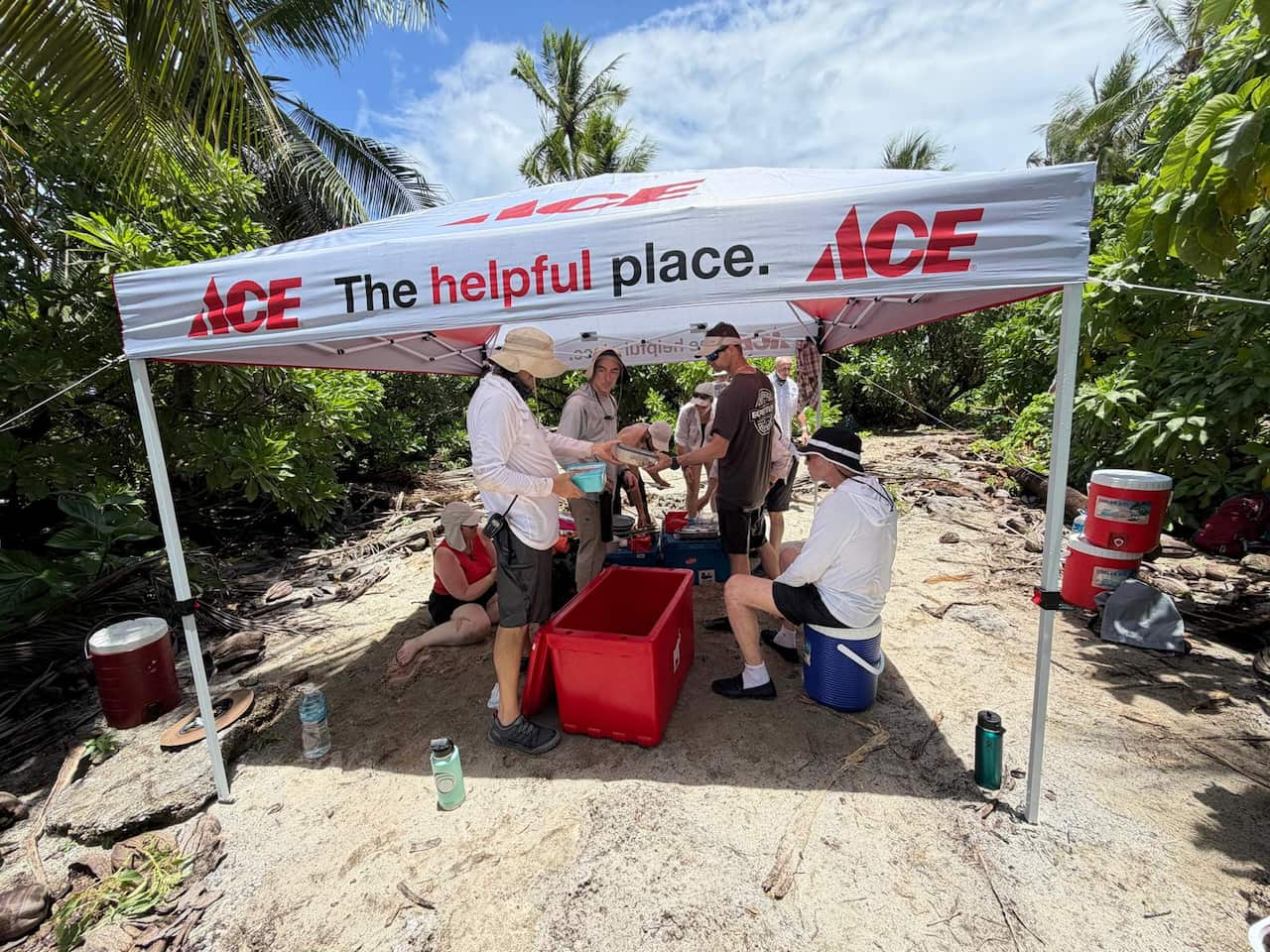 Researchers expect to spend five days on the island. Source: Supplied / Purdue University / Purdue Research Foundation / Archaeological Legacy Institute
A report published on the expedition’s blog on Tuesday said the team used a combination of machetes and hand chain saws to slash a path to the lagoon, adding that it had encountered “at least four” giant coconut crabs.
“After many years since the last expedition to the island, the traditional path to the lagoon was heavy with undergrowth and coconuts underfoot … At least four coconut crabs were encountered along the way, but they posed no threat to the operation.”
The remote island is uninhabited by humans but home to a colony of giant coconut crabs, the world’s largest land-living arthropods and crustaceans. Spanning up to one metre from tip to tip, with a body length of up to 40cm, coconut crabs can lift 30 kilograms and have huge pincers which they use to crack open coconuts.
READ MORE
The research team will sleep on the expedition ship for “a number of reasons”, one of which is the large population of these nocturnal crabs, “whose size and overnight activity make staying on the island impractical”.
The omnivorous scavengers, which emerge after dark to forage, scavenge, hunt, or climb trees for food, factor into several theories to explain the absence of Earhart’s remains.
The United States government’s position is that they crash-landed in the Pacific Ocean, but other theories suggest they were able to make it to Nikumaroro and lived out their lives as castaways.
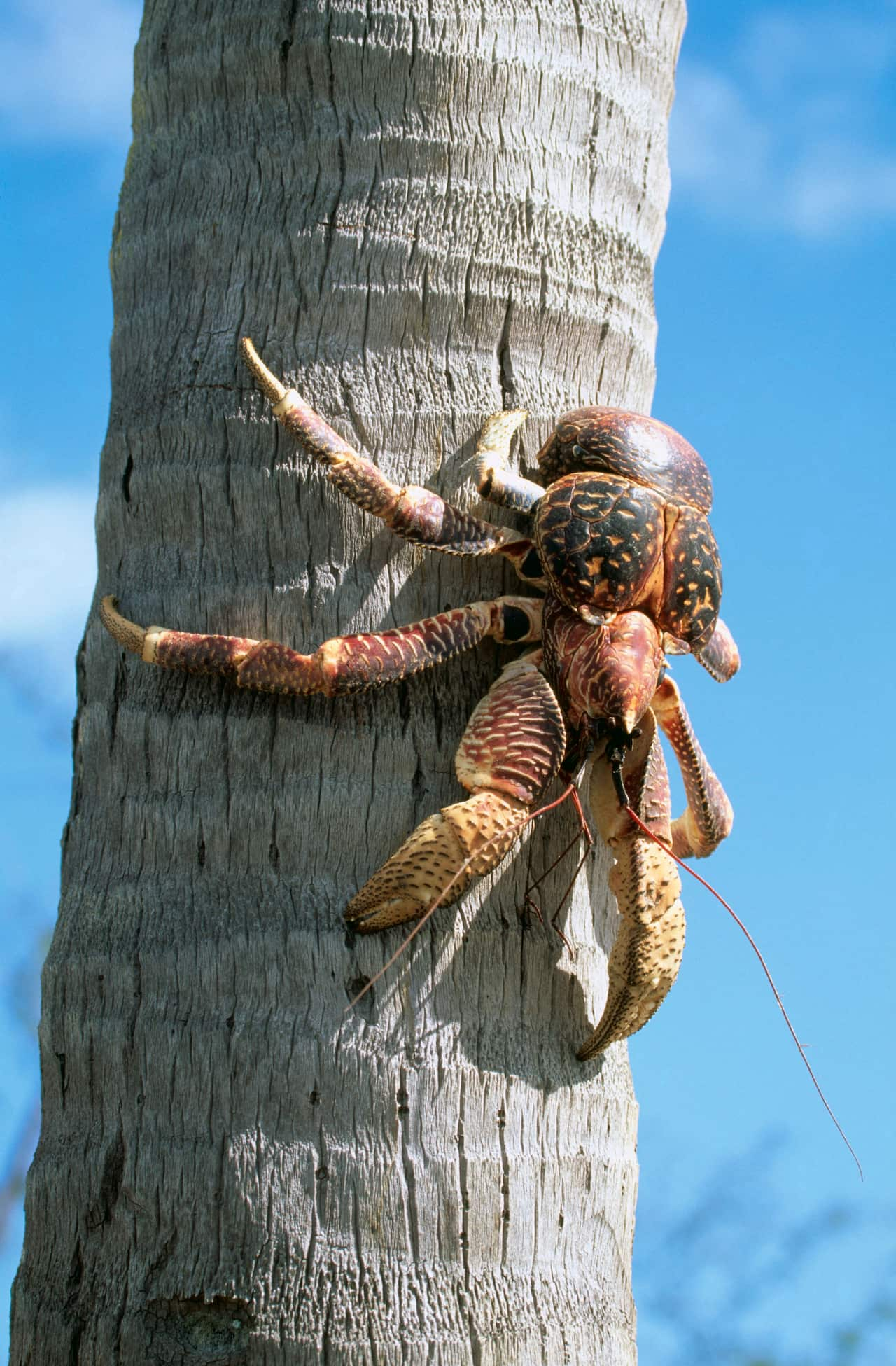 Researchers have tried to investigate whether crabs may have played a role in Earhart’s missing remains. Source: Getty / Mary Evans
Remnants of a cosmetic jar of anti-freckle cream, as well as aeroplane-related materials and parts of a shoe, have been found on Nikumaroro, and human remains found on the atoll in 1940 have been the subject of ongoing academic debate.
They were identified as belonging to a male and were not pursued in connection with Earhart; they were later lost, preventing modern forensic testing.
A 2018 Forensic Anthropology study concluded that the previous sex assessment was incorrect, and “strongly supported the conclusion that the Nikumaroro bones belonged to Amelia Earhart”.
 The Final Flight of Amelia Earhart
episode • History’s Greatest Mysteries • History • 39mPG
In 2007, researchers working with advocacy group TIGHAR placed pig remains on Nikumaroro Island to test whether giant coconut crabs could scatter a castaway’s bones.
The experiment found that crabs rapidly consumed soft tissue and moved some bones, supporting the possibility that crab activity could explain why only part of a skeleton was recovered on the island in 1940.
The taxonomic experiment, which was not peer-reviewed, did not establish that Earhart was eaten by crabs.
The team expects to spend five days on the island to complete its fieldwork.
For the latest from SBS News, download our app and subscribe to our newsletter.