
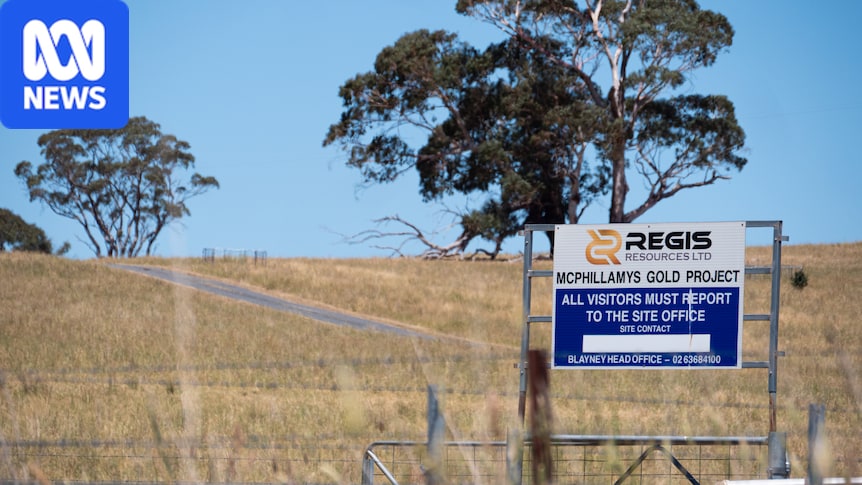
The Federal Court has overturned a Commonwealth decision that halted a billion-dollar goldmine in New South Wales.
Regis Resources launched legal action against then federal minister for environment and water Tanya Plibersek in November 2024, challenging the validity of an Aboriginal protection order she granted over part of its McPhillamys Gold Project near Blayney.
The order applied to 400 hectares of the site, including an area where the company wanted to build a tailings dam, which is used to hold mining waste.
It was made after the mining project received approval in 2023.
At the time, Ms Plibersek said the order would protect the headwaters and springs of the Belubula River and that the company could construct its tailings storage elsewhere.
But Regis Resources disputed this, saying the decision affected a critical area of the project development site and meant the project was “no longer financially feasible”.
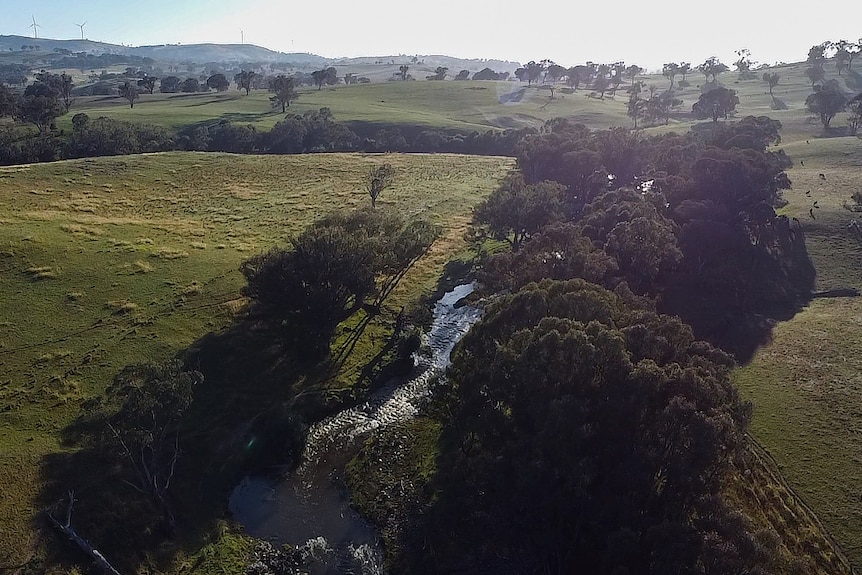
The Belubula River originates at the mine site. (ABC News: Xanthe Gregory)
Justice James Stellios has presided over the Federal Court challenge and held two days of hearings in December 2025.
He delivered his judgment during a short sitting today, which found that Regis Resources was successful in the judicial review and the minister’s “declaration is invalid”.
The Aboriginal protection order was granted after Wiradyuri elder Aunty Nyree Reynolds lodged an application to protect the area under Section 10 of the Aboriginal and Torres Strait Islander Heritage Protection Act in 2020.

Tanya Plibersek granted the Aboriginal protection order over part of the McPhillamys mine site in 2024. (ABC News: Ian Cutmore)
The court heard the application was supported by the Wiradyuri Traditional Owners Central West Aboriginal Corporation (WTOCWAC) and referred to a Dreaming story called the Blue Banded Bee.
Justice Stellios told the court that this information “constituted a new application” and should have been referred to the government reporter for consideration and to carry out a public consultation process.
“Consequently, the declaration made by the minister was made without authority,” Justice Stellios said.
“The court’s decision and my reasons say nothing about the merits of the claim … whether it’s a significant area or under threat of injury or desecration … those are matters within the authority of the minister … not the jurisdiction of this court.”
In a statement the WTOCWAC said it was “disappointed by the court’s decision” and will take time to consider the implications of the judgment.
“This case has always been about protecting places of profound cultural and spiritual significance to Wiradyuri people,” the group said.
“The court’s decision does not diminish the cultural significance of these places, nor does it alter our obligation to speak for and care for Country.”
Regis Resources took the office of the federal environment minister, now held by Murray Watt, to the Federal Court. (ABC News: Matt Roberts)
Justice Stellios said the appropriate remedy was for the proposal to be sent back to the federal minister for environment and water, a position now held by Murray Watt, for redetermination.
He ordered the parties to provide written submissions on costs to be submitted by October 27.
In a statement, Senator Watt said he respected the ruling.
“The Judge specifically made the point that his decision did not concern the merits of the Minister’s decision … instead, the court’s decision was based on an error in the process used to grant the declaration,” he said.
Prime Minister Anthony Albanese told parliament during Question Time that the government was carefully considering the judgment.
Senator Watt said it was “an example of how complex the current cultural heritage processes are for everyone involved”.
“We remain committed to working alongside [First Nations people, industry and state and territory governments] on a better system,” he said.
Decision welcomed
In a statement, Regis Resources said “after considerable delay and uncertainty, and more than two years of time lost” it was “eager to move forward” to advance one of the country’s largest undeveloped gold projects.
“Today’s Federal Court judgment is a significant and welcome step forward,” the company’s managing director Jim Beyer said.
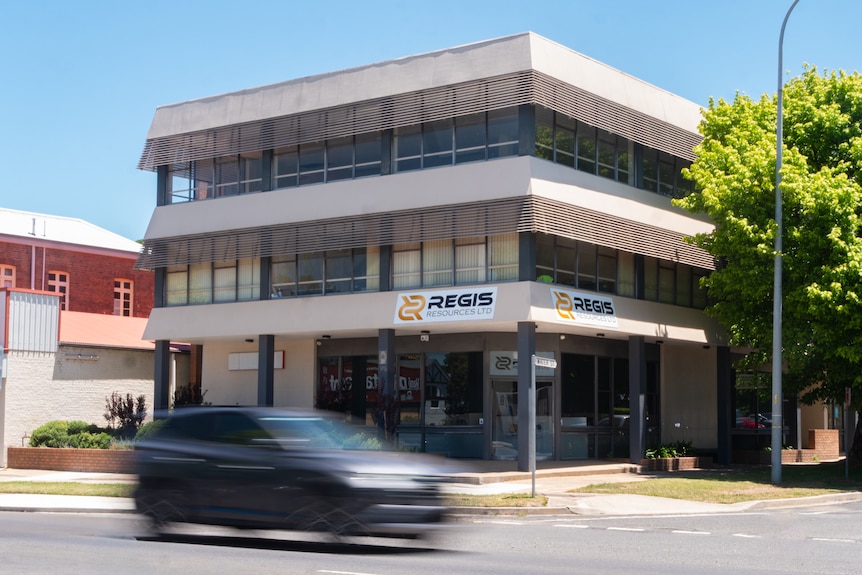
Regis Resources says it remains committed to progressing the McPhillamys Gold Project in the Blayney district. (ABC News: Lani Oataway)
“The judgment finding that the Section 10 Declaration is legally invalid vindicates the position we have held since the declaration was made in August 2024.
“We are extremely pleased the court has agreed.”
The company said it intended to constructively engage with the federal environment department through the redetermination process.
The NSW Minerals Council said it was a win for common sense.
“This is a stark example of how seemingly endless opportunities for activists to disrupt and delay projects continue to cost NSW investment, jobs and growth,” CEO Stephen Galilee said.
“This whole sorry saga should be a warning to governments at all levels that their assessment processes are too complicated, too inconsistent and too vulnerable to spurious challenges and objections.”
Speaking before the decision was released, NSW Premier Chris Minns said he wanted the mine to go ahead.
“I understand that’s not the view of the federal government, but we need the investment,” Mr Minns said at a press conference.
“It’s a really important part of our economy and diversifying our mineral exports, not just in relation to coal but in terms of other critical minerals.”
When asked if Ms Plibersek made the wrong call in putting a Section 10 on the mine site, the premier responded: “Yes.”
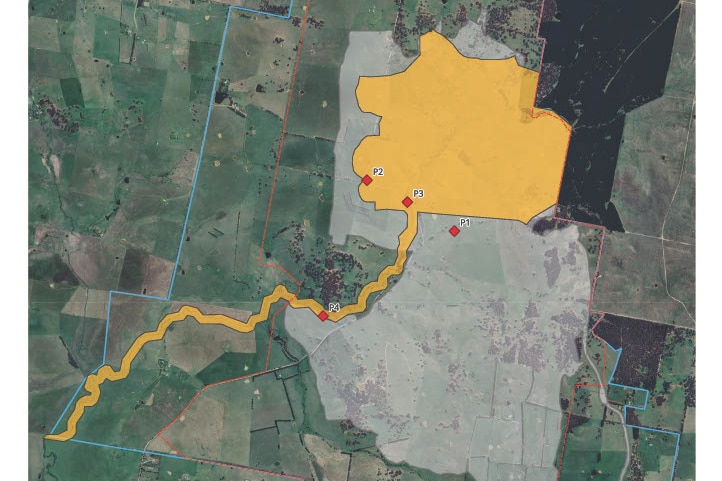
The Section 10 Aboriginal protection order made (in yellow) over part of the McPhillamys Gold Project site (in grey). (Supplied: Regis Resources)
Disappointed downstream opponents
The Belubula Headwaters Protection Group was hopeful the application would be upheld as it forced the company to explore alternatives for its tailings.
“[The alternative] protects the headwaters of the Belubula River and all downstream users into Carcoar Dam and further downstream into the Lachlan catchment,” president Daniel Sutton said.
“It was a win for everyone except Regis’s bottom line,” he said.
Mr Sutton urged the company to proceed with the proposed modifications that entirely avoided the area affected by the declaration.
“[It will] allow them to still get the same outcome but with significantly less environmental impact around the headwaters of the river, the only difference being it’s a fair bit more expensive,” he said.
Regis Resources said it was continuing to progress its alternative tailings development “with the potential for the redetermination process to be protracted or for the outcome not to be in Regis’s favour”.
The company said it was aiming to have a final investment decision on the project in the first half of 2028.